
A conversation with Kenzie Yoshimura, editor-in-chief of Fare. Interview by Arjun Basu
—
THIS EPISODE IS MADE POSSIBLE BY OUR FRIENDS AT FREEPORT PRESS.
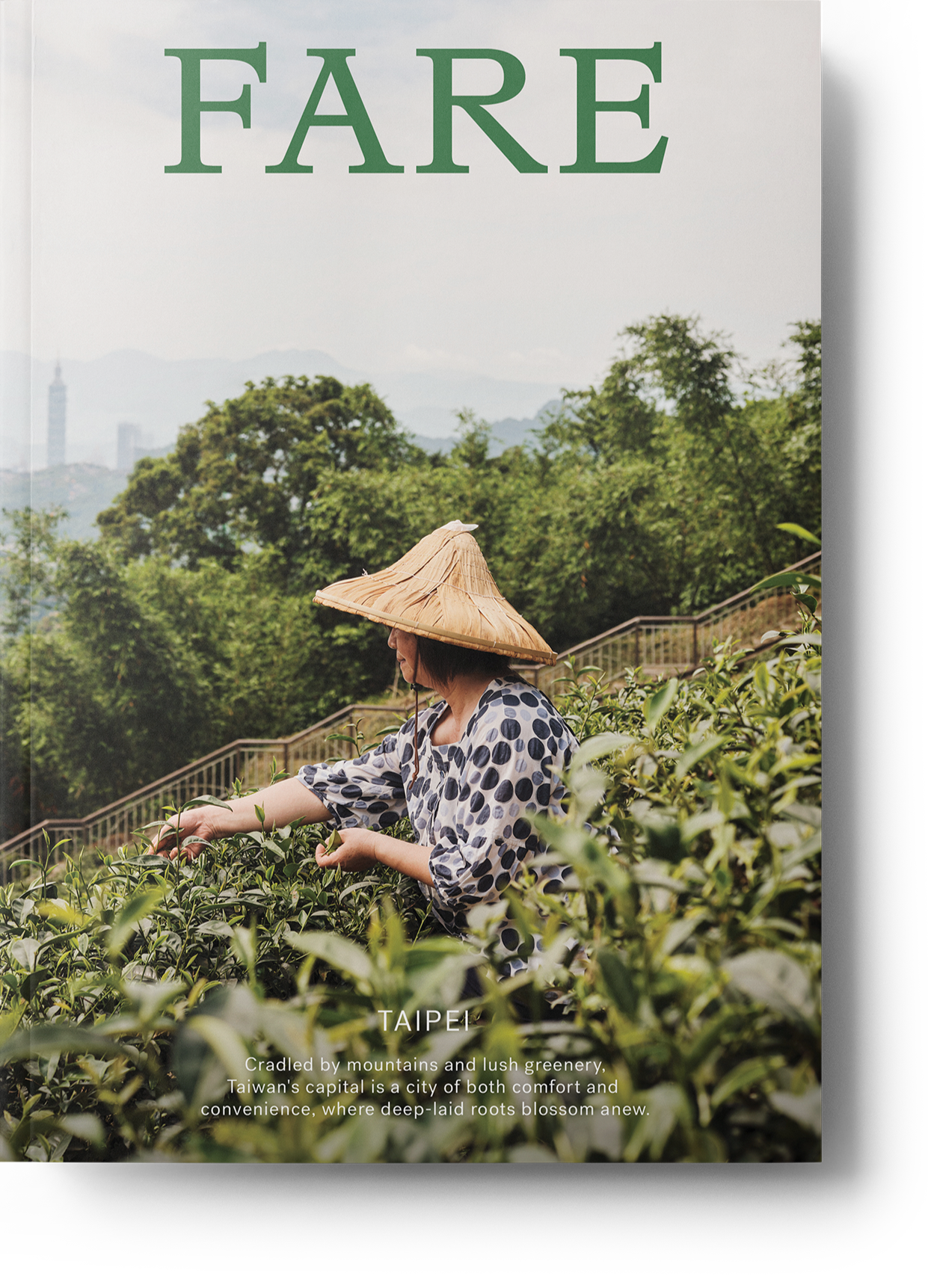
There are two kinds of travelers. The first group are those that need to see as many attractions as they can. The second are those that would rather wander around, get a feel for the place they’re visiting, and live as much like a local as possible. Neither is better. There’s no judgement here. But the people who are behind the bi-annual Fare magazine are definitely of the latter group.
Founded almost ten years ago, each issue of Fare explores a single city, using food as an entry point to talk to locals and tell stories that you won’t find in your typical guidebook. You do not read Fare to find lists of must try restaurants. You read it to meet the people that make a city worth living in and worth visiting. You will learn something. And, maybe, this city will go on your list of places to visit.
Going from city to city is, of course, not the easiest way to make a magazine, but ten years in, Fare is still going strong, and the business is growing to include new titles and new offers. It’s a big world. And I get the sense Fare is going to keep wandering it, meeting the people who make every city taste better.
Arjun Basu: Kenzie, thank you for being here.
Kenzie Yoshimura: Yeah, thank you for having me.
Arjun Basu: So what’s the story of Fare? How did we get here?
Kenzie Yoshimura: How did we get here? Fare is going on, not quite its 10th year. Ben Mervis, who’s the founder. He started it in I think 2017 originally, and I’ve been around for about five years now.
Arjun Basu: And why, this is a strange question, but why does it exist? Because it’s not like any other magazines for sure. And we’ll get to whether or not it’s a magazine at all. But why did Ben start it?
Kenzie Yoshimura: Yeah. Ben comes from a history background. And a food background as well. And I think that the convergence of food and history and travel is something that he was really interested in. And, as the type of traveler who’s a fan of the likes of Anthony Bourdain and this kind of more thoughtful travel.
I think that he saw a space where something really interesting and really different could be put together. That is speaking to a different kind of traveler that is looking for just that real kind of local, not even local insight, because I think that the important thing to note here is that the goal was not to create a travel guide but rather a collection of stories that was going to be a lot longer lasting.
Arjun Basu: So that, my next question is, literally, is it a magazine? Or maybe it’s a city guide or a travel guide? Because, we’ll get to why I’m asking that question, but is it a magazine or is it something else?
Kenzie Yoshimura: That’s a great question and a reaction that we get a lot from people who, because it is a print only magazine and a print first magazine. And when people who have perhaps found us online or through Instagram hold it in their hands for the first time, a lot of people say, this isn’t a magazine. People say, this is a book, or this is something else.
We like to call it a magazine. It is a periodical. We do two a year and each one follows a rather specific format even though they are super highly tailored to each city. And the stories change a lot. But is it a magazine is a great question. We like to say that it’s not a guide because we will never tell you where to go.
If people want to know what the best or the biggest or the most important thing is in a city that they’re traveling to, they’ll find that on the internet, or they’ll find that from one of the myriad other magazines or websites that are giving out that information. And what we hope to do is something a little bit different, which is just telling stories from a local perspective.
Arjun Basu: Okay. For people who don’t know, give me a quick description of what Fare is and does.
Kenzie Yoshimura: Sure. Fare is a very food centered travel magazine, and each issue is a deep dive into the culture of a single city. So two issues a year, each one is about 200 pages, all dedicated to one city. And the way that we build this is by connecting with and commissioning local people to write those stories.
So we like to say that it’s locally led in the sense that there’s a lot of research on our end editorially, and we go in with some ideas of what we would like to cover and some notions of what we think the city is. But everything comes from those initial conversations with people who are from the city, who tell us what the stories are that they want to tell.
So the idea is that it’s a collection of stories. I think that, going back to what was the idea behind the magazine, I think that for us as travelers, the best places that we go are the places where we know someone who is going to share their stories with us, show us around, take us out, introduce us to people, and that really changes the experience of a new place. And so I think that we hope that the magazine does a little bit of that for the reader.
Arjun Basu: Okay, you answered the question, which was my next one, which is how does it come together? But even before that, how do you choose a city?
Kenzie Yoshimura: How do we choose a city? I think there are a lot of factors that go into choosing a city. It’s not enough to say that it should be a city with great food culture or interesting history because one thing that we’re pretty sure of is that we could do a Fare issue on just about any place in the world.
I think that every place has those kinds of stories and lends itself to this format that we’ve created. What is important is that one that, honestly, that we’re able to get our foot in the door as far as connecting with, because if we don’t have connections with people who are going to then connect us with more writers, more journalists, other people on the ground, it’s not going to have the same authentic feel.
So I think that we often start from where we have a connection? Who is going to open up the door to this place? As an example, in the last city that we went to, which I guess I shouldn’t reveal quite yet, because it’s still a ways out from publication, we connected with a food writer who shared a lot of stories with us and then connected us with a lot of other people that they know there.
So the city comes about through a lot of different ways. One thing that’s important to me is that as a series, we do have a lot of long time readers, honestly, at this point. We’re going on to do our 19th issue right now, and a lot of people have been reading the magazine for a long time.
I like to think that as a series, it’s one, not super Eurocentric, and two, that it does bounce around geographically and culturally in a way that you feel like you’re being taken to a really different kind of place every time.
Arjun Basu: I was going to ask that because I wonder do you have a map and say “We’ve never really gone to this place,” or “We’ve only done this continent once,” or “Look at this entire part of the world, we’ve we’ve ignored it.” Does that play into it? Are you trying to play chess with the world or…?
Kenzie Yoshimura: A hundred percent. I think that our goal – and part of this is our, just realistic limitations as a very tiny, independent magazine – but our goal would be to go as far afield as possible. And I say that relative to, I’m based in Barcelona, Ben is based in Glasgow, and it’s really important that the magazine is not limited to where we can get to easily. We want to do more issues in Africa, we want to go back to Asia.
I think something that was very clever, this is just before I had started at the magazine, but what Ben did during the pandemic, for example, was produce issues fully, remotely. And he really took advantage of that time too, I think a lot of people would say, oh, it’s a travel magazine. I guess it needs to stop right now while the world has stopped.
But what he did was produce these issues remotely in Kampala, Uganda, in Kyoto, in Lima. And I think it’s a really brilliant model and shows that we can continue to do that in the future as well to reach more places if we need to.
Arjun Basu: Should I read anything into the fact that both Ben and yourself are Americans living in Europe?
Kenzie Yoshimura: It is a great point. Maybe. Maybe there’s something there. I think that…
Arjun Basu: Because Ben’s from Philadelphia, right?
Kenzie Yoshimura: Ben is from Philadelphia, which is where we..
Arjun Basu: And you’re from Oregon?
Kenzie Yoshimura: …our new issue. Yeah. I’m from Oregon and we’ve both been living abroad for over a decade at this point. I think that there is something to that in that we have the perspective of outsiders in new places and people who are very fascinated by trying to understand a new place and then trying to bring that sort of same sensibility to our shorter travels as well.
Arjun Basu: I’ve often thought that travel magazines that are based in large cities or in media centers are static in that sense. Like 95% of the staff is always in the office or around it, they don’t do the same thing that another magazine like Fare, for example, it’s a very mobile magazine. You and Ben are mobile people. Obviously, you’re far from home. And I ask that because each issue of the magazine feels like an immersion of the place. And to create a magazine about that immersion, you have to know it. So I’m just wondering, like, how much does the team go to the city and for how long? And how does that work?
Kenzie Yoshimura: Yeah, that’s a great question. So I think the way that we are able to accomplish that feeling of being immersed in the city is, again, our starting point is having conversations with people who are from the city and who know it really well. So during our research process, we are quite literally getting on the phone, getting on video calls every week with just about everyone we can get in touch with from the city.
And those might be writers, but they might be friends of the writers who have nothing to do with journalism or travel or food. They might be chefs, they might be designers. Really, we’re very open to anyone who’s from the city who we can get in touch with, who wants to tell us a little bit about their city and the things that are important to them, and pitch us ideas and help us create.
That’s how we start to build. Our table of contents is based on those conversations. Then commission local people to write essays and articles for us, and then, all being well, our team: that being Ben, myself, Ric, who is our art director, and who’s been with the magazine since issue one, two of our sort of, we like to call ’em our staff photographers, but Sam Harris and Liz Seabrook, who have also been photographing for the magazine for years.
We will go with some combination of that team to the city for anywhere between three days to nine days, something like that. And we’ll conduct in-person interviews, visits, photo shoots, et cetera, to compliment all of that legwork we’ve already done and which we will continue to do after the trip.
The trip feels like the end point of that process, but really it’s just the beginning in the sense that a lot of new questions and themes and interesting ideas come up during that trip, which will then go back and try to pull out those threads as well.
Arjun Basu: This is kind of a hard way to do a magazine. You may have a framework, but I’m sure the cities inspire or change or alter that framework because each city is so different and so you really are—besides that very loose scaffolding—you’re reinventing the wheel every time.
Kenzie Yoshimura: Yeah, we’re reinventing the wheel every time. We’re making things quite hard for ourselves and we are essentially building a new team every time, besides those core people that I mentioned. We are gathering a group of new contributors each issue.
And it is challenging, I think also because as I mentioned, within that band of new contributors there might be people who aren’t professional writers, for example who we work with really closely to try and bring their idea to life and in a way that’s going to fit in well in the issue. It’s, yeah, it’s quite the undertaking.
Arjun Basu: And how much of a city are you trying to capture? Not all the cities you cover are huge, but most of them are a good size. And any city that has more than two neighborhoods can be very different. One side to the other. So how much of it are you trying to capture and not being from there? How do you know that you’ve captured a part of it?
Kenzie Yoshimura: That’s such an excellent question, and it’s something that at least I personally wrestle with a lot because when we’re creating that initial table of contents, for example, there will be a hundred plus lines on it, which we eventually have to whittle down to I think about 24 or so per, full pieces that go into an issue of varying lengths.
But, I’m always really making myself crazy, wanting to, thinking, Oh, we’ve missed this, we’ve missed this. How do we fit this in? And at the end of the day we know we can’t capture a whole city. And so the goal is not to do that, but rather to do our due diligence as far as trying to connect with a really diverse range of voices and perspectives, that’s really important. And then allowing those people to really let their story shine and come through in the way that feels authentic to them.
Arjun Basu: As a former editor, I used to always have, there are always tests that I made in terms of are we getting the right thing or have I, is there something that the writer has done in the past that is a tell? And so I’d take like a city or two or three that I knew really well, and I’d see if they’d written about it and if they hit any of what I considered, cliches or just the lazy stuff, that would be my red flag. And so how do you, again, like how do you know that you’ve got something? It may read well, but how do you know what you’ve captured? Because I think in each issue you are trying to capture, I don’t want to call it the essence, but something close to that you are trying to impart the feeling of a city knowing that, you can’t. It’s impossible to do it in a few hundred pages.
Kenzie Yoshimura: Yeah, I think that’s right. I think we are trying to capture an essence of sorts. I think that flipping through the magazine should feel like walking through a city and seeing all that you can and meeting all of the people that you can in the time that you’re allowed. And unfortunately, there are always going to be some streets that you don’t walk down, but we hope that you’ll get the feeling of being there.
I think a good test for this is that through the process of finding new contributors each issue, and having these conversations, we’re building out this really incredible network of local people with whom we can test our ideas. We have the conversations. We try to not be making those commissions in a vacuum, but rather having bigger conversations with each contributor about the other content that we’re planning and seeing if that resonates with people, seeing if that rings true.
And also understanding that part of gathering a sample of voices from a city is that there are going to be conflicting ideas. It’s like when you go to a new place and you ask two different friends for a recommendation for a restaurant, someone might tell you that a place is fantastic and the other person will say, oh God, stay away—stay far away from that place. It’s super overrated. And so I think that we do the best we can. And again by having those conversations, it’s a pretty good gauge for where we’re at as far as capturing the city in the way that we hope to.
Arjun Basu: And this is, you probably answered it, but I asked this of a lot of the travel or food magazines that I have on the show, and you’re both, is that the internet has really, I mean, if there’s two areas where they over index, let’s just say it’s in these two areas and travel and food, and especially food there’s just so much out there and a lot of it is lists of where to go and you’re not doing that. How is it fighting against that, or cutting through the noise?
Kenzie Yoshimura: I think it’s fighting against that by telling stories and really not editorializing in a way that, like I said, we won’t tell people where to go. And one thing that Fare does, I think that the voice of the magazine in as far as the pieces that we write from our end we will describe something as it is and we won’t tell you to go there.
We won’t tell you why. It’s the best we will describe, in great detail, what it is and how it fits into the city. And I think that the other important thing is that we want these issues to be timeless in a way. We don’t ask people, in fact, we hope that contributors will not write about a brand new, interesting thing in the city, but rather we’ll tell a personal story that speaks to bigger cultural and societal issues as well as daily life in the city. It’s more of a daily life snapshot, I think, than a collection of places that you should visit on your trip.
Arjun Basu: So no trends. More real.
Kenzie Yoshimura: That’s the hope.
Arjun Basu: I realize now that I haven’t asked you this question: what’s your story? You started in Oregon, you’re living in Barcelona, you’ve been with this magazine for five years. How did you get to it?
Kenzie Yoshimura: I’ll try to give you the shortest possible version of that. ’cause obviously a lot has happened between Oregon and Barcelona, but I come from a journalism background. I studied journalism and my plan was to go into the nonprofit sector. I had never really planned to be a journalist per se, but rather I wanted to write and planned to go into PR or communications. And I worked in a PR agency before moving to Mexico to do communications for a really small nonprofit organization.
I was there for a couple of years and as often happens in those type of roles, I ended up doing a lot of things outside of the original job description, one of which was a lot of graphic design, flyers, the website, newsletters, everything that this organization needed, and it was something that was really exciting to me and really inspired me to go back to school. I found a graphic design graduate program in Barcelona, which is why I ended up here.
And yeah. Through that program I was exposed for the first time to the world of independent magazines. We had one professor in particular who shared a lot of really great references with us in our units of study on editorial design and typography. He used a lot of magazines and sent us out to find examples and we had to make our own magazine.
And I remember looking through little magazine shops and independent bookstores here in Barcelona and just being really blown away by the world of indie mags, which I had never really known about before. And not only from a design perspective, which is of course the world in which I was very enmeshed at the time, but also from an editorial standpoint. I thought there were some really interesting stories being told there.
And fast forward to just after the pandemic, when I was looking for a job I found this opportunity with Fare which had been one of the magazines that I had discovered on those trips through the bookstores here in Barcelona. And I came on as the first full-time employee, working alongside Ben, who had been doing things basically on his own for years alongside Ric, who’s our art director.
Arjun Basu: So you didn’t necessarily have a magazine background?
Kenzie Yoshimura: No. Not at all.
Arjun Basu: Did you read magazines growing up or were they not a part of your media diet?
Kenzie Yoshimura: I’m a nineties kid. I grew up reading, like, all of just the trashy magazines and Cosmopolitan, and I loved that stuff. I remember getting all of these magazines delivered to my parents’ house and it was so exciting.
It’s not something I ever thought about as a career path, or, I think that, for years, I probably didn’t think about magazines at all. People like to tell me, especially as a journalism student, people love to tell journalism students that print is dead and that media is going by. People love to tell you all these really apocalyptic things about media and print media in particular.
And so it was so exciting to discover this world. I think especially as someone who at the time was, I think, I had one foot in the journalism world and one foot in the design world. I just saw this as an explosion of creativity really at the intersection of those two things.
Arjun Basu: Yeah. I find it, that timing, interesting because I have my theory about the Print Panic, and you were basically in school during that time and I think a lot of people were discouraged from following print in any way or magazines or, definitely newspapers just because everyone was worried that they would die. And here you are. Now Fare is more than Fare. Fare produces—it’s on the website—Insightful Publications for the Hungry Reader. You have other magazines and publications. There’s a consultancy, Gut Geist, which is, I can smell Berlin when I look at that magazine. The cover just makes me hungry. North Norway is another thing you guys have produced, so describe what you’re attempting to do there.
Kenzie Yoshimura: Fare is the core of what we’re doing. And I think that, as I mentioned before, it’s really long since it hit its stride in the sense that we know what the magazine is. The format is something we feel really strongly about and really passionately about. And we know who our readers are and I think that. For lack of a better term, the sort of Fare approach to storytelling and to food and to travel is something that we think can be really well applied to other formats, to other projects.
And we’ve had some opportunities just really recently, in the last year and a half, to try out some of those new ideas and it’s been really exciting. So Gut Geist, for example, is the product of collaboration with Toby Beck, who’s a chef in Berlin. He’s incredibly knowledgeable about German food and German food culture, and it’s something that he really saw an opportunity to bring this out into the world.
German food is so fantastic. And it’s something that doesn’t have great pr I think, globally. And I think the stories he wanted to tell are really stories that we hadn’t seen before, especially in English. The magazine that we did is in English and German.
It’s a new magazine that has been really exciting to put together with Toby telling those stories about really old school German food in Berlin where he’s based now, his childhood memories of these dishes and these recipes and these experiences and it’s one that we’re really excited to expand.
North Norway is a really massive project that is the result of, I think, this has been going on since before I even joined Fare, but it’s the culmination of years of trips to the north of Norway. With that, Ben did, together with Ric, our art director, Liz, one of the photographers, and in the same way that Fare tackles the culture of a single city through stories of people who live there, North Norway is doing that across a region. So it was a really interesting challenge to take that format and expand it and see how far we could take it. And the result is really fascinating because it is this kind of saga across time and space and seasons that I think is really interesting because you get. Again, that’s Fare essence, which is stories about local people but expanded across a really wide region.
Arjun Basu: Very appropriate use of the word saga right there. But, and then there’s the consultancy and which I guess when you have a travel magazine, and you think about a consultancy, either you become a travel consultant or you become a trial or tour guide, and I know you’re not creating tour guides, but the way you do cities just lends itself, I think, to an experiential aspect. I think so. Is that something that’s been discussed?
Kenzie Yoshimura: I think that in an ideal world, we would bring some of what we do with Fare into a three dimensional space, into something that’s more interactive or events or experiences. We’ve been very fortunate with Fare as this, as our calling card, to have been approached by a really wide range of different individuals and brands and opportunities. With Gut Geist as a great example I think that people value the perspective that, not the perspective that we bring, but actually the ability to tap into a local perspective.
I think that is what really resonates with people and the ability to create something beautiful in print. That’s what we’re really excited about and that’s something that we feel really strongly about bringing to new readers and new audiences. And I’m amazed. It does feel like there was this sort of dark period of time where everyone was saying that print was going away. And even in just the last couple of years, I’m seeing so many print projects everywhere and I think—
Arjun Basu: —that’s why we’re here!
Kenzie Yoshimura: That’s why we’re here. It’s swinging so far back the other way and I think it was just an inevitable shift back to analog. And I love to see that. I love to see so much print out in the world.
Arjun Basu: Yeah, one of my big resentments now is that the word authenticity has been hijacked and it means nothing. But, print is so authentic and it’s a savior and a bulwark against what’s happening online. And online is just a terrible place now. And I also am working on the idea that I think, the rise of influencers, especially in places like travel and food, was so inauthentic and it was so fake that it greased the wheels and paved the way for AI. And one of the things that preceded it, especially in these spaces, was the influencer. Because, influencers are, I don’t begrudge them their work. They’re getting work, they’re traveling the world. It’s great. They are basically guns for hire. And so they’re just spokespeople just like anyone else. And they can change quickly. Once the money runs out from the client, they’re onto the next thing and the place next door might get their talents. So a lot, there’s a lot of things happening and conspiring, I think, to bring people back to print. And one of the best parts of doing this show is just seeing how many young people are into it, in discovering it. I mean our sister podcast is called Print is Dead, and we say it ironically, but it’s about the past. It’s about the stars of the past and how they set up what we have now. And we’re about the present and the future. So I’m just happy you guys do what you do. There’s a lot of opportunity, especially in food and travel, that didn’t exist even a few years ago because of what’s happened to the online experience.
Kenzie Yoshimura: Yeah. Yeah. I agree. I feel more and more convinced. I think some people would look at the food and travel space in media and say, oh there’s too much stuff out there. But it makes me feel more and more convinced about what we’re doing. I think that people are doing it. People who are doing it, I won’t say in the right way, but in a thoughtful way, need to keep doing it. I think it’s really important.
Arjun Basu: Do you have a favorite city?
Kenzie Yoshimura: A favorite Fare city?
Arjun Basu: Nope.
Kenzie Yoshimura: Oof.
Arjun Basu: A favorite city.
Kenzie Yoshimura: Favorite city? No, I don’t think so. That’s a great question. But every city I go to is my favorite city while I’m there.
Arjun Basu: That’s a cop out. Come on.
Kenzie Yoshimura: You know my—I think that my current favorite city is Porto. And my most surprising city is Warsaw. When we did the Warsaw issue, that was the issue that I found the most challenging in the sense that I came with such little prior knowledge about the city, and for a lot of reasons the trip itself was challenging.
We went, it was cold, it was getting dark at 3:00pm. It was just challenging in a lot of ways, and I think it’s one of the most beautiful issues that we’ve produced when it came out. I was so excited about it and we received some really lovely feedback about it from local people and it changed my perspective on that place so much.
Arjun Basu: Would Fare ever return to a city? There’s obviously hundreds and hundreds of cities in the world that could be visited that have yet to be visited by Fare. But do you ever want to go back? Do you ever want to return to a city?
Kenzie Yoshimura: That’s a great question. We could. We definitely could. And it’s something we’ve talked about a lot. Ben specifically will say that he could do another Glasgow issue tomorrow. I think it keeps him awake at night to think about the things that didn’t go into that first issue.
But again, there are a million different versions of a single city, and so I have no doubt that we could go back and do a city that we’ve already done in a really different way. Not to mention the fact that cities change so much year on year, but I do think that there is that part of us in the same way that when you’re booking a trip, it’s hard to go back to a place you have, you’ve already been when there’s so much else out there.
Arjun Basu: Okay. We end this usually with a question about magazines and your three favorite magazines right now.
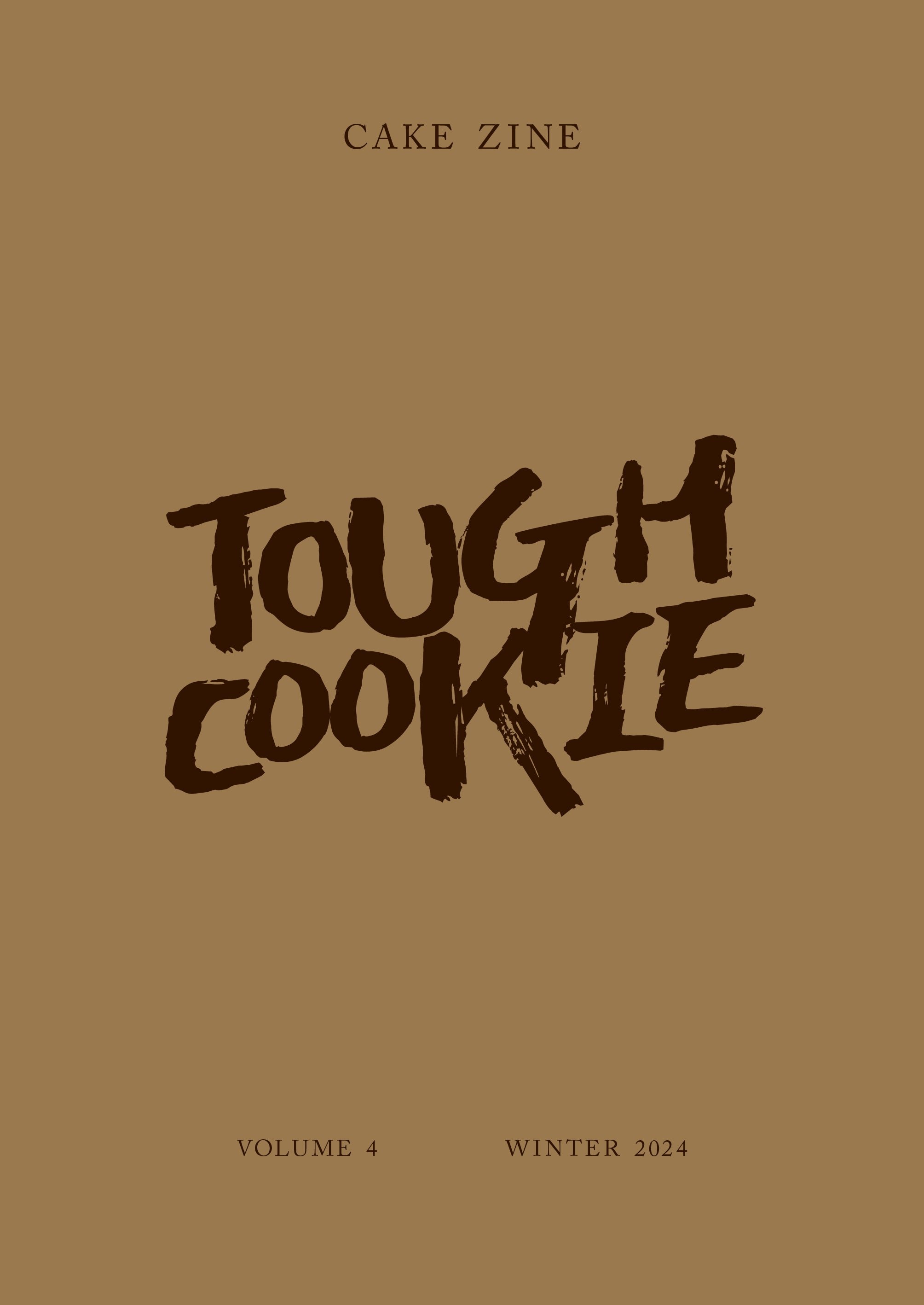
Kenzie Yoshimura: Ooh, that’s a great question. I think this has been said before on this podcast, probably because I’m not the only one, but I really like what Cake Zine is doing out of New York. I’ve just been very impressed by not only the way they’re curating that content and finding really interesting writers, but also just the play on, on a single theme, I think is so interesting and so fun. Really liking that one.
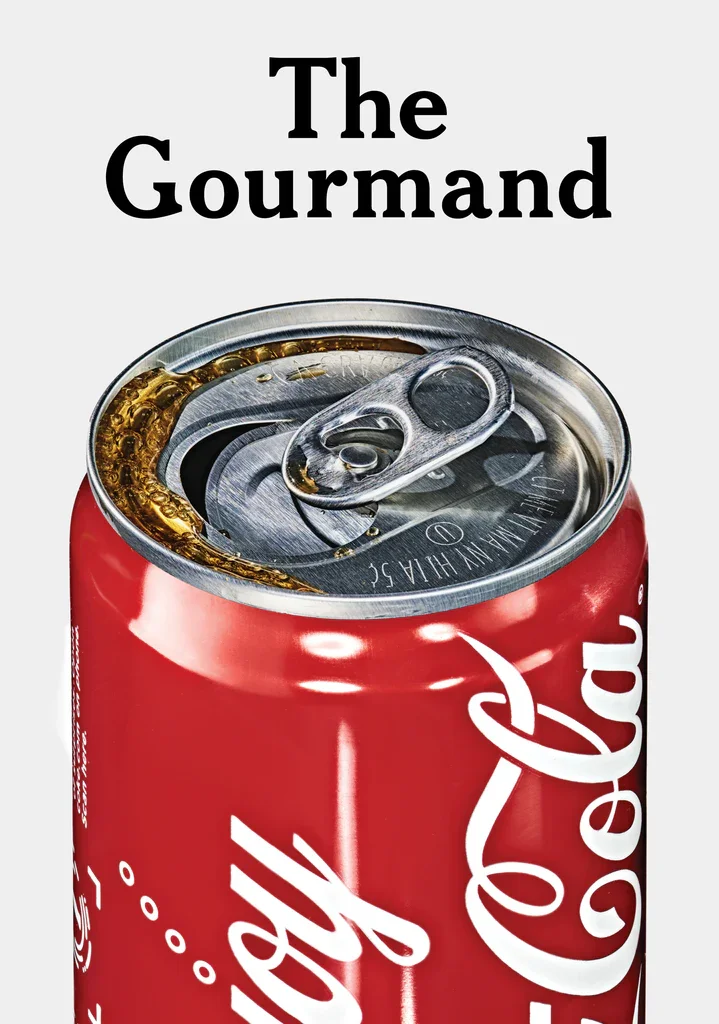
This is not a magazine, some of my favorite magazines are older ones too. The Gourmand is one. I have The Lemon Book and I know I’ve seen that they’re coming out with a mushroom one, but there are these giant books that it, in the same way that with Fare, we take a single city and try to attack it from every angle and break it down, they’re doing this with a single ingredient. And so you’ve got science and you’ve got history, and you’ve got art, and those are really fun.
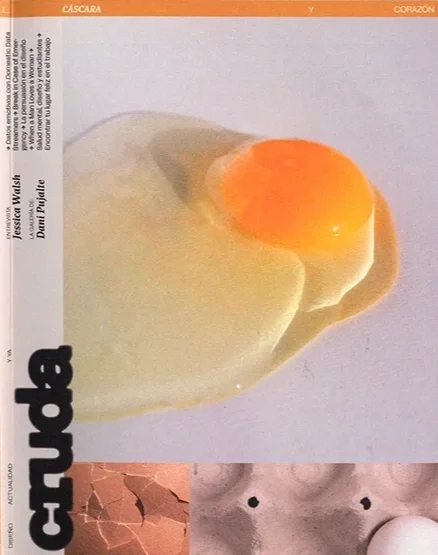
A third magazine, I’m actually going to give you one that’s not out yet, but that’s on my radar. I’ve seen a new mag that’s being worked on right now called Cruda. Jess Eng is the editor in chief and she’s a food writer whose work I really love and I’m sure she’s got a great team, but it looks like it’s a very kind of food science-based publication that I think is going to be great. I’ve got my eye on that one.
Arjun Basu: Great. Thank you. Merry Christmas.
Kenzie Yoshimura: Merry Christmas to you. Thank you so much for having me.
Arjun Basu: And Merry Christmas to all our listeners! And thank you, Kenzie, that was great.
Kenzie Yoshimura: Thanks guys.
Kenzie Yoshimura: Three Things
Click images to see more.
More from The Full-Bleed Podcast