
A conversation with Orlando founder Antonella Dellepiane Pescetto. Interview by Arjun Basu
—
THIS EPISODE IS MADE POSSIBLE BY OUR FRIENDS AT FREEPORT PRESS.
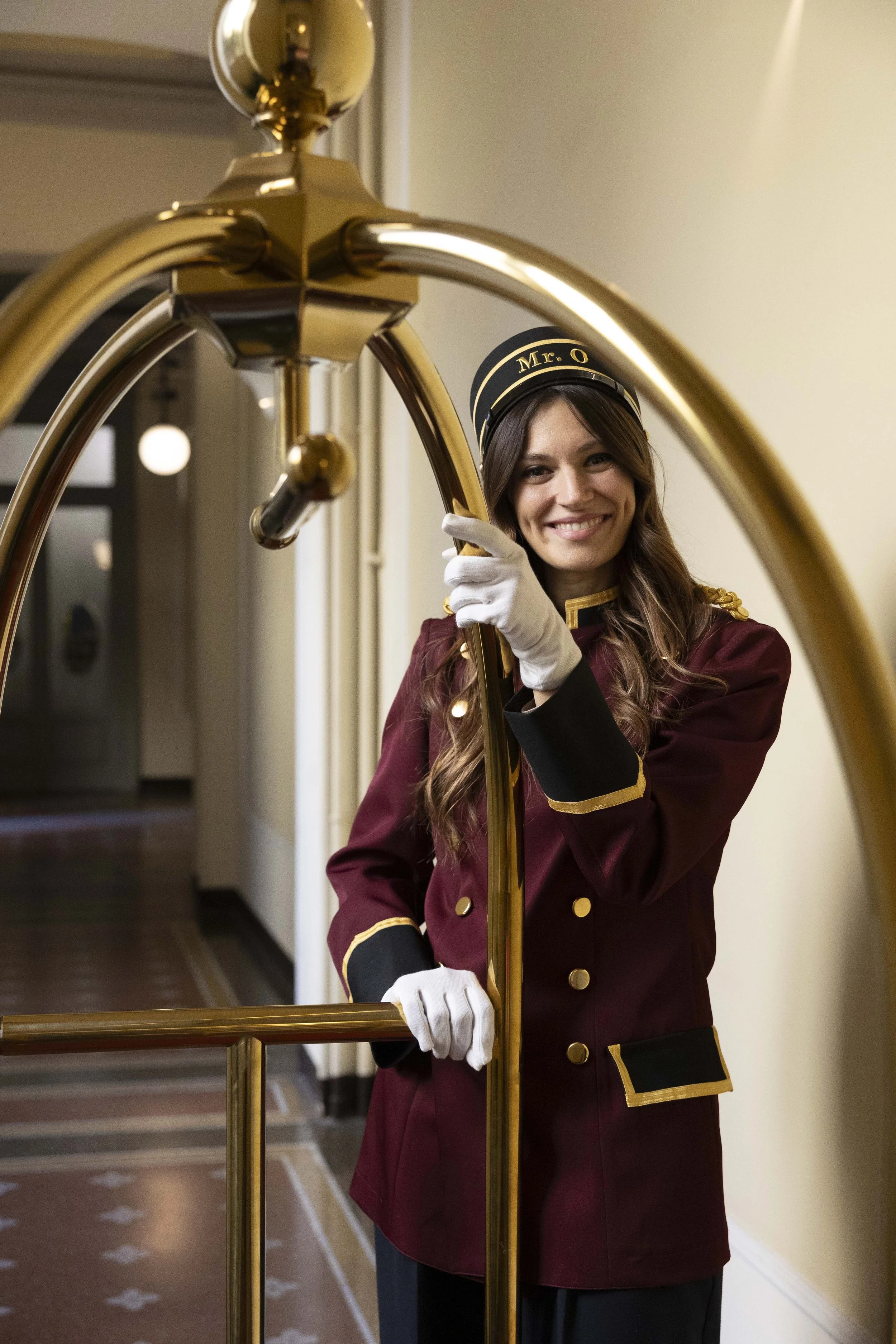
Orlando is the magazine as hotel, quite literally—we’ll explain what that means in a bit—a magazine that one can inhabit and live in, a love letter to culture in the most expansive use of the word. It’s also very Italian. Maybe because it comes from Italy. More specifically, from the mind of Antonella Dellepiane Pescetto, who is Italian. But more importantly, she is someone with exquisite taste.
And, yes, the magazine is set up as a hotel. Just go to the table of contents and you start to see how this concept works. Or visit the website, it’s obvious there, too Ad the concept structures all various—and sometime disparate—ideas that go into the making of Orlando.
And if you visit the website, again, you’ll find courses and tours and podcasts and a Spotify playlist to accompany each story in each issue as well as a boutique, and you can sense the publishing plans as well. But mostly you’ll find yourself in a charming confection of a magazine, kind of like something Wes Anderson might have come up with had he been Italian, which might work for you, or not—not everyone loves Wes Anderson, sure—but just like you know a Wes Anderson movie when you see or hear one, once you enter the hotel that is Orlando, you know. You just do. And it’s the kind of place you can get comfortable in very easily.
Arjun Basu: So before we get into the magazine itself, let’s learn a little bit about you. How did you get to this point? How did you start this project? What did you do before? Because you did a lot. I’m asking that because your bio is all over the place.
Antonella Dellepiane Pescetto: Thank you. I think maybe I’ve always been a very curious person. What has always moved me is art in its many forms. So my first true love was literature. I’ve been very shy since I was little. I used writing as my main way to express myself so I didn’t have to speak. So writing has always been the form of expression that felt most natural, and immediate to me.
I loved poetry at first. Then epic novels like Les Misérables by Victor Hugo. And I’ve also been surrounded by music. So my father is a melomaniac, an opera lover, and I used to travel with him to attend the operas as well as symphonic concerts and theater has always felt like a very homey and safe place for me.
I studied violin for 10 years and sang in the children’s choir at the La Bohème in Genoa, an experience I will treasure forever. And during our trips, my father would take me to theaters, museums, churches, and architectural sites. So that’s why I studied modern literature, then contemporary Art Management in Venice, and eventually became a sommelier.
And because I also wanted to explore that field of culture, which I deeply appreciate, and choosing a career that could include every aspect of my passions was not easy. I always felt I needed, and still feel I need, to live many lives, one as a creator, one as a bookseller, one as a sommelier, or as a writer and so on.
Eventually I moved to Milan to work on an exciting new project, a Japanese concept store. And there I contributed in various ways. I wrote, for example, the restaurant’s first wine list, which was very funny. And I helped select in the books magazine and objects we would offer in the store.
So there we hosted a popup of Indie magazines. And the idea of Orlando was born. So I tried to spend as much time as possible reading, discovering audacious layouts, or finding inspiration in fashion editorials. And I think it felt as if a whole new world was opening up in front of me page after page.
In that moment, I realized I wanted to start my own project and fill it with all my passions, none excluded, finally. I then founded my publishing company. I registered the magazine at the register of periodicals at the Court of Genoa and began attending master classes on how to launch a proper magazine.
So the one hosted by Jeremy Leslie in London, was important and I basically chose the name in homage to two literary heroes, Orlando Furioso by Ludovico Ariosto, published in the 16th century. And Orlando, of course, by Virginia Wolf. They both are nice, brave, old, profound souls and perpetually search of themselves.
Arjun Basu: And you mentioned your grandfather too on the website that he was an engineer and then he earned another degree at 80. So this whole idea of reinvention or just curiosity and learning, it’s obviously a family trait and you have carried it on.
Antonella Dellepiane Pescetto: Yeah, I think the most important thing my grandfather left us, to all his families, is that the hunger of knowledge never stops. So even if he was 80 years old he still wanted to learn something new or deep in something he already studied in the past. But I am like him in this way, so I want to learn as many things as I can. So yeah, I think it’s a family peculiarity.
Arjun Basu: So you were, so you’re at this point, you’re taking magazine classes. You want to do a magazine. You’ve come up with a name. Orlando’s a beautiful magazine, but the unique thing that makes it absolutely different from probably any magazine in the world is that you’ve set it up as a hotel.
Antonella Dellepiane Pescetto: Yeah.
Arjun Basu: And it actually works. It sounds like a gimmick. And then you look at the magazine and you’re like, okay, that actually works. And the metaphor of the hotel or the structure of the hotel allows you to do things not just in print, but on the website as well, that suddenly feel very normal. So what came first, the idea of the magazine or the idea of the hotel, or were they happening at the same time?
Antonella Dellepiane Pescetto: I wanted to give my magazine a unique perspective, and it is truly distinctive structure because there are so many beautiful magazines all around the world about arts and culture. So I wanted to make a difference. I brainstormed for a very long time with all my family and close friends about what kind of framework it could have.
And on a lazy Sunday, I remember with my husband, still without children, we were just chatting about it and the hotel idea just pop up and instantly I felt it was the perfect fit. It could host the restaurant, the library, the exhibition, all the gym and spa – even the garage with space for my love of classic cars.
I think the toughest part of creating the magazine, aside of from the economic aspect, of course, was finding the ideal graphic design, the ideal graphic studio, because I had in mind this all-concept of hotel, but I needed to have the perfect aesthetics for it, so I tried, I think, three or four different graphic designers, but although they were very good, of course, we didn’t click.
The connection finally happened with Francesca, the art director of The World of Dot Studio, Milan. And she and her collaborator, Mauro, immediately understood my vision, my concept, my visual universe. I think it is because we all share a common background: architecture.
And naturally your imaginary hotel had to be conceived, starting from architecture. And I think, thanks to them, we built this imaginary hotel together, a place where readers can find a special room for themselves, quoting Virginia Wolf, and to escape daily frenzy, slip into different rhythm, and embrace time for reflection and savor the beauty hidden in the finest details, always guided by our lobby boy, Mr. O.
Arjun Basu: I just find it conceptually charming and I don’t think it’s something I’ve ever said that about a magazine before. It’s a…
Antonella Dellepiane Pescetto: Thank you.
Arjun Basu: …It’s charming, it, and it, the magazine, as a hotel implies, I think to a reader once they get it – that it’s a place that can become a home – every good hotel tries to become a special home, first for the guests, no matter how long you stay there or how – it might be one night, it could be a week, whatever. So it takes the idea of a magazine and does something special with it. Every magazine obviously needs a structure. So do you find that this structure opens the magazine up or do you find that it gives you a sense of control in terms of what’s going in there?
Antonella Dellepiane Pescetto: I need to have control of everything because my mind is too crazy, too attracted to many different things of culture, of course. So I need for my approach, a multidisciplinary approach, I need some rules to control it. Because without that, it’s chaos. So I really love, I dunno if you know about it, you remember the OuLipo? It was a literary movement in the sixties in France. So Italo Calvino, Raymond Queneau, Georges Perec were part of it.
Yes. And they needed rules, very strict rules. They imposed themselves rules to write a poem without a vowel, a specific vowel. Or they were crazy, totally crazy, but I think it was really fascinating and it’s all about meta narrative. So Orlando, for me, is my experiment of meta narration.
For example I put meta narration as the main theme of Orlando in the sixth issue. And in the editorial I reinterpreted the One Thousand and One Nights because it’s the most meta narrative tale of everyone. So I think meta narration is, for me, very fascinating.
Arjun Basu: So are you the manager of the hotel or are you the concierge?
Antonella Dellepiane Pescetto: I think I am the, huh, nice question because we have our lobby boy, so yeah, he is very the front person. I am more, of course, behind the scenes. So maybe the manager. Yeah.
Arjun Basu: Okay, so right now you have, it’s like a two level thing. You have the publishing company, Tessiore, and you have the magazine. The website said Tessiore’s purpose is to produce large format illustrated books, art, photography, illustration to match the power of art with contemporary literature and poetry, which sounds great, but it’s so big. So is that the magazine in larger form? Like what’s the relationship between the two?
Antonella Dellepiane Pescetto: I think Orlando is the first main project. I wanted to fill with all my purposes and all my intentions and my, all my passions, of course. And the next level will be produce actual art books. So I want to go further and produce, yeah, illustration books or art books.
Arjun Basu: So it feels like a larger business or will become one. You run a creative studio, you have the Athenaeum, which is, yeah, talks. You have events, you have Wanderings. You have a boutique and it’s really such a great boutique. It’s very Italian. You even have a Spotify playlist matched to every issue. And it all feels again, because of the hotel, it would feel natural anyway – but with the hotel, it suddenly, it feels normal that you would have talks and wanderings, you’ve done that. You did that educational thing in a chocolate factory. Aesthetically, they’re all connected, but what about editorially? Like how does that all fit?
Antonella Dellepiane Pescetto: I think all these different projects are conceived to be the publishing company. For now, in our times, I think being a publisher is not as it was in the past. I think now you have to do many different actions to maintain your activity, and not just counting on the sales of the magazine, of course, because it would be impossible.
So I conceived all these different parts at different times. I did not have in mind all of this in the beginning. So now, for example, I’m working on launching a new course of the Orlando Athenaeum in wallpaper design. And we already launched last year, a course on music for media with the composer Stefano Fasce.
My grandfather was really into this. But I would love to convey this message that culture is freedom, and living in culture is wonderful. So difficult, but wonderful. And all these different aspects. So between one issue and another we did these popup stores in Milan or in Rome one time. One was inspired by Alice in Wonderland for our fourth issue. We hosted the Mad Tea Party. And the other one in Rome was inspired by One Thousand and One Nights.
It’s always important to connect with our readers also in person, and not only through paper.Also, during art fairs, we attended Mag To Mag, organized by Anna Frabotta, the guru of Italian indie magazine. And it was really important to connect with people and explain to them how you structure all of this.
Arjun Basu: So deciding to publish, there’s two decisions you made. One is there’s no advertising. And two, deciding to publish in English. Why did you decide to publish in English?
Antonella Dellepiane Pescetto: Because I need to be more international. Genoa is a very—it is not a small city because I think it’s the third or fourth one in Italy for population—but it’s very small in mindset. So I really needed to open up my perspectives and I wanted to communicate with all the world.
So also the artists I interview are from all around the world. So I needed this perspective, open perspective. And so I chose English for this and, I have no advertising because I think Orlando is my manifesto. So I didn’t want to have any interference in what I say, or maybe what I should put in an issue.
Arjun Basu: Yeah. You didn’t want that pressure from other brands. Although I imagine that there are brands, especially in Italy, which has a lot of brands that are very compatible with Orlando, I imagine that at a certain point they’re going to be, maybe they already have started calling you and saying, “we would like to do something with you.” And yet Orlando remains ad free. Have you had to say no to them or have you had discussions or…
Antonella Dellepiane Pescetto: I had discussions with them and I think now that I have made already six issues. Orlando is Orlando. Its people know how we perceive things, how we want to communicate our culture and our point of view. Even if in future we are going to have ads, it will not change anything in our concept. It will be just ad; a page for a nice brand.
Maybe we are going to share nice aesthetics or whatever. I would also love to collaborate with the fashion brands or other partners, but maybe to do a specific project for them. Not Orlando. I think I would prefer to collaborate with fashion or hotels also, because I am looking in that direction, of course for the future, but for other experiments, other projects, yes.
Arjun Basu: I understand. It would be like a really nice hotel suddenly opening up to a chain restaurant or something. Or even a good chain restaurant, but just someone else’s restaurant as opposed to your own. And it would have to be absolutely perfect without it. I was thinking that this magazine feels like what Wes Anderson would do if he were Italian.
Antonella Dellepiane Pescetto: Yeah. I know!
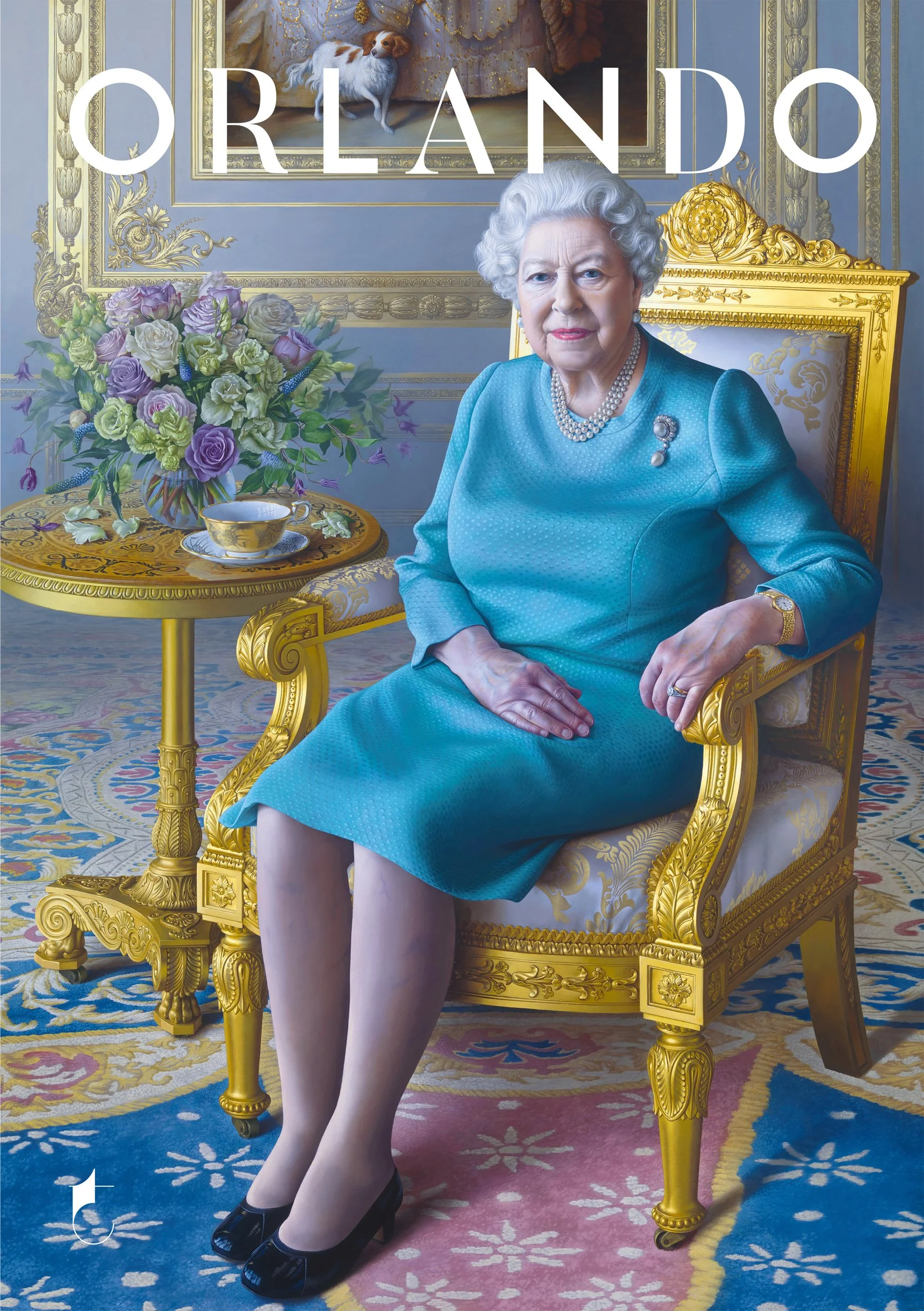
Arjun Basu: It’s a very universal magazine, but it’s also very Italian. Like it’s distinctly an Italian magazine, but just thinking about your first cover, you had Queen Elizabeth on it and, and, what a statement, this coming from this magazine called Orlando from Italy in English, and Queen Elizabeth’s on the cover. What was this reaction to that first issue? You’re a small magazine, so I won’t say it exploded and touched everything, but people who noticed these things, that was quite a statement and it was big and thick and overflowing with art. What was the reaction to that first one?
Antonella Dellepiane Pescetto: I think in Italy, but internationally it was a good reaction because some told me that they thought it was English, not Italian, because of the style or something in the graphics. I think the Queen was a right choice because the painter who did this last picture of the Queen is a phenomenal artist, Spanish-British, and I thought it was right, the right statement. Really instinctive.
So I’m not focused on what could sell more. I know that cover is right because I feel it, so not very the commercial side, but my instinct with my perception said it was the right choice. And I think the Italian newspapers noticed this and Vanity Fair Italia straightaway wrote to me and to do an article about Orlando. So it was a nice reception.
Arjun Basu: So how does the magazine work between you? Because you’re obviously very involved. All magazines are collaborations, we all know that. But this one, you came into this with such an idea and then you have an editor in chief who runs the magazine, and then you have this art director who’s obviously very important. How does that whole thing work?
Antonella Dellepiane Pescetto: I had the fortune to have a Flavia, who is the editor in chief, who totally embraced my project because I’m not a registered member of a journalist, so I could not have been the editor in chief of my own project. But she totally, because of the idea, the concept, and she loved it immediately.
She trusts me a lot. So basically I proposed to her everything on my mind and we, together, we set the editorial plan. We commission all the articles to the collaborators and the freelancers. So I think, yeah, Flavia is the mind who helped me to realize my dream. And then together we work with the other collaborators.
Arjun Basu: So she’s creating the structure in many ways. There’s this bigger structure, obviously, of the rooms, but she’s taking your ideas and your vision and actually applying a certain amount of structure to them.
Antonella Dellepiane Pescetto:Yeah. Yes.
Arjun Basu: Because it just feels you’re allowing your imagination to do a lot of things. At some point someone has to say okay, we have to make a magazine now.
Antonella Dellepiane Pescetto: Yeah. Yeah. Yeah. No I think I am, I’m becoming a bit better with all the chaos I have in my mind. So I, yeah, I’m trying.
Arjun Basu: So this magazine is a—it’s a complete worldview. You can see it from, especially, one is one, but then you start seeing them and I’ve seen all of them now and it’s really quite consistent, which is a strange word to use for this magazine. And I say this because I was trying to figure out what Orlando was as a magazine. It’s obviously a cultural magazine, that’s obvious. But it almost feels like a statement of intent or worldview, except the view is not political, but it’s aesthetic. It’s an aesthetic worldview and it’s an openness to, it’s almost spiritual, I would say, aesthetically spiritual or culturally spiritual. And on top of all that, it’s—even though it’s not showcasing Italy—it is a showcase, I think, of a very particular worldview that is universal. Look, the world has taken a lot from Italy, Italy’s given a lot to the world. We consider it that way. And then on a personal level, it’s a showcase of your tastes, which are vast. Did I get it right?
Antonella Dellepiane Pescetto: Yeah, completely. I could not say more better than you did, but thank you. I think my aesthetics tries to be spiritual, as you said, because the beauty of little things is how you can capture the moment. The time is fleeting and the beauty is instant. And I try to capture it with my single issue of Orlando and, you can see the spiritual part of it. Yes. But thank you for the beautiful words. But you also appreciate the literary voyage, I remember.
Arjun Basu: Yeah. I’m a writer and I’ve made magazines too, so I just know how difficult it is. But also, trying to convey, as an editor-in-chief, what’s in your head to your team to get it right. And I know that and when I was doing a monthly, it was some months you didn’t get it, and some months you did. And I think, the advantage of not doing a monthly or a weekly or whatever—and more and more magazines are finding this out—is that you have the time to get it right. So you do four issues a year. You do two issues a year. Two. You, you have the opportunity to actually get your vision on paper.
Antonella Dellepiane Pescetto: Yeah.
Arjun Basu: Or more of an opportunity to get your vision on paper.
Antonella Dellepiane Pescetto: Yeah, exactly. And I think my true manifesto, as you were saying before, are really my editorials. And these fashion editorials become, also, short art movies. So we really pay attention to the smallest detail.
Arjun Basu: So who are your readers?
Antonella Dellepiane Pescetto:Curious people, fascinated by, I think, everyone was in love with beauty and culture. So graphic designers, illustrators, photographers—very creative people. So we are a strong community, I think.
Arjun Basu: And where are they?
Antonella Dellepiane Pescetto: All over the world. Yeah. Not only from Italy.
Arjun Basu: You don’t over index in Italy, you’re international. No. What have you learned about making magazines that you really had no idea about before?
Antonella Dellepiane Pescetto: I think the boring part, the registering the tribunal, all these things, but also to the funnest part, so to, to play with the other collaborators to try to convey all the same message, but through different minds. I have my approach, the graphic designers, he’s and the other, the freelance writers, another ones. So it’s exciting to exchange all these different point of view, but to convey only the same message.
Arjun Basu: So what’s next? Orlando, just given its structure, is going to grow in, I think, unique ways. Your publishing company will grow. What’s the next step?
Antonella Dellepiane Pescetto: At the moment, I am working on developing collaboration with luxury hospitality, as I mentioned before, and fashion brands because I feel that my multidisciplinary vision aligns well with these worlds, and because we share the same attention to detail and sense of care. And I intend to return to print, to print an issue soon. And I would also love to start publishing art books. So these are the steps.
Arjun Basu: What’s your favorite hotel?
Antonella Dellepiane Pescetto: Difficult
Arjun Basu: I had to ask.
Antonella Dellepiane Pescetto: Yeah, you’re right. You’re totally right. So Rosewood it’s great. And I went in Venice, but I can’t remember the name. I will try to remember the name, but it was incredible [The Hotel is the Nolinski Venezia –ed]. Close to Piazza San Marco. Oh gosh. I don’t remember the name, but I will tell you they had both Rosewood and this one. So, attention to every detail. The furniture, the everything. Yeah.
Arjun Basu: And aesthetically, what is your favorite thing? What do you think is the most beautiful thing in the world?
Antonella Dellepiane Pescetto: Aesthetically.
Arjun Basu: Yeah.
Antonella Dellepiane Pescetto: I think theaters would be my first reply. So the classic architecture of theaters. We have in Italy, La Scala in Milan, or Teatro San Carlo in Naples. So I think these two theaters are maybe some of the most beautiful architecture in the world, yes.
Arjun Basu: That was a satisfying answer. It was an unfair question and you answered it very well.
Antonella Dellepiane Pescetto: Yeah, because it’s very difficult for me. Of course.
Arjun Basu: I know. It’s an impossible question actually. And tomorrow you might answer it completely differently.
Antonella Dellepiane Pescetto: Of course.
Arjun Basu: We always end these with a question about your favorite magazines. So what are your three, three favorite magazines right now?
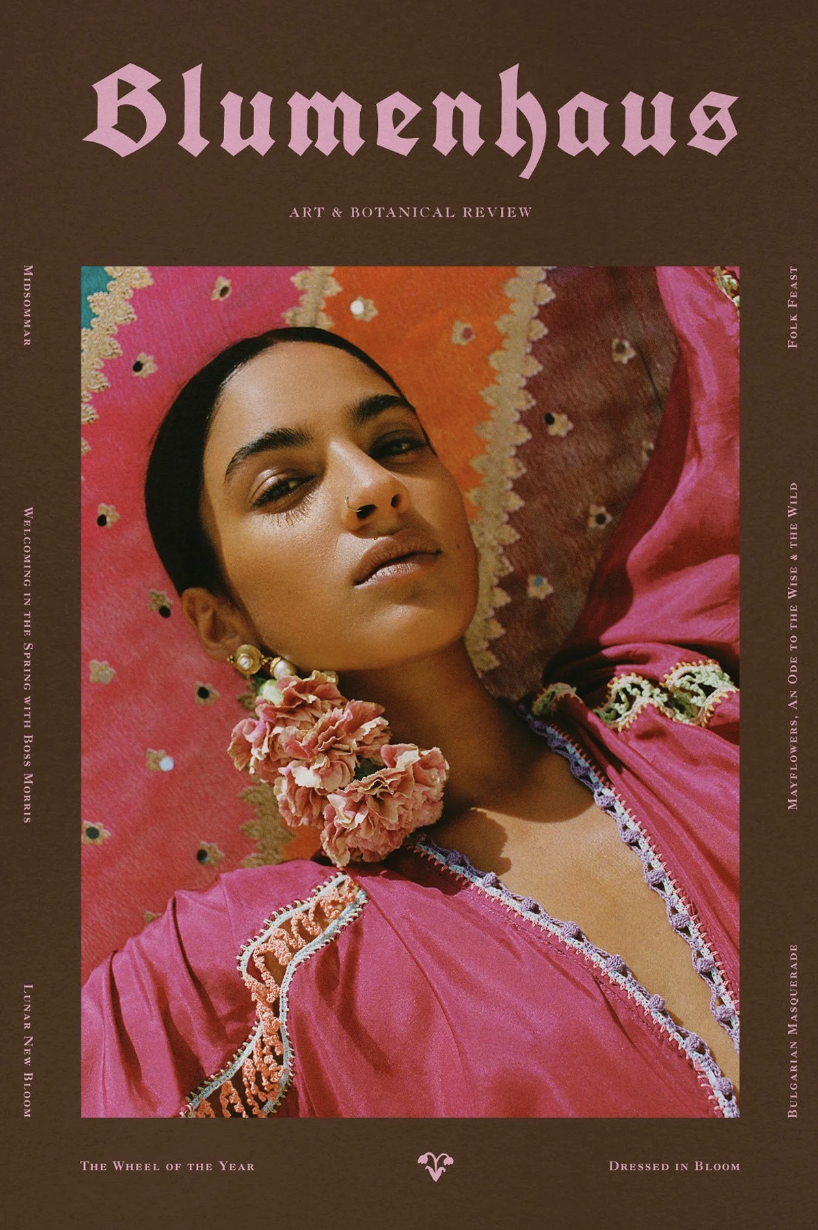
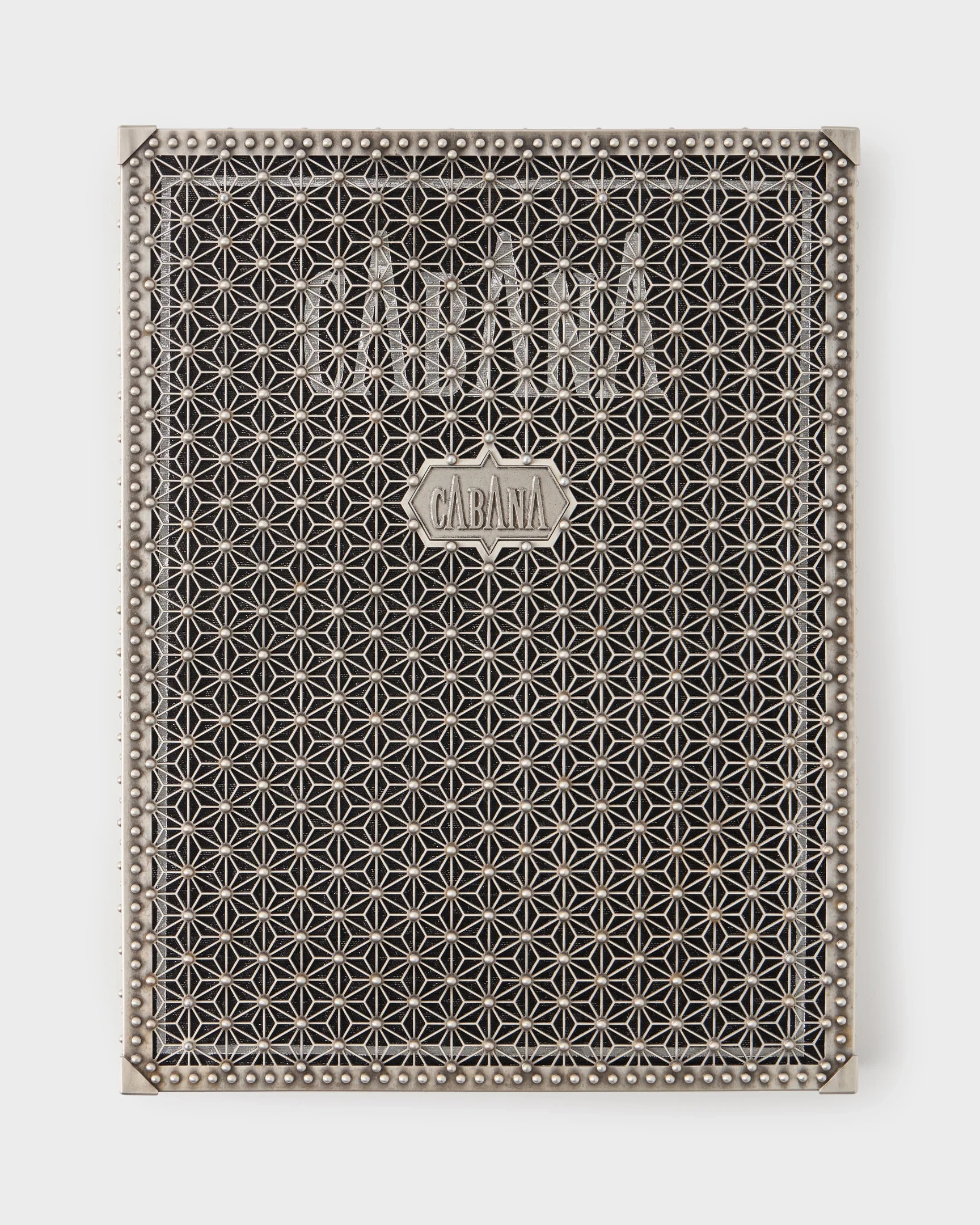
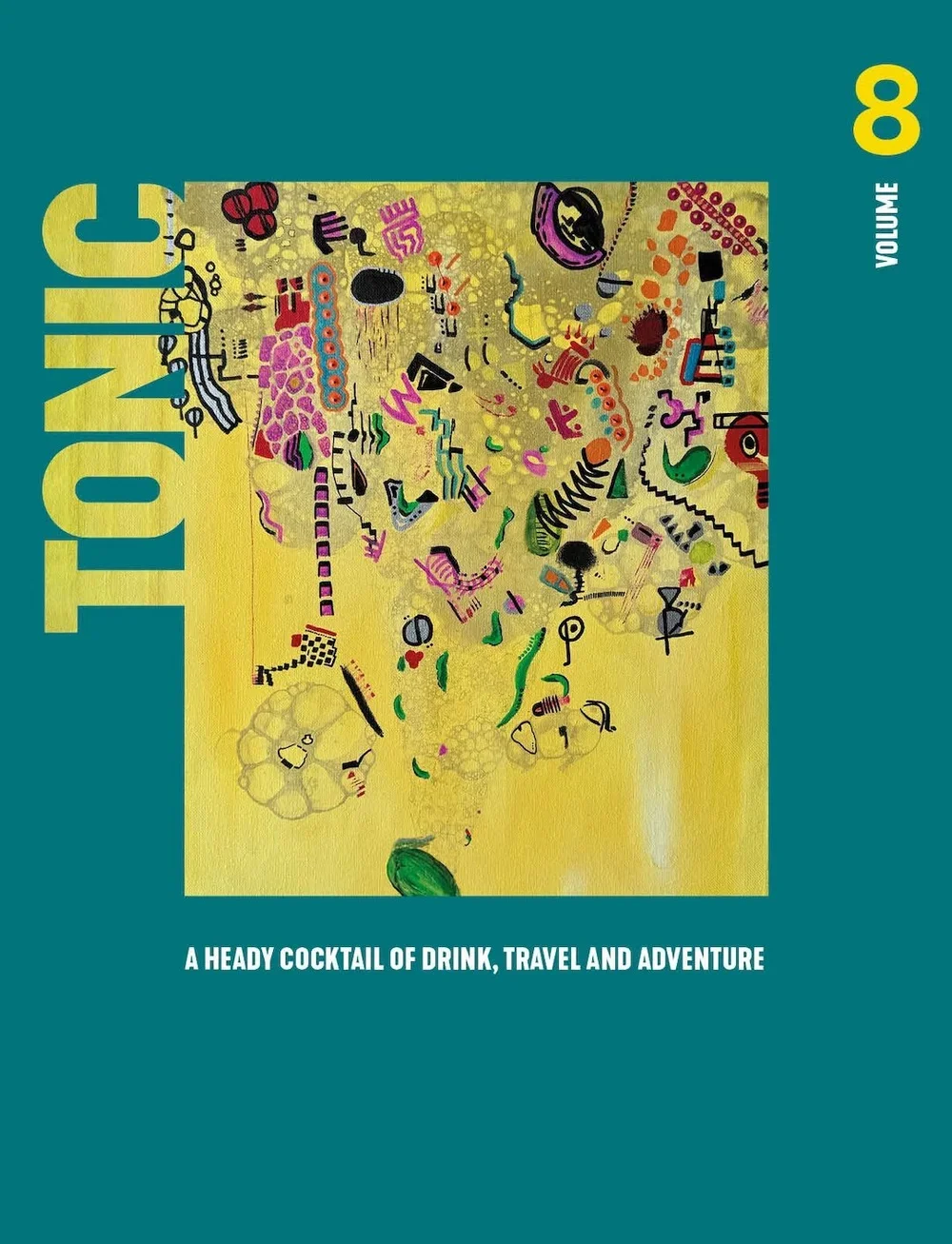
Antonella Dellepiane Pescetto: I love Bluemenaus magazines. They are French and they have a really nice aesthetic, very refined. Cabana, of course. I love it for the interiors. And The Tonic magazine. I love the founders because we always share the desk in fairs and I love to chat with them.
Arjun Basu: Great. Thank you Antonella. This has been a great conversation.
Antonella Dellepiane Pescetto: Thank you, Arjun. Thank you so much.
Antonella Dellepiane Pescetto: Three Things
Click images to see more.
More from The Full-Bleed Podcast