
The View From the Window Seat
A conversation with Direction of Travel founder and editor Christian Nolle. Interview by Arjun Basu
—
THIS EPISODE IS MADE POSSIBLE BY OUR FRIENDS AT FREEPORT PRESS.

Despite its name, Direction of Travel is not a travel magazine. Sure, it’s a celebration of a certain kind of travel, but this is not a publication that takes you somewhere. Unless you think of Air World as a destination. Which I do.
Founder Christian Nolle is an AvGeek. Which is not an insult. More an acknowledgement of a state of mind. Christian loves all things aviation. And mostly he loves how it looks and feels and, perhaps more importantly, how it looked and felt.
Direction of Travel is a loving homage to route maps, in-flight entertainment, ticket offices, and airports. It is a magazine about the culture of flight and the aesthetics one finds in Air World. And for anyone with even the slightest interest in flight, it is a glorious—and loving—celebration of that world.
Regular listeners of this podcast may have noticed that I’ve been speaking to quite a few people from travel magazines recently, and there are reasons for that. One could argue that no other type of magazine has had to weather such a variety of competition from the digital space. And travel itself is subject to forces that have nothing to do with travel itself. But it remains aspirational even to those lucky enough to travel often.
So whether you’re a frequent flying business person, or someone who might fly once in a while, the magic of lift off—and touch down—remains.
Arjun Basu: The background to this is that we had a bit of a flight delay and that joke will get funnier as we talk. So tell me about, before we talk about the magazine itself, tell me how you got to the point where you said, I’d like to make a magazine about flying.
Christian Nolle: I’ll try to condense it down a little bit. So my background is photography, but I spent the last sort of 25 years building things online. So I’ve been, basically, I have a digital design agency, we build websites and at times that can feel soul destroying because you spend years building something and then somebody pulls a plug and it’s just gone. There’s no history to these things.
And then parallel to all that, I accidentally started collecting maps, airline maps. And I was purely just by accident. I saw these beautiful things and I thought, Hey, these look great. And obviously eBay is amazing for that stuff. And I just started buying up bits and pieces that I really enjoyed. And that slowly accumulated, but now, never like thinking, Oh, I’m going to do anything with it. It was more like I’ve always been a little bit of a collector over the years. They just add on and suddenly you’re looking at these big piles of stuff and going, Ah! What can I do with this?
And I love flying. I’m what you would call an “AvGeek,” all the way through—aviation, flying is my sort of passion. Some people might say it’s an obsession. And then it came to a point when I was thinking I got all this material and I felt like there was nothing out there, there’s no—the print world, a funny place, there’s lots of niche publications.
But there wasn’t anything ever done in that genre. I thought, There were magazines about the news of aviation, or about the heritage of aviation, or about people’s small planes, that kind of thing. But there wasn’t anything that sort of talked about the culture and the history, visual history.
Most of that stuff seemed to appear in big coffee table books. And so I thought, there might be a little bit of a gap there. And I like magazines. I really subscribe to tons, so I would like to contribute something back into the world.
Arjun Basu: Aviation is such a visual medium and you know where it comes from. And we’re going to talk about the past a little later, but how was the magazine assembled? A lot of it is probably material that you have collected or bought on eBay, but there’s also a lot of archival. Not all of it can come from you. Can it?
Christian Nolle: You would be surprised. I have quite an extensive collection. I’ve been in touch with other people as well. I spent quite a lot of time at the British Airways Speedbird Centre, it’s called. So at the headquarters at Heathrow, which is—it’ll be demolished when the third runway ever goes ahead, it’s quite ironic—they have this sort of building within a building basically, which, essentially, their sort of enormous archive. And it’s this amazing place of just like aircraft models and the people who work there all they’ve been with the airline and now they’re just volunteers to look after the archive.
So I had spent quite a lot of time going through all that stuff and some of it has been used in previous volumes. So that’s one of them. And then, more and more recently, I’ve also just opened up to getting contributors to come on board.
Magazine work is hard and it’s quite—it’s a funny world because you make them, and then you put ’em into the world and you never really know what people are going to make of them. You get a little bit of feedback, but when you do it by yourself, you just don’t know what works and what doesn’t work, there’s no way of measuring it.
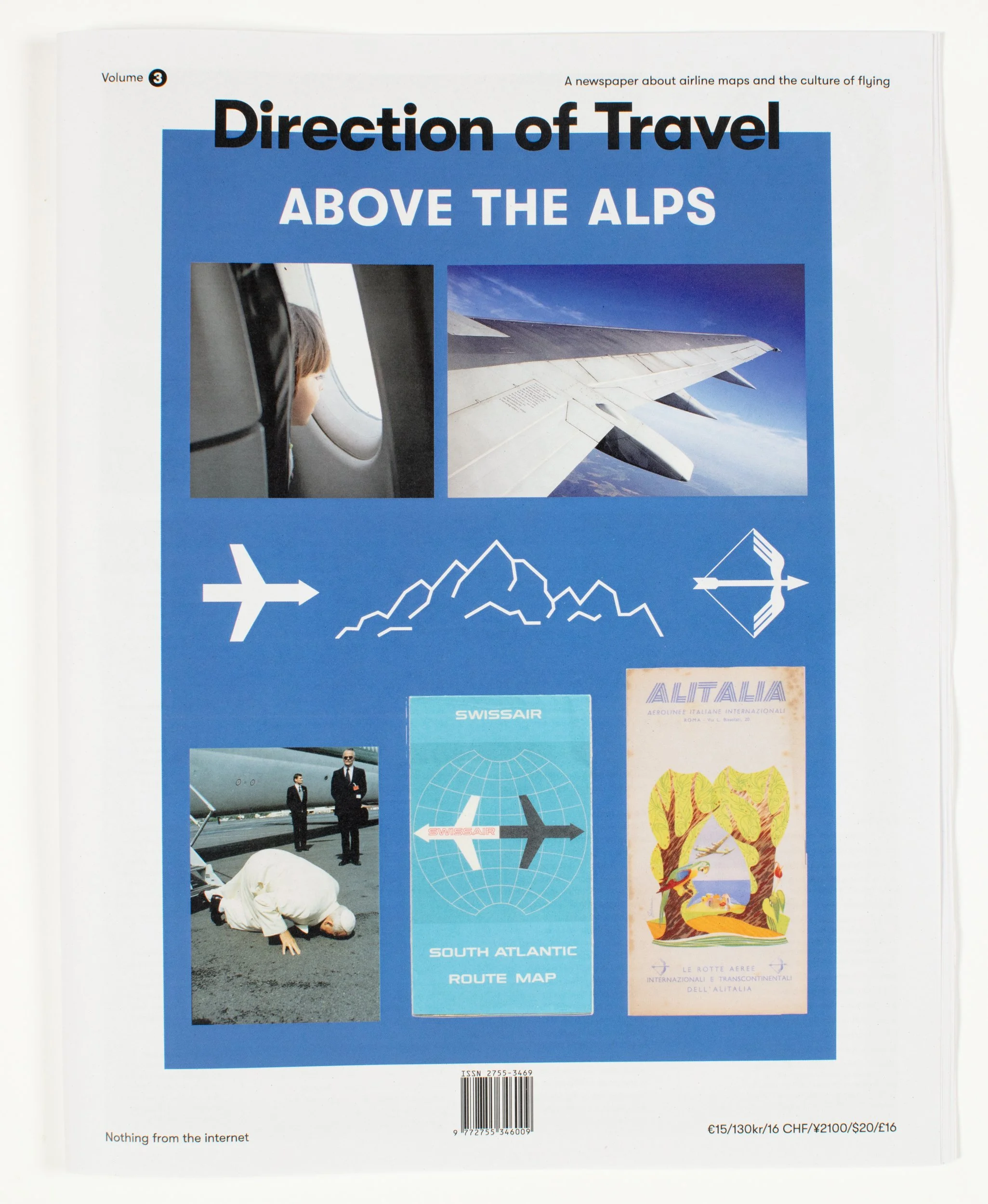
Arjun Basu: Each of your issues is themed. You had the issue on the British Airways and then you had the issue on, you called it Over the Alps, but it was really about Swiss. And you had the great issue on aviation in Africa. So that’s what I’m wondering: Do you just all of a sudden notice like, oh, I have all these beautiful maps of Africa, I should do an issue? Or is it driven by interest as opposed to material on hand.
Christian Nolle: I think it’s a real mix between interest and material because the two have to work together, and I spend a lot of time thinking what story, what can I add to this in a way that nobody else is doing because you want to put something out, you don’t want to do anything it’s already oversubscribed or saturated. You want to add something to the conversation that feels new or new angle or interesting in a way that hasn’t been done before. So often it’s a mixture between the two. And it’s also hey, that’s a great story.
Like I spent, for instance, I’ve spent years being interested in aircraft stowaways. So I built a website. Years and years ago I made this interactive map online. So these are people who’ve been hiding inside the wheel bay of an aircraft and who’ve either survived or fallen out or just amazing things…
Arjun Basu: Some of them made it…
Christian Nolle: Yeah! The most extraordinary stories. Also because there’s stories of individuals when you normally hear about people trying to make it into a country, it’s like, there's lots more here. It’s always individuals. So there’s two men on them and there’s some interesting stories there about these incredible people who’ve survived. And also obviously, often, there’s been cases where one has survived and one has died.
So I spent a lot of time on that and then I thought, huh, a lot of these people came from Africa flying into Europe. So I thought that would be a natural fit for, let’s say, the Africa issue. So that’s how it works. It’s like these long-running side products that somehow I think maybe they can slide into the magazine.
Because magazines for me, they’re like a little container of ideas. You can work out what can I put in here? What works? So does this work in a sort of overall scheme of things? Or what do I need, what do I need to go out and get, to make it work as a printed object.
Arjun Basu: The maps are gorgeous. As someone who loves maps and Air World in general, I could spend hours and hours on the maps and the old stuff, the vintage stuff. It’s just very rich. So what can we learn from the past, in terms of even what aviation has meant? Because it’s obviously a different industry now, even though it still does the same thing, it still takes you from one place to another. But it was different in the past.
Christian Nolle: It was an experience. I suppose the whole thing from the get-go was that the funny thing is: it’s still an experience. I love when I get into a plane now. I’m really excited about it. I want to sit in the window. That excitement, never really going to go away.
Even after X amount of flights you go, I’m still going to sit in the window. because you never know what you’re going to see. And I love watching over the airfield and having that visceral experience on takeoff and landing. For me that is the real nitty gritty, that feeling in your body.
But in the past, obviously, there was more of an occasion to it. Now we take it for granted. We just jump on a flight to go whenever we want. It’s so easy and also so accessible, and it’s also much, much cheaper than it used to be. I think that’s a very big thing too. And I’ve been thinking about that a lot and people keep going, “Oh, it was the ‘golden age of aviation,’” like to talk about that. But the golden age was like, you had to have a goal to do it. It was expensive.
It was really expensive and only certain people could do it. You had to be within reach of an airline, ticket office, go there, buy your ticket, go to the airport. It’s completely outside most people’s reach. Now it’s different obviously, but I always think about trying: How can we make people appreciate, a little bit more, or at least like it’s a really special thing that we get to go flying? And I suppose my magazine in many ways is a lovely answer to that.
I just want to celebrate it. I know and I spend a lot of time thinking about the environmental aspect as well, but, it’s an extraordinary thing, and I think that’s the sort of starting point for anything that I’m doing is trying to just celebrate that. And it’s so visually rich…
Arjun Basu: I think the only real difference now is that it used to be, almost universally, aviation was projection of power or soft power.
Christian Nolle: Yeah. Yeah.
Arjun Basu: And even modernity. And now it’s not. Some countries still use it as that, as mean. I can think of the Gulf, all the gulf airlines.
Christian Nolle: Yeah.
Arjun Basu: It’s definitely that. But it’s not that for most airlines. It’s that part has been lost, and I think that’s part of the reason why it’s become such a mercantile affair.
Christian Nolle: Yeah, it’s interesting because if you think back on how PanAm was, for instance, PanAm was such a soft power tool. The whole, the early flights working with Aeroflot, getting in the flight between New York and Moscow, that was massive power, soft power, skill politics at play, and I’ve always been fascinated by one of the sort of one of my side products that I keep these sort of rabbit holes that go through, it’s the airline ticket offices.
It’s one of my sort of recent interests, how they were like these networks on the ground and how they provided a little bit of, again, as soft power as well. And often these offices on the ground would also double as mini embassies. So SwissAir, overseas, would represent Switzerland, obviously, same with Lufthansa, and so forth. They weren’t just selling airline tickets, they were selling an ideal dream…
Arjun Basu: Well with brand … yeah. Airlines. Airlines were so brand aware when they started and then they went through a period, especially in North America, where they weren’t aware of their brand at all. They were just getting people from point A to point B. And now it’s come back a little. I think the last, maybe, American airline that really cared about its brand was Braniff. And of course they went outta business. But I think that’s part of it, isn’t that it? That’s one of the things we lost. Just the architecture—the photos of the airline ticket offices—they’re spectacular buildings, and that’s just architecture-as-brand. But there’s a national element to it as well, obviously.
Christian Nolle: Yeah. And now these airlines, there’s so few of them are national airlines anymore. Like now they’re just privatized or they’re part of giant networks. Scandinavia Airlines still represents Scandinavia. And they want to take ownership of that again, even though they’re technically not owned by the state. You get on board, it’s a Scandinavian experience. Or you get on Finn Air, it’s a Finnish experience and I think there’s a wonderful thing about that.
There’s still that sort of, obviously if you get on Ryanair, it’s a Ryanair experience, or it’s an Easy Jet experience. It’s just a pan-European setup. It’s very different. But the national airlines—or the previous national, they’re now privatized—they still have that.
Arjun Basu: I know BA has just done a rebrand and it’s actually pretty nice, but it just feels like their attention went somewhere else because, as you said, travel got democratized and it became just another way to see the world in many ways. But I like you, I hate the airport, but I love getting on the plane.
Christian Nolle: Yeah. Yeah, exactly. The airport experience has become, most of the time, completely horrendous. But once you get on the plane, you sit down, you go, Okay, I’m in my seat now. It’s all right. I’m in my natural home.
I’ve spent a lot of time photographing around airports as well, and that's another thing as well, but also very well aware that you could just be stopped any minute, even though you are walking around fully visible because events have happened that have led to that kind of alertness.
Arjun Basu: Yeah. And I think, I mean reading through your magazines, I, and with my own past, I mean, I used to edit inflight magazines, and so I just think about everything that’s gone wrong. And one of them is: what’s happened to inflight magazines? because the relationship between airlines and print—and I think you make this point in one of the issues—is actually a long history, and that even pilots still had until very recently, and maybe some of them still do, they had printers in the cockpit. And so the relationship between aviation and print is actually quite deep. And part of it was the inflight magazine. Now not very many airlines do it, and when they do it they don’t do it very well. And I think that’s a part of the diminishment, at least to me. And I’m probably sensitive to this because I was in the field, but it just feels like another part of the brand experience that has been lost.
Christian Nolle: And then the excuses they made. I remember like Singapore Airlines were saying, “Oh, we are going to not do a magazine anymore because we’re going to save weight, so we are going to spend less fuel.” The weight issue.
Arjun Basu: The weight issue, I remember when I was working, when I was doing Air Canada’s magazine, there was a CEO at one point who said who could calculate the weight based on how many pages we told him we were printing. The problem he had was that our magazine was so full of ads that we were producing some monster issues and, so when the fuel was cheap, it wasn’t an issue, but when it went up, it was an issue. When I was doing the magazine, it was making money for everyone. That’s the thing.
Christian Nolle: And also there’s you’ve got a very captive audience, right? And obviously it’s changing now when more airlines are getting internet on board. Before that you had an incredibly captive audience there, sitting there with something. Not everybody wants to look at Google on a screen the whole time. I might want to read something. It’s a great space for reading anyway. I always felt that.
And obviously some airlines have been better at that. There’s still some that do some interesting bits and pieces in print. But it tends now to be like, I like, I think the British Airways magazine is just available in their lounges now. So not on board anymore. And it’s only if you are flying business or have access to a lounge do you get a copy of it. And it’s a real shame. And the sort of aviation content, so to speak, in those magazines is like at the very end, that’s a little map, which is so dense with lines. There’s a little bit about their fleet and that’s it.
But then when an airline turns a hundred years old, Lufthansa has just published a book celebrating that. They’re there right away. They go like, how do we mark this occasion? We’re going to publish a book. Of course we’re going to do a book. Because it’s a permanent marker in time. It’s not a website, it’s not anything like that. It’s a book. You can take it home, put it on your shelf, take it out in 20 years time and go look at this. And that’s beautiful. I love that.
Arjun Basu: So on the website you have a bunch of things. You have, as we discussed, the airline ticket offices, and they’re really, they’re just gorgeous. I would suggest people go to the site. You have this whole thing on Heathrow’s third runway, which is ongoing and has been going on forever. I think it’s been talked about since I’ve been interested in the subject, in, since I’ve been in the industry and it’s still being discussed. Although now, I think, it’s going to happen, but it’s a fascinating thing. I played around with it earlier yesterday. The polar radar thing. These are, really, like Av Geekery at its highest level.
Christian Nolle: Yeah, it’s part of me. I have these itches to scratch and so I come up, I make these projects thinking nobody else is doing it, so I’m going to do it. And that’s how it usually starts. Like thinking the most recent one was the ticket office one.
But before that I did one, which was basically just the thirdrunway.com, which is basically a website that just tells Londoners: Am I going to be impacted by it or not? And that came out of another project we did years ago called Planes Over London, which basically is a website that predicts whether planes will fly over London or not based on the wind direction.
And people use it now. It was funny because I did it for myself because I live right under the flight path of Heathrow and I wanted to know why there are no planes today? So it was just, I did it for myself. But there’s a whole audience now. It’s got its own kind of people who use it every day because obviously they want to know whether it be planes over them so they don’t wake up in the morning, or they don’t get woken up by it. So they want to predict it in terms of their quality of life.
Basically, my world is just a world of flying and these are just some of the projects I do in my spare time when I have a little bit of extra time. The Polar Radar one was like you have Flight Radar 24, but every time you look at the planes going up north or down south, they go completely mad. So the lines of the flight path don’t work anymore because of these flight radar applications, they use a Mercator Projection and they can’t deal with these polar flights. They’re just not made for it. So I was like, Hey, I want to know about all these flights that go over the poles because that’s interesting.
Because that’s what they used to do in the seventies, right before the opening of the Russian airspace. And now it’s closed again. So now the airlines do it again. They go over the pole, they go different routes. They don’t stop in Anchorage anymore, anything like that. But so that mix between what’s happening right now, what’s happened in the past, and then put a bit of technology there in the middle to tell some kind of new story.
Arjun Basu: “Nothing from the internet.” It’s right there on the cover.
Christian Nolle: Yeah. I suppose the point I still hold myself to this, that the material in the magazine came from my archive. That was the kind of starting point. That was the idea. From that I wanted to do something that wasn’t born out of an Instagram feed or anything like that, so I wanted the material to originate in the real world.
And so that’s the starting point for it. Because it’s just, obviously, now you get stuff from archives online, so you could argue that there’s some stuff from the internet. You could argue that. But the point was that I was, as much as possible, tried to bring something original into the magazine that hadn’t been published before, that hadn’t been produced before, it hadn’t been eaten up by AI. This was a thing that was a piece of paper, of a map, in my archive that I would just photograph and then reproduce.
Arjun Basu: Is Direction of Travel about nostalgia or is it a comment on the present?
Christian Nolle: The stuff I have by its very nature, it’s nostalgic. These old maps are designed at a time when people spent effort and money and time to design them. They were designed by the best. That was effort put into these things.
I would say it’s something I’m very aware of and I’m also trying not to overdose on it, if that makes sense, because I think there’s a danger of going down that road too much. And I have done that and I’m always kind, trying to pull it back a little bit by doing something.
The next issue I’m working on is going in a different direction where we’re trying not to do less of that and more contemporary photography. But again, there will still be some nice map, because I think it’s a nice way of bringing things together. And it’s also people. It's also evolving. It’s an evolving language as well, like visual language, of how these airlines talk about themselves. But they do love celebrating themselves as well. They really do.
But they do it when it fits them. Generally they’re too busy basically trying to survive because the airline business is brutal. I suppose I’m trying to find that balance between showing some new things but still reflect on the past all the time. And also think about what we can learn from it as well. Which is why I was so fascinated with the whole polar flight thing, again, this is incredible; the fact that back in the day people would give out certificates when they crossed the North Pole.
Now Finn Air does it. And I was like, great. So on Polar Radar you can actually go in and you can find the flight you were on and you can write your name and it will generate a PDF file of a certificate you can print out and put on your wall with any airline across the polar region. So again, I was just trying to take that, how do we make it contemporary, and how do we make it fun?
Print is so good at that, it gives you that space to tell those stories. I feel my competition in many ways it’s not print, but it might be YouTube, those sort of vlog videos of people traveling around the world.
That’s great. I watch them of course, but it’s like I do something else in that space. Just celebrates that stuff, doesn’t talk about the news, doesn’t talk too much. But also I had done a fair bit of, like, artist projects in there. Had an American photographer called David Rothenberg who photographed people landing in New York and he managed to capture them, basically, just as people were looking out; we have these moments when he’s photographing them, looking out the window with their smartphone, this little brief moment where they’re like both looking at each and not looking at each other, but they’re capturing each other kind of thing. So I quite like that.
That’s one of the things that I’m fascinated with, like how artists have engaged with them, engaged with flying in general, because it’s such a rich subject. And that’s one of the sort of things that I’m exploring in the next one.
Arjun Basu: I’m just thinking about the challenges about this project. Maybe about all print projects.
Christian Nolle: I think it comes down to: How can I make it work financially? I think that’s another thing to consider because these things take up so much time and print is still expensive. And its distribution is complicated. Just making it, that step number one, but you gotta make sure it gets into people’s hands.
I’m always wanting to do some kind of collaboration with an airline itself or with some kind of thing. That’ll be really, that’ll be amazing. I had not had the opportunity yet. But some kind of collaboration where I come in and we do some print product together or something like that, which obviously can happen where I feel like I can add some value as well. There’s some interesting things we could do which is not just video, which seems to be the thing that they do most these days.
It’d be nice to do something in print. I suppose things sometimes tend to start online and then they migrate into a print format. But the print format is usually quite different from the online format, or sometimes something starts on the page and it migrates from the page onto the screen.
So I see the two kind of working together in a sort of little ecosystem of just geekiness, I suppose you could call it, but you’re just thinking like, how can they learn from each other and how can they feed off each other, because I exist in both those universes.
I don’t exist purely in print or purely online. I cross over and I feel like it’s quite a nice position to sit in terms of trying to create products that can touch different people in different ways and different mediums.
Arjun Basu: What’s your favorite airline livery?
Christian Nolle: My favorite airline brand is probably the old Eva Air livery. I really like that one. The old one, not the new one. The old one with a bit of orange in as well. I thought that was beautiful.
I’m also quite a big fan of the TAAG Angola livery as well. I think that’s really lovely. Not the new one again, but the one they had previously. I quite like those. I think they’re quite beautiful with their cheat lines, the sort of old schoolness to it. There’s a richness to it.
Arjun Basu: What about airports?
Christian Nolle: It’s gotta be Heathrow just because it’s an utter mess, but also spectacular at the same time. I have this sort of ongoing project where twice a year I walk around the airport with my camera as a way of exploring the area and seeing what’s changed and taking some photographs of some planes.
And it’s obviously evolving bit by bit. Heathrow never stands still, even though they have no third runway, there’s still stuff going on. Things are changing all the time. Much more subtle, so yeah, that would probably be my favorite. It’s just interesting because it’s like this sort of melting pot of politics and transport links and what’s happening in the UK as well in terms of our position on the global stage and so forth.
Arjun Basu: What’s your favorite airline?
Christian Nolle: Probably be something like Singapore Airlines. It’s been a while, but that’s what I’ll probably say. A slightly cliched answer. I’ll be sitting down in the back and it’s just, it’s a really comfortable ride, and the service is great and you’re going through Singapore, which is always great.
Arjun Basu: What are three magazines you would recommend right now?
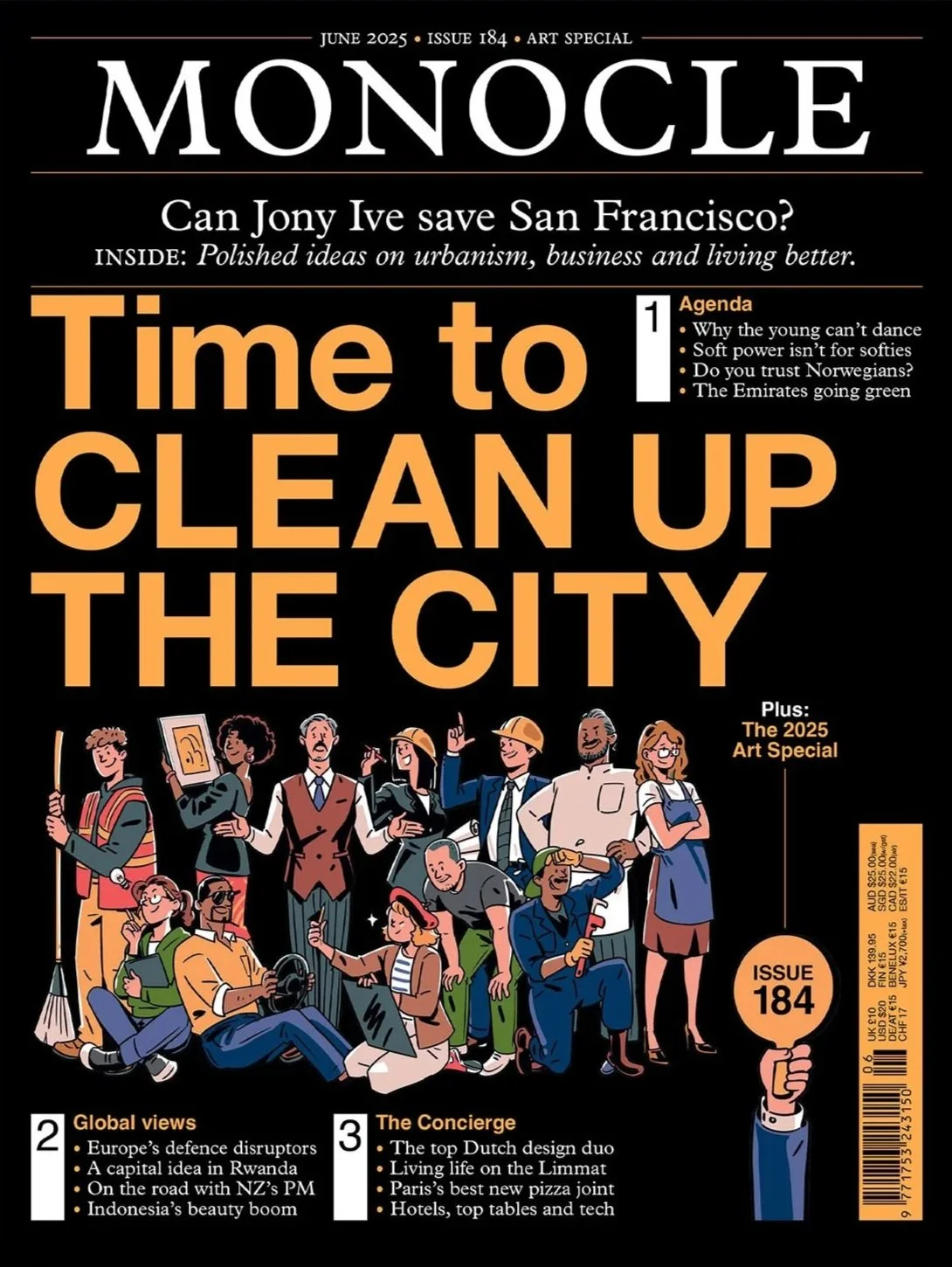
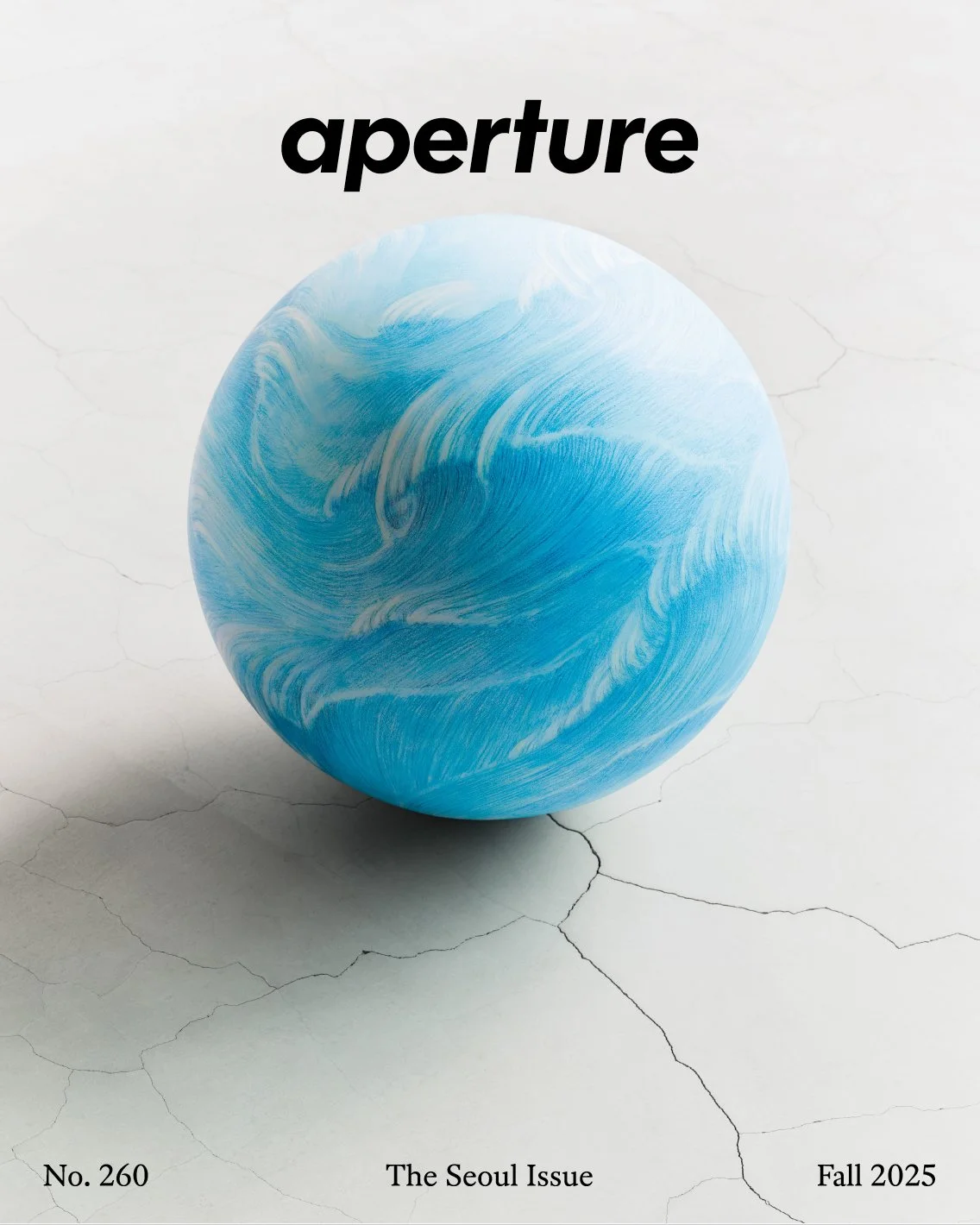
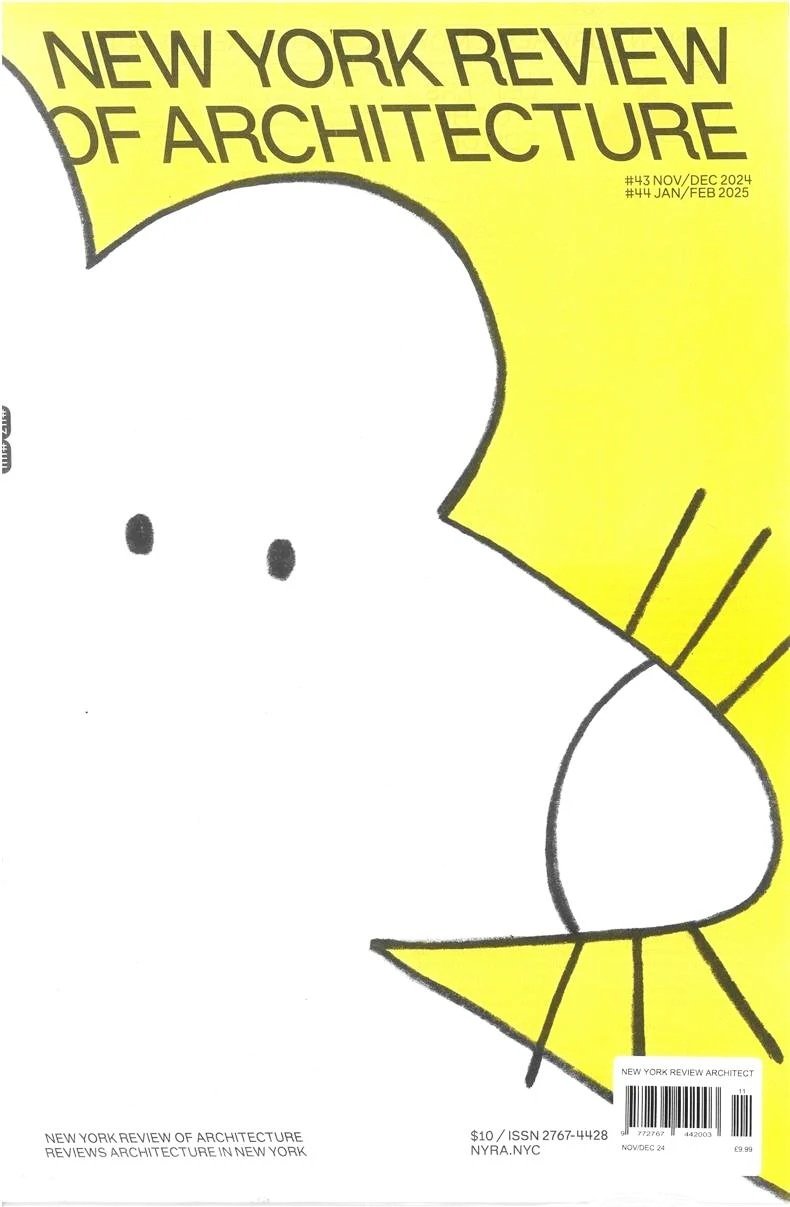
Christian Nolle: I’m a Monocle reader because—I’ve always been—they’ve been a big supporter of my project as well. But the magazines I read these days? I like MacGuffin a lot. There’s a UK magazine called The Fence, which is really good. I really enjoy that. I read the Aperture as well. That’s another one—a photography magazine that I really enjoy.
And then there’s The New York Review of Architecture. They’re amazing. They’re really good. It comes out like four times a year, I believe, which is mostly about what’s happening in New York about architecture. But it’s great, it’s really good writing. I was in Hamburg doing a little stand with my magazine and they were there as well. So they exist in that little world of indie publishers, I suppose you could say.
Arjun Basu: And what about inflight magazines?
Christian Nolle: Things that I really like and have in my archive is the old Air France one Revue from the 1950s. That’s unbelievable stuff. Unbelievable. The other one that’s amazing from that period is the Sabena inflight Magazine. And they’re just, they’re beautiful things. They’re like objects and they’re just, and they also, you’re looking at they would cover, like Sabena would do this whole issue just on Congo, like Belgian Congo back then, and it’s just extraordinary stuff. And the photography is this rich. The printing is this deep black. It's a beautiful thing.
I still try to find some of these issues that arrive half torn bits, but they’re great. I’m trying to think of a present day one. I can’t, I think the one I’ve just come across recently, I just got a copy of, was the old Virgin Atlantic inflight Magazine called Carlos. But what’s interesting about Carlos, it’s got no aviation content whatsoever.
Arjun Basu: That was Jeremie Leslie, our friend from MagCulture. Carlos was the best inflight magazine ever. It was the ideal. We were so jealous of it. A pure reading experience.
Christian Nolle: I think that’s the thing with magazines. You want to give something interesting to your readers that they would not see otherwise. So I’m more like, what can I do here that they would to be surprised? How can I surprise them? How can I put something in their hands when they sit there and they go: I didn’t see this coming. There’s a sense of discovery that’s quite wonderful.
Christian Nolle: Three Things
Click images to see more.
More from The Full-Bleed Podcast