
A conversation with Marie Claire editor Nikki Ogunnaike. Interview by Rachel Baker & Maggie Bullock/The Spread
—
THIS EPISODE IS MADE POSSIBLE BY OUR FRIENDS AT COMMERCIAL TYPE AND FREEPORT PRESS.
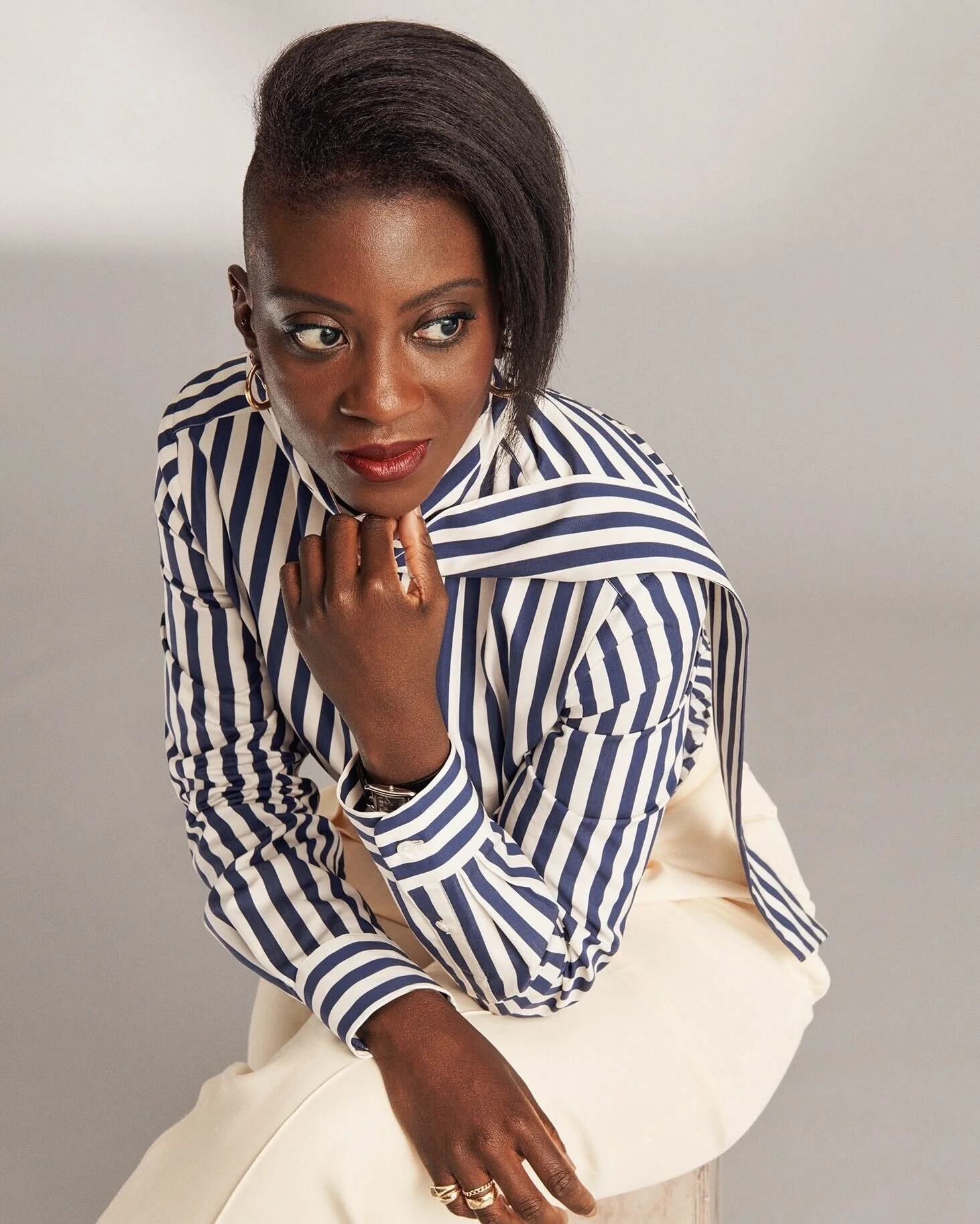
In the media storm that is 2025, the person you want captaining your ship is smart, decisive, and cool, calm, and collected—in other words, she’s Nikki Ogunnaike.
The editor-in-chief of Marie Claire, whom we got to know when we worked together at Elle, is the very model of a modern magazine editor, in that—unlike the lifers of old—she hopscotched through a ton of jobs, accruing skills as a writer, a fashion editor, a digital editor and a print editor, and, oh yeah, a social-media savvy multiplatform operator—to become what she is now: someone uniquely equipped to lead a new era of Marie Claire.
We talked to Nikki about what it’s like to run a modern media brand in a post-magazine world—what does the job of “magazine editor” even mean now? Also: how is the post-Hearst Marie Claire evolving to meet a new reader, or should we say “follower,” and which parts of its original DNA Nikki is working to preserve. Also: Is the “girlboss” back?
Maggie Bullock: Nikki, hi!
Rachel Baker: Hi Nikki. Thank you for being here.
Nikki Ogunnaike: Of course! Thank you for having me.
Maggie Bullock: We love an Elle reunion.
Nikki Ogunnaike: It’s the best.
Rachel Baker: Totally. Can you tell us about who you think of as the Marie Claire reader?
Nikki Ogunnaike: I think she’s generally an unabashedly ambitious woman. Somebody who is okay with that. I think, you know, myself, you two, anyone else that is in our orbit is ambitious. And that’s not a bad word.
I’ve always said that she probably has a little bit of girlboss energy, but is probably not a girlboss. Like she knows better than to be a girlboss, right? But she still has a bit of that in her. And she’s curious, and generous, and cares about fashion, and cares about beauty, but above all, I think is interested in, like, in worldly things.
Maggie Bullock: So what’s the click bait? What are the stories that keep people coming back to you?
Nikki Ogunnaike: Listen—she loves a royal, I don’t know any person who doesn’t love a royal. Guys, that’s still working. I think that just speaks to the fascination that people have and will always have with the monarchy, but that’s not it.
She cares about TV and pop culture. She cares about fashion as well. We’ve done a really great job at making fashion one of the verticals that really does drive a lot of traffic for us, which I think if you ask any other website, they would say that’s probably rare.
So our woman cares about fashion, she’s shopping, and then it’s all of the career and politics stuff. I think we’re beefing that up and we will be continuing to beef that up over the next few years. We’re in a very unprecedented time, if you will. But I think that Marie Claire’s DNA has always matched this sort of occasion really well.
Rachel Baker: So when you say fashion, is most of that shopping? Does your reader come to Marie Claire to tell her what to do? Like she is like this ambitious crew woman. I love to hear you talk about that, because that’s what Marie Claire has always been to me is like work. Like this woman has a job, which is cool. That’s a cool filter. When you’re figuring out fashion stories and stuff, what is the big filter? Dressing for work or is it just shopping in general?
Nikki Ogunnaike: I’ve always viewed it as dressing to make your life easier, whatever that means. So we would offer up the trends, offering up how to shop them at various price points, offering up the things that we think are worth investing in. We always like to say that she is not trend driven, but she's trend oriented. She wants to know what the trends are and then understand which ones she can take, which ones she can leave, and then how she can shop them. So my newsletter is all about shopping.
Rachel Baker: Well, I feel like I’ve known you for years. I don’t know you that well, but I think of you as somebody who dresses smart. Like I feel like you always have some kind of strategy in making it easy for yourself. What are you wearing right now?
Nikki Ogunnaike: I am wearing a very smart outfit, if you will. I’m wearing a black linen Citizens of Humanity button down. I do like to wear a button down, especially if I know that I have to go to an event after work because it just feels put together. I’m from Virginia, so I’ll always have a bit of that preppy sort of element to me, like I can’t shake it.
I’m wearing trousers. So great trousers from Maison Kitsuné. And then Nike sneakers. So it’s an outfit combination that I wear often, especially if I know the day is long and I need to get from point A to point B unencumbered. I don’t like complicated, fussy clothing.
Maggie Bullock: I think that the way you dress really embodies your sort of platform as a new-era editor-in-chief, right? Like it’s cool, it’s polished. It’s like there’s insidery things going on, but like the practicality was not always the thrust. What do you make of that? This is the uniform for the job as it is today. What do you think about that?
Nikki Ogunnaike: I mean, I think it’s exactly what you said. It’s the uniform for the job as it is today. So as we’ve, as any Gen Z or millennial editor has discussed, like, car service is gone, we’re taking the train places, we are running around from event to event. The outfits have to be, I think, a little less precious.
I’m also just a deeply pragmatic person, so the clothes are never going to be complicated or encumbering. I’m always going to want to feel like my best in my clothing so I can get onto what needs to happen during the day.
Maggie Bullock: I think that’s such an interesting point of view for a quote unquote fashion person like you came up through fashion. That is not the way we think of fashion—people thinking about their wardrobes, right? Media movies have given us this idea that these are more fanciful folk.
Nikki Ogunnaike: Yeah, but I would say that if you look at any editor, they definitely have a uniform. And whether their uniform consists of high heels or something of the sort, it’s definitely a uniform. There is a practicality to how people are getting dressed in the morning because they have so many things to do in their day.
Rachel Baker: Okay. Royals, fashion—okay, we come from the features department as you know, Nikki. So we have to ask what features has Marie Claire done in the last little while that you’re proud of and that really resonated with the Marie Claire audience?
Nikki Ogunnaike: We did a really great deep dive into what it’s been like to give birth in Gaza recently.
Rachel Baker: Wow.
Nikki Ogunnaike: Extremely proud of that story.
Maggie Bullock: How did you report that?
Nikki Ogunnaike: We had somebody on the ground. We had a reporter on the ground, we had a photographer on the ground—lots of, like, voice notes being passed between parties. And that’s one that I was just really proud of, just because we’ve figured out our woman also cares about work. A lot of the women that read this magazine care about this brand are mothers, and I think that is a story that deserves to be told, whatever your point of view is on these like great big topics.
So maternal health was really important to us. We also did a story, Andrea Stanley, who’s my executive editor, also did a story about this group called Elevated Access that will transport women across state lines, no questions asked, by plane to help them get abortions.
And that is another sort of thing that I think is really important—has always been important to the Marie Claire reader. Women’s reproductive rights are something we believe in right here, and we will never back down from that.
And so I think just being able to work at a place that can do all of those types of stories. And the same magazine can do a feature on Halle Berry and then can do a story on giving birth in Gaza. I think that’s that special sort of Marie Claire mix that not a lot of other places have.
Maggie Bullock: Yeah, I totally agree with that. And you’re getting at stuff that we wanted to talk to you about, which is that it’s such a precarious time in this country and time to be in media. And we know that from knowing you, we know that you’re a political person. How are you feeling in terms of your responsibility helming a women’s media company at a time like this?
Nikki Ogunnaike: It is heavy, right? There’s really no other word to describe it. I don’t know if it’s even I feel like I have a responsibility, right, when it comes to women’s media. I think it’s more I don’t know any other way. As a black woman who works in women’s media and cares about women’s rights, I feel like it’d be weird if I didn’t have us cover these things.
I think it’d be weird if I even worked at Marie Claire and wasn’t thinking about these things. So more so for me, it really just feels like things are dovetailing quite nicely now between who I am as a person and the place I work.
Rachel Baker: Yeah, it kind of seems as you’re talking, you were like the ur-Marie Claire reader.
Nikki Ogunnaike: And like I’ve been able to arrive at this time in my life where it’s, “Okay, great. We can all sort of, we could just be together as one.” And I can continue to shape and think about the kinds of stories that I would want to read and I would hope that our fellow Marie Claire readers would want to consume on whatever platform.
Rachel Baker: Last year you guys did a package on voting after 40, which was so fun. And so I’m wondering, do you and your staff talk about how to capture swing voters? Or do you feel like you know where the Marie Claire woman is going?
Nikki Ogunnaike: That’s a really interesting question. I feel like we are—so I’m going to be really frank with you—I feel like we are in a situation right now where there’s no way that we can say, like, “Yes, we know exactly where any reader is going. No matter where they’re going.”
And I think that’s one of the reasons we came up with the story specifically in that voting package about how white women were going to vote. Because we were like, “We’ve seen how it’s gone in the past. Is it going to happen again?” Spoiler alert: it did.
And so we would hope that it would not go certain ways. And we are generous with our reader, and we do think that our reader is a liberal woman, but there’s no guarantee. She could be a woman who wants to read-- she could be a woman that’s trying to figure it out. And that’s okay too.
And so we never want to speak down to anyone that’s coming to Marie Claire, but we are cognizant of past trends and we meet the voting trends head on.
Maggie Bullock: Yeah. It’s sort of a profound shift, I think, for Rachel and I. When we worked at Elle we were allowed to have this kind of assumed progressive stance. Like there was an assumed stance amongst our readers that they were progressive because like why else would you be buying a magazine in which we talk often about abortion rights and—I mean, to be clear, we tried to be balanced in who we covered across the political spectrum. But I think in terms of our feminist values like that was baked into the product. Now we’re in this weird shifting landscape like you’re saying, where there’s this up swelling of the woman-o-sphere and conservative women, which is sort of like a, a really radical shift. I just wonder if you feel like now that there’s so much evidence that there are a lot of women in this country who think this way. Even though maybe we would’ve preferred to think they weren’t—speaking for myself, we would’ve preferred them to think otherwise. You’re making a mainstream magazine—do you have to speak to them? Do you have to yeah. Like how do you countenance that?
Nikki Ogunnaike: I mean, honestly, I think that’s something that we deal with day to day. For me, there’s no hard and fast rule when it comes to something like that, because I think that that sort of closes us off to possible storytelling. And I’m not necessarily—I don’t want to close myself off to storytelling. I don’t want to close Marie Claire off to storytelling.
Now we do know that this brand is for a woman of power, purpose, and style. And power and purpose are big things that we will continue to discuss here. And how that shapes up, who knows? The story is constantly changing.
I’ve never had to lead through a time like this. I’ve barely worked through a time like this. This is really nutty! And I think that we are all just trying to figure it out day to day, but stay rooted in the fundamental values that we have here. And this is a brand for a progressive sort of feminist woman. But that doesn’t mean that we would close ourselves off to anything else.
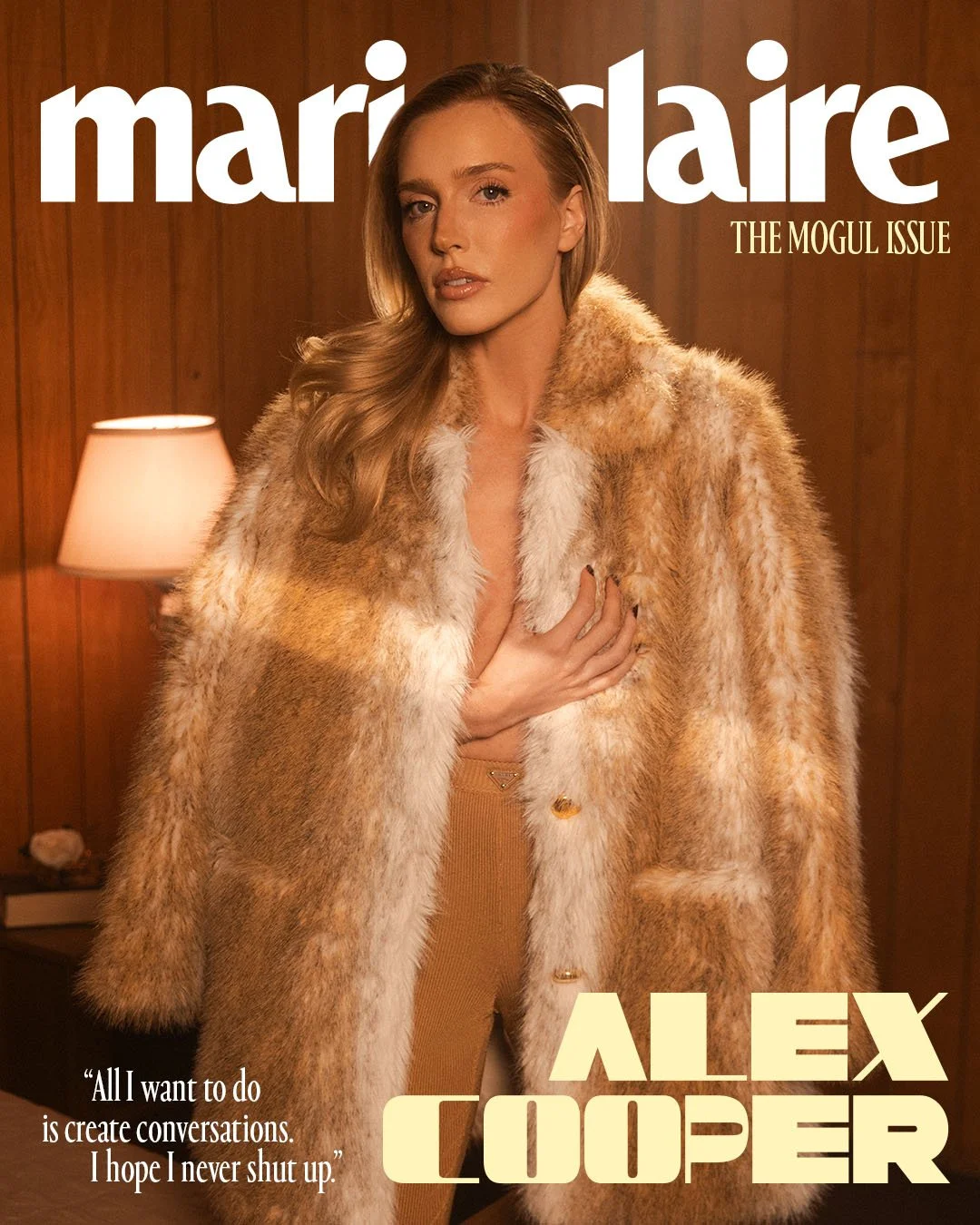
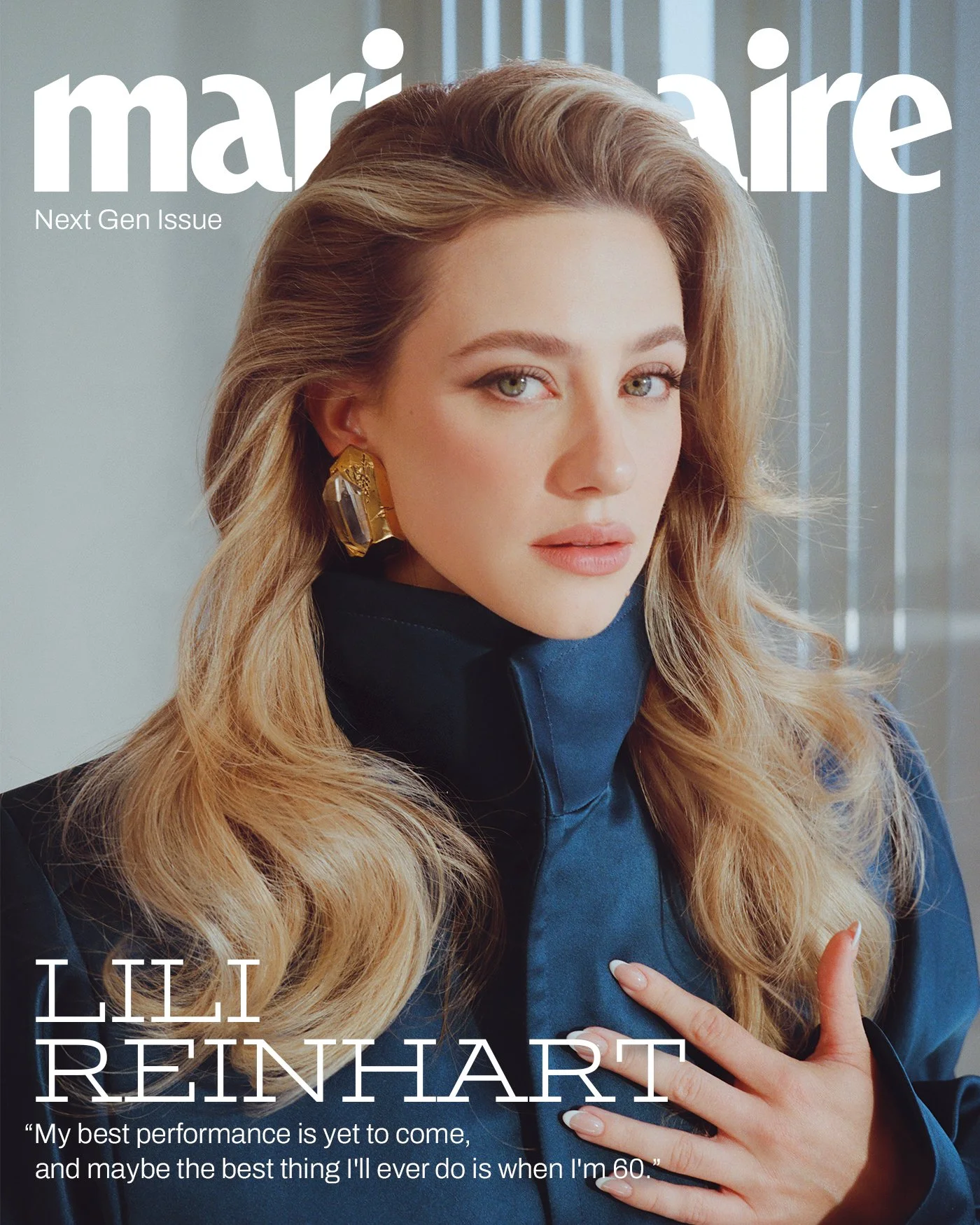
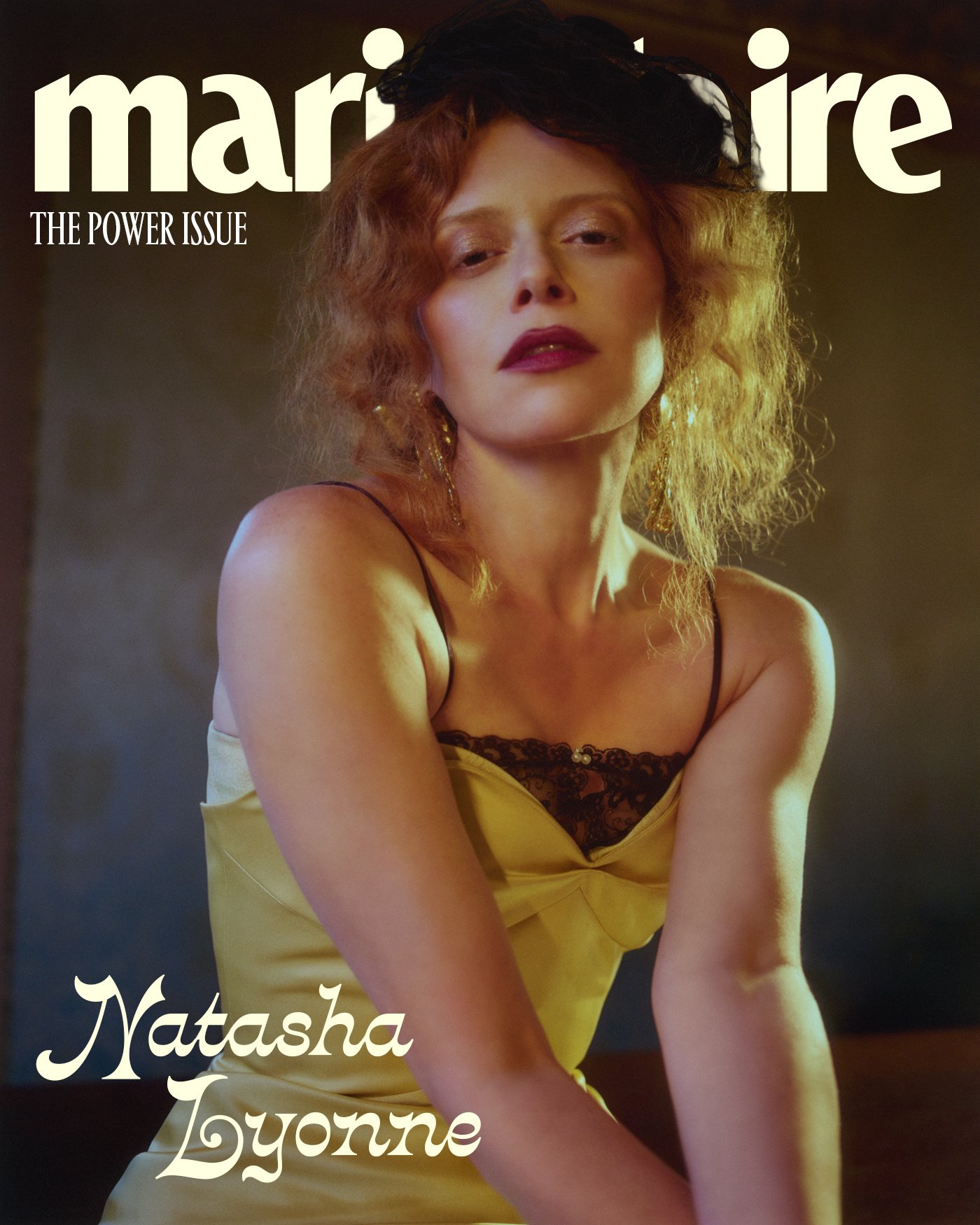
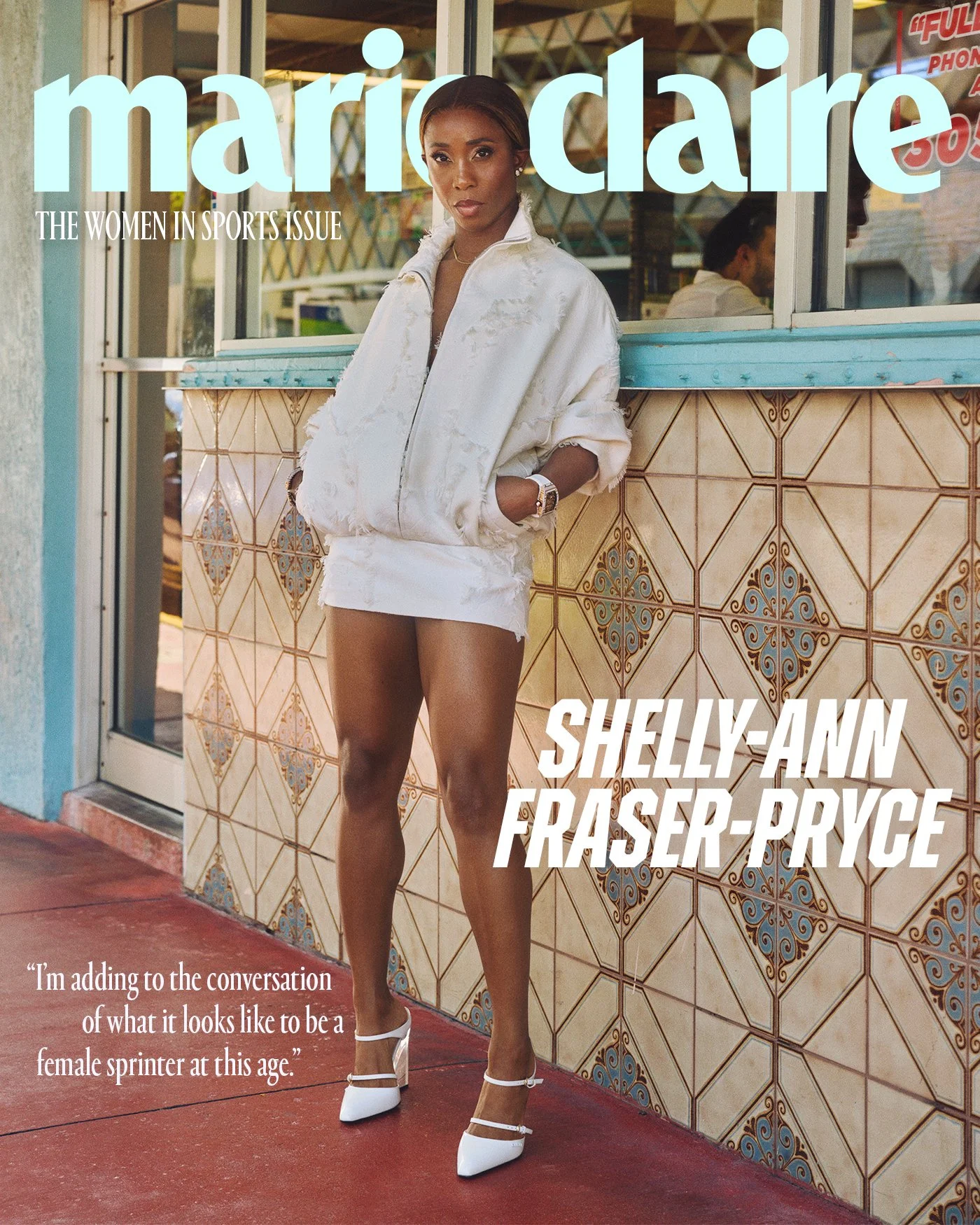
A sampling of Ogunnaike’s favorite Marie Claire covers.
Rachel Baker: When we were last in the building with Marie Claire, when Marie Claire was owned by Hearst, it was a magazine with the website. And now it’s many things. It’s like this “ecosystem” is the word that you used and you mentioned it at the beginning. I’m wondering if you could take us through that and also, kind of describe, like, which values and priorities from what we were just talking about, like how you weight those things per, for each tentacle or, I don’t know what you call them. Expression?
Nikki Ogunnaike: Expression, maybe. I think because I have this sort of like digital background, but I have worked in print in a few different roles, and I came up during this time of anything goes on the internet. I think we editors think more so in terms of, okay, this is the IP of this project, and then how does it fit on every platform?
So for example, we just had Teyana Taylor on our changemakers cover for September. That interview was an interview I did. You can find a longer version of it on our podcast, Nice Talk. We have done similar things where we just had Power Play, as I said, in Philadelphia. Some of those conversations will be podcasts on Nice Talk for future episodes. So it’s really just thinking about all of the tentacles as you said, and where the IP fits and how the specific storytelling fits on each platform.
Rachel Baker: I feel like you are a tentacle, though. Like you’re like informing the whole thing, but then like your Instagram alone is also like its own beast. I don’t know. It’s so interesting to watch you as your own brand, you as the ur-reader and leader of Marie Claire. Do you ever feel like you have to pick and choose or it all comes naturally?
Nikki Ogunnaike: I think it all coalesces. I don’t know if it all comes naturally. I think it would be not true to say that I don’t try or work at these things. They are all like specific undertakings that I do have to look after. And so I think that when I think of myself as a brand, I’ve never really thought of myself as a brand.
I’ve always liked social media and I’ve used it, and I think that I came up during a time when people are like, “editors are brands.” And that just worked in my favor and it’s continued to work in my favor. But I don’t think that was particularly deliberate. It was just something that we were all doing.
Like me, Julie Schott, as we said—we were all just like doing it together. Carly Carino. Like, we were all these junior editors running amuck at Hearst and having a good time, and they let us do whatever we wanted. Leia was great.
Rachel Baker: The effect that it has is, I feel like you’re everywhere at one time. But I’m sure there’s some real truth to that, like, thinking about that you’re making a podcast out of the cover story and also doing the newsletter and then you’re constantly on social media. Are you tired?
Nikki Ogunnaike: That’s just like modern editorship though.
Rachel Baker: I think what you’re saying is, “Rachel, you’re a dinosaur.”
Nikki Ogunnaike: No, I’m just saying you have seen parts of it and you’re now seeing it all coalesce into the big thing that it is now. I think that while editors in the past may not have had podcasts or whatever, I always point to Tina Brown because I truly think she’s the most iconic editor of the past years. I’m obsessed with everything she does. But she was a personality, she was a face, she was writing, and she was editing, and doing all the things, and she was an insider and she dressed well. She just did it in a different form. There were just not as many cameras or microphones around.
Maggie Bullock: So pivoting dramatically, actually, let’s go back to the beginning if we could. because we don’t know a lot about your childhood and your growing up, but we love a power sibling duo and what that says about the family from once you came. So can you explain to our reader, your sister also works in media. You guys are two power players. How did this come to be that you’re both so successful in this business? Were you um, studying magazines at the kitchen table? Tell us all about it.
Nikki Ogunnaike: So, my sister’s Lola Ogunnaike. She paved the road not just for me, but frankly for a lot of people in this industry. She worked at The Daily News, The New York Times, CNN. She writes freelance for all sorts of magazines: Architectural Digest, Marie Claire. Lola and I, and my brother—we have a secret brother in the middle. No one knows that he exists, but he is there. And we do love Tayo, we do love him.
We grew up where my dad always had the radio on, we watched 60 Minutes every Sunday night together, there were newspapers everywhere. Reading was huge in our family. And I think that—I never thought that I would be necessarily an editor-in-chief, but like the signs were there.
I grew up reading a ton. My mom loves fashion. She’s extremely well dressed and had boxes and boxes of Delman’s heels all over the house. So the ingredients were there for us to land here.
Lola really took one on the chin as the elder sister in an immigrant household. She was the first one to be like, “Hey, so I’m not going to be a lawyer. I’m actually going to be a journalist.”
And they were like, “Okay.”
But like once your kid starts working at The New York Times and then CNN, you’re just, “Okay. Sounds great.” It’s good. Hopefully Nikki can do the same. And so they always want the best for us, but it was definitely like, “Okay, we’re doing journalism, not law. Got it.”
Rachel Baker: Did you both go to UVA?
Nikki Ogunnaike: We did, yeah.
Rachel Baker: Can you tell us about that? What was college like? And what was the college-to-jump-into-magazines like?
Nikki Ogunnaike: So I went to UVA, graduated in 2007. I loved my time at UVA. I think that it was really special and just an all American college experience. Charlottesville is such a great town and football games on Saturday mornings. I was in a sorority. We would pregame on the lawn, the whole thing.
But I definitely had this, the whole thing, yeah. But I had this side of me that while everyone was like going to McIntyre Business School, I was like, “I’m going to study sociology. And I’m going to intern at Harper’s Bazaar over the summer.” And people were like, “What?”
It was like, “Yeah, I’m outta here.”
So I interned at Bazaar the summer after my junior year. No, I interned at Glamour the summer after my sophomore year. Interned at Elle.com when it was like Keith Pollock—were you guys there then? Interned with Keith and Joe at Elle.com the summer after.
And then I graduated—of course without a job as many do. My parents said they would pay my rent for six months and then I was on my own from there. Thankfully, I had both my sister and my brother in New York at the time, so they fed me. And then I was off to the races from there.
I got my first job at Vanity Fair, I was a market assistant there and was not like the best at it. I just knew that the logistics of being a market editor were not for me. Like you spent a lot of time on your email. You gotta pay attention to like really close details and I was just very much a writer more.
Rachel Baker: Oh, interesting. So were you writing for the paper in college or high school? I’m also curious, you mentioned Tina Brown earlier, I’m curious like what other, either writers or magazines, were you obsessed with as you were coming up?
Nikki Ogunnaike: Totally. I was the person that would write an op-ed. I’ll never forget in high school they said that we couldn’t wear our pajamas to school—I don’t know, for some stupid reason. And I wrote an op-ed about it. Like that was the sort of writing— write the letter to the editor about it.
Maggie Bullock: Fight the power.
Nikki Ogunnaike: Exactly. And then in college, no, I didn’t write for the newspaper, sociology was all like reading books and thinking about people and how people interact. And I took a lot of media studies courses, so I was in the first cohort that had—so UVA doesn’t have a traditional communications program, but they have media studies. And we were a part of the first cohort that was in the media studies program.
And at that point it was just a certificate. It wasn’t even like a proper major. So I minored in media studies, which meant I spent a lot of my time watching movies and talking about women in media, race in media. So also the signs were there. It’s no surprise that I ended up here.
And then as for growing up, my parents both worked in retail, my dad worked at CVS, my mom worked at Staples. And so I would spend a lot of time either waiting at Borders bookstores for my mom to be ready to go home, or sitting in the aisles of CVS, reading magazines.
So I read everything. It was like, YM, Seventeen, Honey, Suede, Teen People was a huge one for me. I loved Teen People. I thought it was so smart. And so I spent a lot of time just like in magazine land, read a lot of Glamour. When I got to college, Elle was the “thinking womans’” fashion magazine. So I read a lot of Elle. It’s always just been a part of the digest, really.
Maggie Bullock: Yeah. And so you were a child of Virginia, right? Like, you were growing up in Virginia. Do you consider yourself southern?
Nikki Ogunnaike: It’s tricky. And I’m sure Rachel has thoughts on this. So I’m from northern Virginia, from Springfield, right outside of DC. I think that I have southern tendencies, if you will. But like Northern Virginia is pretty northern, it feels like. When I got to UVA, I was like, “Oh, this is different."
Rachel Baker: It’s like the capital of the Mid-Atlantic.
Nikki Ogunnaike: Exactly. I got to UVA and I was like, “This is a different Virginia. And I’m surrounded by southern people.”
Maggie Bullock: Yeah. Yeah. You came to New York and you got that job at Vanity Fair in the closet, but were the good times still rolling? Were you going crazy?
Nikki Ogunnaike: It was the last days of disco. It was the last days of disco, I gotta say. Like the times were rolling. And Vanity Fair has always been like a really special place. I think it’s always a great place to be a creative. And times were really great, and Condé was really great at that time, too.
And then I went to Time Inc., which is a very different company. But I was just telling my sister the other day that InStyle—and Ariel Foxman was the editor-in-chief at InStyle at the time—that felt like a finishing ground for me.
Maggie Bullock: In what way?
Nikki Ogunnaike: In terms of just the writing and the reporting. InStyle at that time—and currently, I think—is such a smart magazine, actually. They do celebrity coverage really well. And it’s extremely rigorous. The fact checkers, the copy editors—there weren’t a lot of words in the captions that we were writing, but you better get all your facts right. You better get everything in there, and it better sing.
You have 200 words to talk about jeans, you know what jeans you should be wearing, but it better be chock-full of information. And it better not be boring.
Maggie Bullock: Yeah, the quality control there was pretty amazing, right? It would miss the eye, maybe of the casual observer, but it was tight, right? They ran a tight ship.
Nikki Ogunnaike: It was tight. It was a really tight ship, and there was a respect for that woman as well. Like we always said that she was probably the most fashionable person in her friend group. And it wasn’t Vogue and it wasn’t Harper’s Bazaar, but it was its own fashion beast. And that woman was also a shopper. And so I think it informed a lot of how I see fashion today, and we approach fashion at Marie Claire and online.
Rachel Baker: I met a woman, Nikki, around that time, and she told me she and all of her friends called InStyle—exactly at the time you’re talking about—they called it “the Bible.” They got it.
Maggie Bullock: I think people shopped that magazine. Like it was a literal guide. And you followed its directions to the letter.
Nikki Ogunnaike: And it was the sort of place where we would go out to these small designers and we would say, “Okay, we’re putting your piece in front of book, but be ready because it will sell out and this will sort of make or break your company. So just be ready?” Yeah.
Maggie Bullock: Hold onto your hats!
Nikki Ogunnaike: Yeah!
Maggie Bullock: Do magazines still have that power?
Nikki Ogunnaike: Maybe not like the print form of it, but the e-commerce on the sites definitely do. That’s the reason that Vogue is creating whatever they’ve just created. We all are concentrating on e-commerce. I think it’s really just putting intention behind what these other places have done for years.
It’s unfortunate that Lucky didn’t have this opportunity because they would’ve been the number one e-commerce platform everywhere. Lucky was such an important shopping magazine to me, and I think that like if you were a Lucky girl, you can see hints of it in the work that comes out.
Maggie Bullock: Yeah. Lucky girl right here.
Rachel Baker: Nikki, you have worked everywhere. You’ve worked more places than anybody else I know. I go to your LinkedIn and just marvel at it, like, incredible. Can you give us the hop, skip, and jump version of what happened between InStyle and Marie Claire?
Nikki Ogunnaike: Sure. So after InStyle—InStyle was great because I was an assistant editor. I was working on print. I was dabbling in digital, but I knew that if I ever wanted to become an online editor, I’d probably have to leave. Or if I wanted to become a blogger or like an early-stage influencer, whatever, I would have to leave.
And I was like, Where better to learn than on the job while somebody’s paying you to do it? So I went to Glamour. And I worked with an incredible team there. Ann Sachs was leading the site at the time. Cindy Leive was the editor-in-chief. And I was there for three or four years.
And then after that I hopped to Elle, because Elle is an incredible brand, as you both know. But it was also a time when Hearst Digital Media was really up and running. And that was functioning as something like we had literally never seen before. Like they split the company, basically, and it was Hearst Digital Media and Hearst.
We approached digital in a way that was open and experimental and, just frankly, really incredible. I think everyone was really interested in doing their best work, working really hard. Leah Chernikoff was the site director there. She’s so smart and generous. So I worked with Leah for a really long time.
And then towards the end of my time at Elle, I was feeling burnt out when it came to digital. And my friend Mobolaji Dawodu worked at GQ and he was like, “We’re looking for somebody”— to be basically his number two.
I was like, “Listen, I don’t know a lot about men’s, but I’m a really fast learner and I am hardworking.” And GQ was such an interesting sort of finishing ground for me as well, because it was my first time working with predominantly straight men, which I’ve never done, and in this industry, is rare.
Maggie Bullock: What’s that like?
Nikki Ogunnaike: Exactly. That’s the thing. And it was great. Everyone was like, no bs. Will Welch is such a great leader. He is open and thoughtful. And it was the time when they were just thinking about masculinity, and The New Masculinity issue had just dropped, and he had only been there for maybe a year.
So again, it felt like a new, fresh environment where like anything could go in men’s media because we’re forging a new path together. And then the pandemic hit. And so working in print during the pandemic, I was—I don’t really know what’s happening.
And simultaneously, Samira Nasr got her job as editor-in-chief at Harper’s Bazaar. Leah was working there. Samira and Leah were like, “This is an opportunity to get the band back together. Let’s do it.” And so we did. And I did that for almost three years. And then Marie Claire came calling and that’s not an opportunity you let pass you by. And that’s how I found myself here.
Maggie Bullock: It’s a really amazing graduate degree that you have your PhD in modern magazine making. Honestly we can’t think of anybody else who has that much of a breadth of experience. And it must really set you up to have a unique perspective on this, like, really shifting industry. First of all, you’ve been very good at surfing the industry—like where it goes, you’ve gone, and you are flexible in that way. You’re like, I can do a little bit of this. I can do that over there. How about I learn this thing? So you’ve proven that you can do it all. I’m not really sure what my question is. I guess it’s a very long-winded compliment.
Nikki Ogunnaike: Um, thank you. But I think ultimately for me though, it’s just been like this industry is up and down and you never know where it’s going to take you. And I think graduating 2007, seeing the great recession hit, there was no certainty. There’s never been certainty for me in this industry. So like surfing that wave, being open to what comes, like not being stuck in my ways or tying my identity to one place has always served me well.
Rachel Baker: Yeah. And something I have always noticed about you is that you’re an editor, but you’re also a business woman. Like you were ready to be an editor-in-chief, and I wondered if some of that came from observing all these different brands and being able to compare them and see what worked and what didn’t work.
Nikki Ogunnaike: Totally. I mean, as you guys said, there’s a breadth of data points, if you will, that I could pull from of things that I like, of things that I don’t like, of things that I want to like tweak in everything, from like the content that we make to management styles to how we want to be flexible and thinking about the business. And that’s just been really helpful I think just in totality for my career.
Maggie Bullock: Yeah, I think it also reflects not being mired in nostalgia for the way things were.
Nikki Ogunnaike: Because I only got one year! I didn’t really know the way things were because I never really got that time. The way things were for me is, yeah, you graduate in 2007, and good luck if you get a job. And if you get a job, get ready for some possible shakiness.
Rachel Baker: Yeah. As Maggie and I were prepping for this—I’m one year older than you—and I was saying like, yeah, the good times were rolling for me for two years. Exactly.
Maggie Bullock: Exactly. Rachel, I could have sworn you said you were at least two or three years older and now you really shrunk it, like, in the hours since you came up with that data point. Okay, for the record, I’m older than everybody. And Nikki, I knew your sister early in my career, so I’ll be the older sister in the room.
Rachel Baker: I edited your sister once at Elle, so...
Nikki Ogunnaike: I love it. I love it. So you know the rigor. Lola was my first editor as well. I would give her my copy to read all the time, thankfully. I was so lucky to be able to do that. And to have editors inside the house and outside of it has just been so instrumental.
Maggie Bullock: So can you just tell us—forgive me, this might retread, but I feel like we have to ask the question now again, like, the many-tentacle thing that is Marie Claire. Can you tell us a little bit about the corporate structure behind it? Just like broad strokes and there’s Hillary Kerr over here, she’s another friend of The Spread and someone we’ve known for a long time. You’re outside of the major media ecosystem in some ways, so how does it work over there?
Nikki Ogunnaike: So Marie Claire is owned by a company named Future that is based in the UK. Hillary Kerr is the co-founder of Who What Wear, which was sold to Future. But she’s also the SVP of women’s luxury, homes, music, and a host of other things. She has a very big job here. It’s really major.
And really one of the reasons why I wanted to come work at Future—and Future owns like 200 properties. Our team here says it’s the biggest publishing house you’ve never heard of because it’s, like, extremely popular and they have everything from Tom’s Guide to Kiplinger, The Week Junior, Marie Claire, Who What Wear, so it’s really diversified.
Anyway, one of the reasons why I wanted to come and work here was because I wanted to learn from Hillary. I think there’s something to be said for someone who leaves traditional media, right when they’re young, starts a newsletter business that turns into a website that turns into multiple websites, that turns into a clothing brand and book deals, and then sells her company to Future, and stays.
And I’m like, “I gotta learn from this woman.’ Because as you said, she’s not just a content person, she is a business woman. And that’s really important.
Rachel Baker: I said that about you, but it also applies—
Maggie Bullock: Well, it also applies to Hillary. We can be generous here.
Rachel Baker: Hillary. We love Hillary.
Maggie Bullock: So in terms of the Marie Claire slice of that very large pie—and I’m glad you explained it because I did not know the breadth of that and the 200-ness of that was news to me. How big is Marie Claire? Your pod of people, like how many people you got working there, and how do you divvy it up, and what takes most of your time?
Nikki Ogunnaike: That’s an interesting question.
Maggie Bullock: That’s a lot of questions. Sorry.
Nikki Ogunnaike: Yeah, no, it’s fine. I have, I believe it’s 24 people reporting to me. Somewhere around that. And it’s our social team, the fashion team, everyone ladders up to me, but that's sort of the number.
What takes up most of my time is, I think, whatever it may look like to enable people to do their best work. So it’s a lot of management. It’s a lot of approving memos and top-editing things and like thinking about big picture ideas.
And then I host a weekly podcast called Nice Talk and I have a weekly newsletter called Self Checkout. And those two things are really important for me to continue doing because it allows me to flex that muscle that a lot of people don’t get once they hit a certain point in their career.
Rachel Baker: Nikki, last time I saw you in person was at the ASME judging. And now you’re on the ASME board. You’re in the room with all the industry’s biggest players. Can you talk about that and also what does the word magazine mean to you and to this industry now? What is the industry?
Maggie Bullock: No pressure.
Nikki Ogunnaike: That’s such an existential question like, What is life? Like, What is life now?
Maggie Bullock: Stroke that chin, Nikki, and give us all the answers.
Nikki Ogunnaike: I don’t know if I have the huge, overarching answer for that! I think “magazine” is now a catchall term, honestly. I think when we say “magazine,” you know that it’s something bigger, something more than just like a physical print product.
So it’s all of the things I just listed. It’s live events, it’s content series, podcasts, newsletters and also the magazine. But I think that for so long, these places like Bazaar, Elle, or Marie Claire, they’ve been called magazines for so long. But like, that’s not just it. Vogue isn’t just a magazine.
Rachel Baker: Yeah. So do you prefer “brand”—the Marie Claire “brand”? Or do you just like “magazine,” it just means more than it used to?
Nikki Ogunnaike: “Brand” as a word gets a bad rap, right? It’s a little like, meh. But it is what it is, right? We are a brand.
Rachel Baker: Yeah.
Maggie Bullock: So it’s more accurately described as a brand, but it doesn’t feel great to use the word “brand.” So we’re still calling them magazines.
Nikki Ogunnaike: I don’t know if I would go that far. I think it’s more just like you say magazine—it’s like Magazine+.
Rachel Baker: American Society of Magazine+ Editors.
Nikki Ogunnaike: And all editors are magazine+ editors.
Maggie Bullock: True enough. And also minus. Nikki, give us the pragmatist’s guide—which I really deeply appreciate about you because we are a couple of real women—what is the pragmatist’s guide, what’s the good news from Fashion Week for real people? What’d you see that might actually find its way onto our bodies at some point?
Nikki Ogunnaike: I think New York specializes in pragmatism when it comes to fashion, which is why I love New York Fashion Week. I will never say New York Fashion Week is dead. I hate when people say New York Fashion Week is dead. I think it’s so cynical and so bad faith. There are incredible designers in New York.
So you have people who did not show on calendar, for even this season, but somebody like Christopher John Rogers who makes fanciful clothing, but that is clothing that “real women”—all women are real women—but women of all sizes wear.
And then you have people who did show on calendar. So you have the majors like Michael Kors and Ralph Lauren, and then you have the budding designers—Daniella Kallmeyer is an incredible woman designer who works out of the Lower East Side, and she’s a stylist to coach Sandy [Brondello] of the New York Liberty. And so she’s just really created this really fantastic group of women who like to wear her clothing.
And it’s a lot of suiting and slinky dresses. And I wore a lot of it during Fashion Week because it’s just easy clothing that looks nice and makes you feel good. I think you also have somebody like Joseph Altuzarra or Amy from Tibi.
I didn’t make it to this show, but Form is one that a lot of the junior editors at Marie Claire really love. You also have designers like Sandy Liang, who is all bows, and pink, and all of the things. And it’s not necessarily my style, but she’s created a really great business and a tribe of women who want to wear her clothing.
Maggie Bullock: Nikki, you had a really spectacular new accessory to show off this—
Nikki Ogunnaike: I do.
Maggie Bullock: —year. Or season. She’s engaged!
Nikki Ogunnaike: I’m engaged! Get excited. Everyone is really excited for me. Thank you.
Maggie Bullock: This is such a girly question to end on, but how are you going to decide what to wear? You have so many allegiances and friends and how are we making this choice?
Nikki Ogunnaike: It’s really funny. As soon as I got engaged, I was like, okay, everything white is like filed in the mental folder. So like Brandon Maxwell, a great friend of mine, a designer of mine, he had a beautiful white dress that walked the show. I was like, “Maybe that?”
Like Rachel from Dima had an incredible white dress. I’m like, “Maybe that?” Your mind just goes all over the place because there’s a wealth of knowledge that I have over the years of working in this industry that makes it fun and exciting and overwhelming, but really fun.
Maggie Bullock: Also, it’s an amazing way to bridal shop. You’re like, “Fashion Week’s coming up. I’ll just … ding-ding.” But whatever it is I think what you said is you’re going to give the spread your exclusive on your wedding trousseau. Okay, great. Thank you.
Rachel Baker: So, congratulations, Nikki, on that. But congratulations on this career and life. It’s so cool and inspiring to have gotten to watch you.
Maggie Bullock: And well deserved, and you earned it.
Nikki Ogunnaike: I appreciate that.
Rachel Baker: You’re so young. I can’t wait to see what’s next.
Nikki Ogunnaike: Who knows? I’ve got to ride this wave. That’s the exciting part.
More from Print Is Dead (Long Live Print!) & The Spread