
An Art Bar for Everyone
A conversation with ArtBar founder—and photographer and filmmaker—Sarah Ingram. Interview by Arjun Basu
—
THIS EPISODE IS MADE POSSIBLE BY OUR FRIENDS AT FREEPORT PRESS.
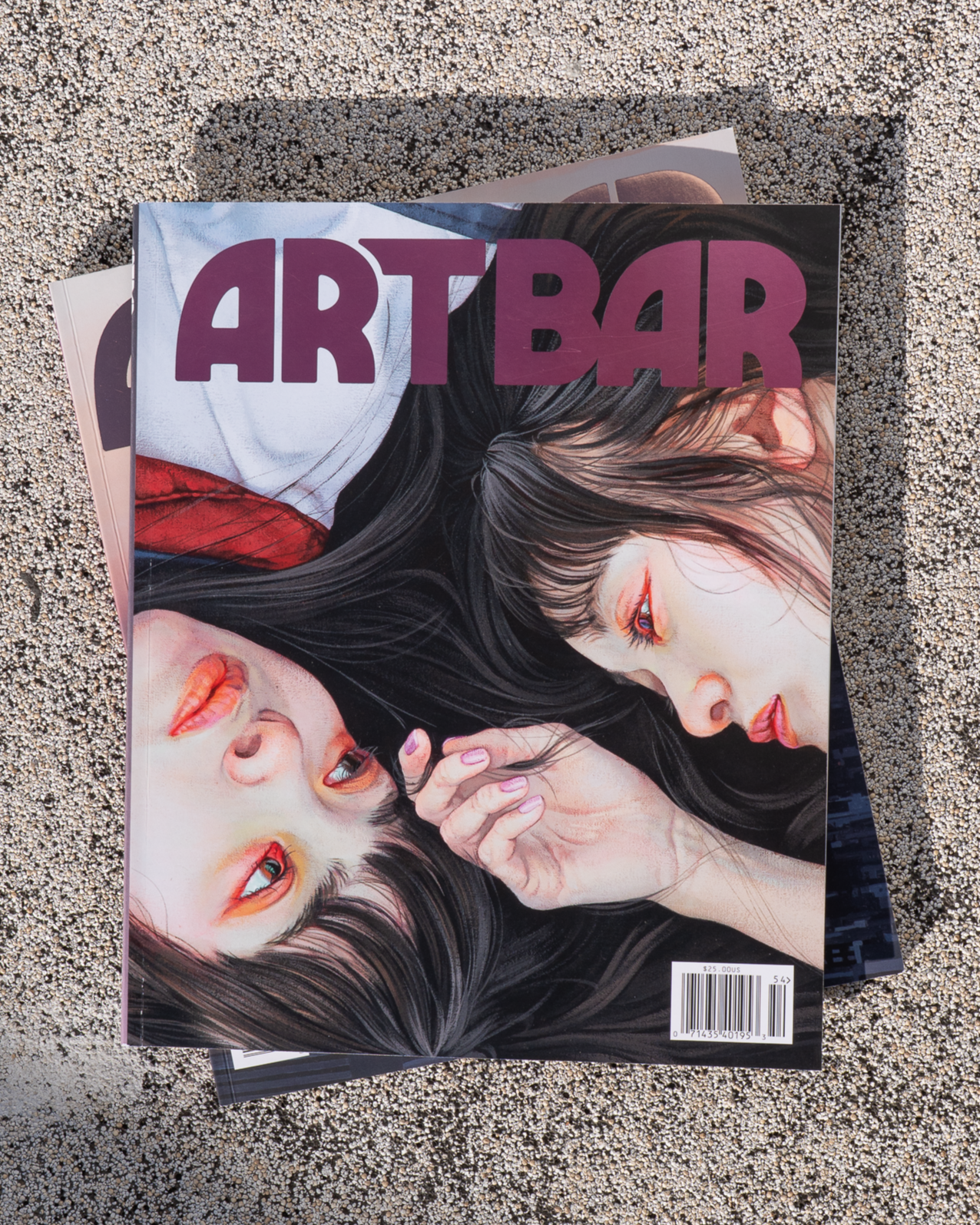
ArtBar is the perfect name for ArtBar magazine and that’s not always the case with the names of magazines. Founded by photographer and filmmaker Sarah Ingram in LA, ArtBar is like a dive bar for artists and their art. It’s democratic in its tastes, and wide in its scope. And fun.
Sarah wanted to hang with artists and so she created a space for them. Literally. From a recent editorial:
“Art Bar is a hole-in-the-wall where the graffiti artists, punks and poets, filmmakers, philosophers, painters, photographers, musicians, and wild-eyed creatures find themselves at the end of the day to tell our stories and share our work."
So. A dive bar. And that bar was going to be in print. And she wanted to get the magazine in your hands no matter where you lived. ArtBar is widely distributed, available on newsstands, and seeks more. Sarah wants to create a community, of course, all editors do, but she also wants to create a community of indie magazine folk. She wants to break things and rules and invite like-minds to her art bar and hang out and see some cool stuff and do some cool things. Think I’m taking the dive bar thing too far? Here’s that editorial again:
“We wanted to foster a place to gather, a common ground to share the stories of our human experiences and how they shape our work. This is a place where we can break things, break rules, get our hands dirty.”
I wasn’t joking. I may joke about a lot of things but not about a magazine set up like a dive bar for artists. Are you kidding? Doesn’t this sound like a place you might want to hang for a bit? Can you tell I love dive bars?
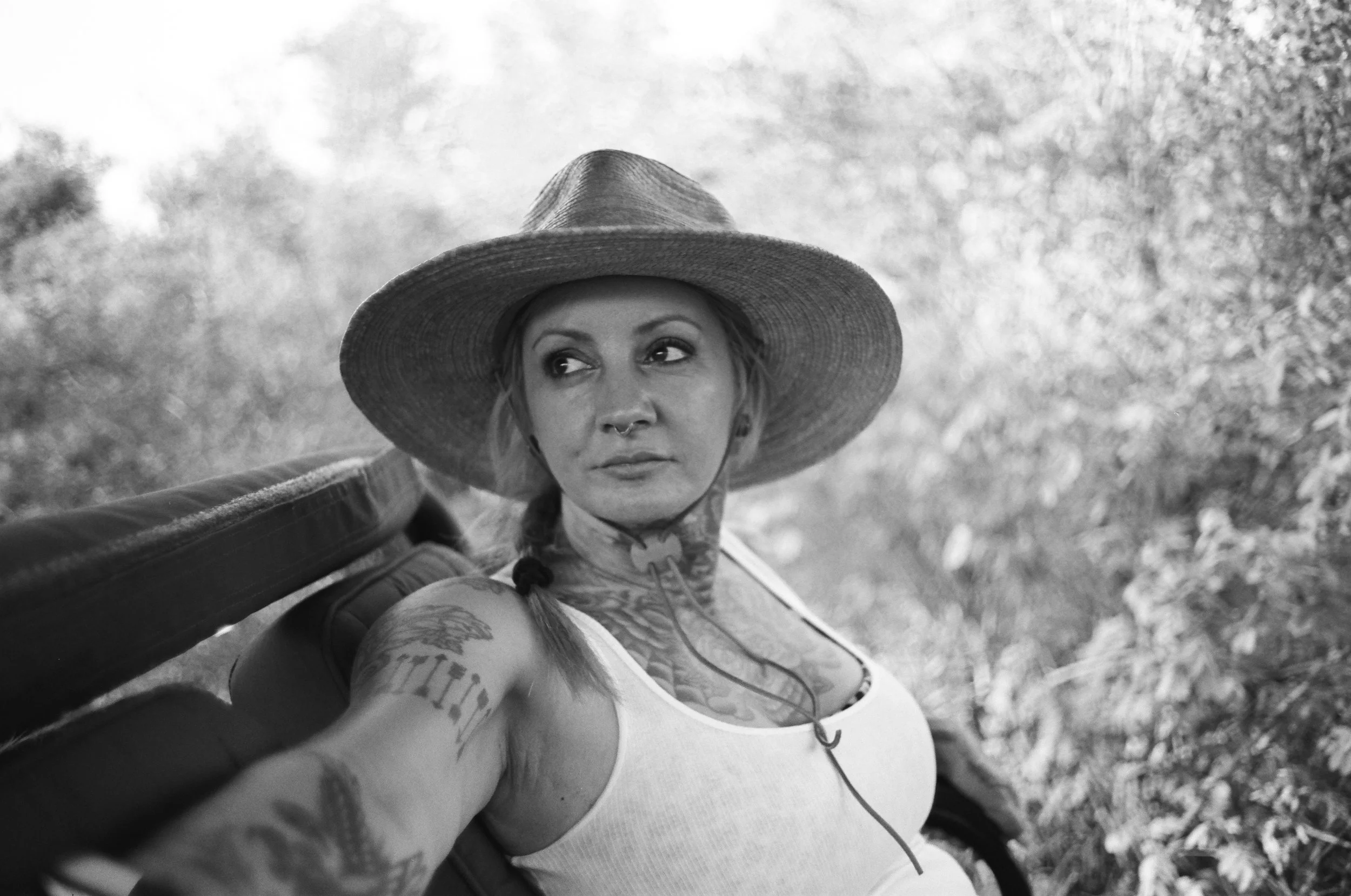
Arjun Basu: Sarah, thanks for being here.
Sarah Ingram: Thank you so much for having me. I’ve been listening to The Full Bleed since I started my little publishing journey.
Arjun Basu: That’s what I want to talk about. You know a lot of your interviews with artists in the magazine start with asking them about their artistic journey. What’s your magazine journey? Or maybe I should be asking about your artistic journey.
Sarah Ingram: One did lead into the other because I came from photography and filmmaking and before I started the magazine, I finished this documentary that was about an artist community in Bombay Beach. And it was a five year project. Definitely very rewarding, but I wanted to continue telling stories of artists without it having to be a five-year project.
And so the magazine was the next thing that came after where I could keep meeting with artists and talking to them and telling their stories on a more regular basis and more bite-sized pieces.
Arjun Basu: Art Bar in that sense is a personal journey as opposed to, “I can’t find what I want.” Or is it both?
Sarah Ingram: As far as not finding what you want in publications. I mean, yes. I’ve always loved print and with photography I print my own photos.
I love everything analog, so I wanted to make a physical, tangible, beautiful book that showcases people’s art and tells the stories. But yeah, I wanted something that you could relate to, that other artists could relate to. Something that you could go to to be inspired by. Something that was accessible and to me, that’s what we’ve been trying to do with this magazine.
Arjun Basu: There’s a lot of art magazines out there. But you didn’t find everything you just said in existence.
Sarah Ingram: I love other art magazines. Rising tides float all boats. That’s why we wanted to be in bookstores as well as just subscriptions. I love that experience of going into a bookstore and looking at the art magazines and finding an art magazine.
What I do think that we did that I wasn’t finding is not just one genre of art. We love photography and filmmaking, so we cover photographers, we cover filmmakers. I grew up adjacent to a lot of graffiti and street art, so we have that element in there. My husband, who’s my co-founder, comes from skateboarding and something about skateboarding culture leads a lot of skateboarders to become artists. So we have a lot of artists with roots in skateboarding. They see the world through a different lens, always being out on the street. So they turn into really great artists. And you know, obviously we have new contemporary artists and all of that, and I think even though it sounds like a very mixed bag, it’s all very related.
And that’s kind of where the name Art Bar came from, is that it’s this meeting place where all these different walks of life can find common ground. And we also wanted it to feel very much like a community. And that’s been a common thread in a lot of the work. And we wanted, I mean, this is probably a whole separate conversation, but we wanted a place where people, there’s a lot going on in the world and art can either be a very important place for people to have a voice about that. And art speaks to the times that we’re living in. But it also, a lot of great art can be comforting and escapist and something beautiful and a sliver of hope that we all need. So we wanted that in there as well. And I don’t know if it answers your questions about the other magazines, but I wanted that kind of safe space, community space, to go to where you felt you could relate to the artists that you’re hearing from and not feel like it was this elitist, pretentious art world that you weren’t invited to.
Arjun Basu: That segues really nicely into my next question actually. Everything you said, at least the first half of your response, if someone did not know where you were from you basically said LA without saying LA.
But I kind of wonder about your original editorial and I’m going to read some of it: "We wanted to foster a place to gather, a common ground to share the stories of our human experiences and how they shape our work. This is a place where we can break things, break rules, get our hands dirty." So that says to me that actually you didn’t find that in anything that existed in the media and all of those elements that you talk about you know I mean not just art and photography and or filmmaking and skateboard culture like all of that stuff... I mean I’m trying to think of it. I don’t think it did exist.
Sarah Ingram: Maybe not all together at once and hopefully it makes sense seeing it all together. But yeah. Even when putting it together sometimes and curating the programming of artists and stuff, or the way we’ve done things, I think, “Oh, that’s not how you do it.” We have no parents. We’re a completely independently run magazine. We can do whatever we want. But as far as breaking rules, getting your hands dirty. I think that comes from a lot of the culture, you know, like the coming from the punk rock, DIY ethos. Was there, is there a question? I don’t want to talk.
Arjun Basu: I was waiting for you to realize I didn’t ask a question.
Sarah Ingram: Okay. And I do that too because I run a lot of interviews too. I realize sometimes I’m just making a statement and I want them to reply to it and they’re like, what was the question? I’m trying to be mindful of not talking crap about other magazines.
Arjun Basu: You can but I’m not asking you to. Having said all that, and now I will ask a question: So who or what -- because there’s so many elements that you bring up all the time -- so who or what is your inspiration here?
Sarah Ingram: My inspiration is connecting with the artists that we talk to. It’s special to me and it means a lot that we’re not just writing a feature based on a press release or going to a show and writing a critique or a review. Sometimes when we’re interviewing artists and they’re in another country, the interview is done remotely. But some of those artists I’ve already met through my travels and eventually we would like to turn it into more of a travel based meeting artist in person.
What’s special to me is having an actual real connection and a real rapport with the artists that we interview. That’s one of the reasons that doing the studio visits, spending time and having it not just be a generic, “Where did you go to school? What are your techniques?” But having it be a more actual human connection.
Arjun Basu: Going back to that editorial again, because I was thinking, looking at it like, “What is the thread that is tying all this together?” There is a lot of disparate art in here, and I started thinking what kind of artist is Art Bar interested in? And then I sort of thought it’s everything.
Going back to the editorial: "Art Bar is a hole in the wall where the graffiti artists, punks and poets, filmmakers, philosophers, painters, photographers, musicians, and wild-eyed creatures find themselves at the end of the day to tell our stories and share our work." And then I thought you know what it is? You’re like a dive bar for creatives to show their work.
Sarah Ingram: That’s how I picture it. If it were to be an actual place would be if you were to go down some weird alley and there’s a little dive bar or like even a David Lynch movie driving down a dark highway, and then you just see this little hole in the wall on the side of the road. But you go in there. Then you’d see each other and you realize, like, “Oh, these are my people,” and you feel like you’re home. And even though there’s different genres of art, I feel like most of the people we talk to have common ground and something in common when it comes to their process.
We all have our own process and our own reason for making art, but there’s a lot of through lines. And the common thread is learning about our process and what inspires us to make art. And in some instances, how art can be used to form change. And that goes back to the documentary work I did and also how art is being affected by its environment.
Arjun Basu: Let’s talk about how this magazine is actually put together. What is the discovery process like? When you’re starting an issue and it’s blank, how do you start filling the pages?
Sarah Ingram: I like it to have a balance in each issue. We’re just finishing our third issue right now. I had most of my artist roster filled in and I’m like, “Oh, we don’t have anyone painterly.” We have these very mural-based, street-art based artists. We have someone who did a whole essay on stop motion artists.
And the tedious process that is, and we have a filmmaker and we had a skateboard photographer. We have Shepard Fairey who’s known for a lot of his poster work. We don’t have anyone very painterly. And I wanted to add that.
So I do like to have a balance in each issue. I don’t want it to be all only one thing, but the process for curating it is having that balance. I have a long list of artists that I want to eventually work with and some bucket list ones. But it is having that balance and having a mixture of some that are purely conversational interviews and some that are written stories or essays.
Arjun Basu: That was my next question in terms of how you decide because I don’t want this to sound badly, but a lot of great artists are actually boring people. They produce this fantastic work but they don’t have much to say, maybe because they leave it all on the canvas or whatever medium they’re painting on or whatever. Do you go into an interview with an artist saying this is going to be a Q&A, or this is going to be a background because they’re more interesting, or is that something that happens after you’ve spoken to them?
Sarah Ingram: Sometimes the decision comes after. I tell each artist kind of the options. It depends on the scenario. If they’re in another country or place, they have the option for a video interview or an email like written Q&A. Sometimes if there’s a language barrier, the written interview is better.
If we meet with them and we have a conversation, I sometimes decide after, that was a very good back and forth conversation, I’m going to leave it in conversation form. And in some cases, one artist in our first issue, Mark Bryan, we visited him twice over the course of four years. Each time, coincidentally, right as an election was happening and some of his work is political satire.
In that case it didn’t work to leave it in conversational form because the visit spanned four years. So it was best to just take everything we talked about and give it to a writer and have him write about Mark Bryan’s work and use pull quotes. So sometimes in that case, the decision comes afterwards.
Arjun Basu: It’s very democratic in terms of aesthetics and taste and range. I’m just thinking about in the second edition you know you have this piece on GWAR, the world’s most infamous art collective and I’ve always thought of them as performance art. I mean it’s hard not to. KISS I would say started that way but then just became a vehicle for a vast commercial enterprise which is fine that’s probably why they’re much bigger than GWAR. I bring up the GWAR story because there are many many art magazines in the world and probably most of them would not have touched that story with a 10 foot paintbrush and it’s a big story there. It’s the first one I read when I got the magazines and it told me that I wasn’t reading Artforum.
Sarah Ingram: Yeah, exactly. I think Artforum and some of those are more based on art trends and art reviews and geared towards collectors. Side note, I think collectors would be interested in reading Art Bar anyway, because if I was collecting an artist, I would want to know about their life and their human experience to have a better understanding of their work.
But as far as GWAR goes, we came across that because they were doing a show at Roger Gastman’s gallery, and he is one of the greatest curators of artists of our time, but he mostly deals with graffiti and street artists. And I even asked him, how do you go from graffiti to GWAR? And it goes back to the punk rock roots and how that intersected graffiti.
But yeah, GWAR, if you really find out about GWAR, they were all art students and they just started making their own creations. And then the way to get their creations out there was through performance. And then now that they were doing these shows, then you had to kind of learn how to play the music.
I think they’re, you know, old art school, rough kids at the root, and then it became this whole stage show.
Arjun Basu: They’re sort of the other end of Talking Heads in a way. You know Talking Heads is an art school band too.
Sarah Ingram: We have covered a few musicians, but it hasn’t been about their music. There’s a lot of musicians that also have parallels in art. So there was GWAR as an art collective and in the first issue, N8NOFACE is a musician, but it was about his creative co collaboration with his girlfriend because she’s a photographer and he’s a poet. Also we had Nadya from Pussy Riot, she has the punk band, but she’s also an artist and an activist artist. And she had that show at MOCA, the POLICE STATE show.
Arjun Basu: Unlike a lot of the magazines on this show you came in with advertising right from the start. There is a slight shift even within the first two issues in terms of who’s in it. The first issue is mostly galleries. What was it approaching these places that you know must get approached all the time by all sorts of different publications, how was that reception?
Sarah Ingram: The answer to that is it’s actually been really hard to get advertisers. It’s a rough economic climate. I have another job where I work for a production company that relies mostly on advertising income and because of the tariffs and everything, a lot of budgets have been really scaled back and the art world has been heavily hit.
I think art sales are down like 40%, so it’s harder to get galleries to advertise. The first issue to be fully transparent, we gave ads to people we were friends with to just show what an ad could look like in our magazine. And we were new. And even though we started our first issue with the biggest distribution company, in all the Barnes and Noble stores and all that, we still couldn’t get ads by the second issue.
We already have relationships with some galleries and a couple galleries bought ads with us. And going into the third issue, there were no new advertisers except for it looks like we’re starting a partnership with Pabst Blue Ribbon, which is nice. But it’s crazy because a lot of magazines have pulled out of this distribution system.
We’ve expanded from the first one to being all across the US. Now we’re in Canada, UK, and Europe. And even then, it’s still really hard to get ads and I’m not a salesperson. Maybe if I had a salesperson, they could go out and be like, this magazine is everywhere. It’s outselling these other art magazines four to one.
And maybe we could find advertising. And I was inspired, I remember a while back you had Mountain Gazette on your show and he was like, what if we just have a model where we don’t need advertisers and now they are having more advertisers. But I think the most sustainable things right now for publishers is that subscription-based model where you’re just giving people good quality content. Even with the ads that we have, it’s like four pages of ads and 136 pages of art. Our plan is to just try to keep making a great magazine and hope people subscribe.
And of course if there are advertisers out there that want to be in a premium paper, high quality magazine, that’s in very many stores across the world, we would love, if it’s a good fit, to have advertisers because the printing costs. If it only just covered the printing costs, that would be great because we’re still having to front most of that, and in a lot of debt for that.
Arjun Basu: Making magazines has never been easy but now with the ad market the way it is it’s that much harder of course. So outside of the advertisers, what about readers? What’s the reaction to the magazine been?
Sarah Ingram: The reaction has been wonderful, and it makes everything worth it. I get people that just send me direct messages, send me emails. They found it in a store and now they’re writing to us and they’re saying that they had a connection to the magazine and saying, thank you for doing what you’re doing. That, to me, is the why. That is the most rewarding part of it. So far, the reader reaction has been really, really great and people are really connecting with it and relating to it.
Arjun Basu: You’re distributed all over now but are they all over or are they concentrated in a certain place or?
Sarah Ingram: It is mostly America, the messages that I’ve been getting. But it is all over and it’s fun because this is probably changing, but for now, other than the distribution that goes out to the stores, I’ve personally been shipping all of the subscriptions and single issue orders, and it’s really fun seeing them going out to all these different places.
All of our first subscribers were people we knew trying to support us, and now it’s really fun to just have a huge strip of labels print out and put ’em down, and just seeing it go out to all over the country. A lot of Pennsylvania somehow, but yeah, just, just everywhere.
Arjun Basu: I did not expect you to say Pennsylvania when you started that. So now I’m going to bring up LA because I kept wondering how LA this magazine is. And I know it’s not about LA, of course, and the artists come from everywhere. But it feels LA somehow and maybe that’s just me... or maybe it’s just you.
Sarah Ingram: I was born and raised in Los Angeles, so that’s probably going to show up. We have a lot of friends that are artists that are in LA that we’ve probably covered, but I can think of other magazines that specifically focus on the LA art scene.
And we definitely wanted to try to be different than that and not cross stream. So the goal is to be a travel-based magazine, but there is going to be a lot of LA interjected in there because I have a lot of roots in Los Angeles, but hopefully, you know, it’s a global art collective.
Arjun Basu: It’s global. It just there’s something very LA about the magazine and I don’t know what it is. So this is not about the magazine at all but what art scenes are ready to go? Larger centers feel like to me that’s where you go once you’ve made it. They’re small galleries and stuff, but is there a scene in large cities now? Can there be, given the costs and everything?
Sarah Ingram: Yeah. And here LA’s very spread out and there’s definitely different scenes. One very specific scene would be in the second issue, we covered this gallery Superchief that it was save Superchief, because it’s very hard to stay financially stable in the art world these days. They do a lot of community work and very not bougie art world. So there’s that scene. In LA there’s a very strong scene of these kind of OG street photographers and street artists and there’s that when those shows where it’s very location-based. Even though there’s these kind of very old school artists, there’s also a very young generation that’s going to those shows.
And then there’s high art scene that I’m probably not as involved with. And then, yeah, there’s kind of the new contemporary. There’s galleries like Corey Helford or Thinkspace. When people have art shows, people do show up.
It is a gathering place. But as far as if anyone’s going to ask me about a scene, I’m probably not going to have the best answer because that’s not what we’ve been about. I’d rather go see a show during the week when it’s not crowded than to go, just to be seen at the opening night. Guess I’m not the best person to ask about scenes because that’s not what we’re reporting on. We’re more kind of interested in people’s lives.
Arjun Basu: Fair enough. What have you learned about making magazines?
Sarah Ingram: I’ve learned a lot because I did this from scratch and pretty much on my own. I’ve put out little zines and things like that before, but the whole process to me was really fun and I geeked out on every part of it, from getting paper samples to different printers and learning a lot about the printing process and having relationships with our printers and being there during the printing to learning about distribution and the pros and cons of being in bookstores versus subscription. I guess the main things I’ve learned about our printing and distribution, and those are things that were really fun for me to learn about and geek out on. The other things as far as storytelling, were already part of our roots from doing documentaries. I would love to learn more about the sales or advertising aspect of it.
Arjun Basu: You did mention distribution and I mean it seems like you’ve sort of figured it out.
Sarah Ingram: We got lucky. I think our timing was good too. Sadly there was an art magazine called Juxtapoz that went out of print after 30 years and we were already in development when that happened. But I think there was definitely an opening or a need for an art magazine in some of these chains.
We just wanted to be in the independent bookstores, the cool little bookstores that I like to go into. Ages ago, I was a buyer at Tower Records, so I know how that whole world kind of works. And I just asked the magazine buyer, who do you get your magazines from?
And then I followed the trail and found the distributor and asked them how I could be distributed by them to get into this tiny bookstore and they were like, well, it doesn’t really make sense for us to distribute you unless Barnes and Noble takes it because otherwise the numbers just don’t make sense for us.
So put together a sell sheet. We’ll see if Barnes and Noble will take it. They usually get back to us within a few weeks. And I put together the sell sheet and in less than 24 hours they were like, yes, we want it. So then we had to scale our printing and all of that. To meet those orders. It’s not very beneficial to the publisher at first because you front all the magazines, and I know this from working at Tower Records, what they don’t sell, you don’t get back.
And what they do sell, you maybe get half of, and so you’re maybe breaking even. And then the pay cycle is like basically you get your final payout of Net 180 after your off sale date. So like 10 months after our first magazine, we’re going to get that bookstore money. And meanwhile, they keep like doubling their order and ordering more because they’re expanding us and we have to keep printing these magazines without seeing a return.
So I’ve learned a lot about that part of distribution, but to me it’s still worth it for now because we get mail from people who are, like, I found your magazine at a bookstore in Vermont and it had a positive effect on my life. And so for now, for me, it’s worth it to be able to reach people in areas that maybe don’t have an art community or don’t have that indie bookstore that they can find it at.
And we’ve actually interviewed a few artists that talk about being a kid and going into Barnes and Noble and going through the art books, or the art magazines, or the skate magazines, and that having an effect and being formative for them. So for me, it’s worth it to be in those stores, even though we’re taking a hit to do it.
Arjun Basu: Barnes and Noble saying yes and saying yes so quickly. Did the buyer just really like it and just say yeah I want this? That’s amazing. And how early in the process of making the magazine did that happen?,
Sarah Ingram: From concept to going to print, it was a year long process I naively thought. I think in July of the year before it came out, I was like, “We’re doing this magazine. I bet I can get it out by Christmas.” And it was a year later that it came out because I really wanted to get it right.
To me, this is a lifelong project and I don’t want to just rush something out. So it was long enough into the process that we had our artists lined up and you know, we had enough to show them what we were doing and explain what we were doing. But it was probably four to six months.
Arjun Basu: Someone like Barnes and Noble says you know within 24 hours yeah we’ll take it. You’re not thinking about the business reality at that point. That’s just a really good kick in the ass
Sarah Ingram: That was a good milestone for us. And going back to the advertiser thing, I was like, oh, now, we’re in Barnes and Noble. Of course now we can get the ads. But it was still tough. It was definitely the nice little push that inspired us to get over the finish line.
Arjun Basu: Where do you want to take it?
Sarah Ingram: I would like to be able to do more artist visits that are travel based. Make it more of a travel art magazine where we’re doing studio visits in Japan or Bolivia, or this one artist we met, she built her own artist studio in her backyard in the Netherlands, and I’ll see it covered in snow with her little wood stove burning.
And I want to be able to travel more with the magazine and just keep finding new subscribers and keep doing what we’re doing with our relationships with the artists. This to me is my lifelong project that I want to retire with. So I just want to keep the quality up.
Probably start working with more writers as well and meeting with more artists across the globe.
Arjun Basu: At the beginning of this conversation you talked about the community a lot and building a community and so I wonder how the Art Bar community becomes a thing, you know, and becomes an actual community where people meet not because of the art itself but because of Art Bar. One of the things that I think a strong media can do is do exactly what I’m suggesting. You start creating events and that’s just a whole other part of the business. But is there any idea of that?
Sarah Ingram: Yes. It made me think of something else that’s big on the list that isn’t print related but related to the magazine. For our next issue, we’ll be having an Art Bar launch party and it’d be great to have them in other places. As far as community goes, it would be good to have events in other places.
Some people have said they just felt the community just by reading it. One thing that’s not print related is because we come from film. We’ve been shooting video this whole time and just haven’t had the time to start putting it out yet. Eventually having screenings and eventually having our own film festival, art related films and documentaries and having an Art Bar film festival.
I always need to reign myself in and take it one thing at a time because I have a tendency to be overly ambitious when it comes to some of those things. But yeah, having more in-person group art shows, community-based events, and ultimately a film festival.
Some of my first influences were David Lynch as a filmmaker, a photographer, David LaChapelle, Floria Sigismondi, the filmmaker Alejandro Jodorowsky. All of his films are these surreal art pieces where every single frame could be a painting. With photographers and painters it’s vast.
If I were to have a bucket list of artists that I want to work with that are legends. Not, you know, necessarily new artists, it would be Ralph Steadman, who was the gonzo artist for Hunter Thompson and who I already mentioned, Alejandro Jodorowsky. I’m hoping I can get over the pond and do interviews with them.
Arjun Basu: That’s like the equivalent of the three people you want to have dinner with question. You answered it that way so that’s good. Everything you’ve learned making this in a medium that you weren’t really experienced in, and despite your zine that you created.
What’s the advice that you would give to anyone who wanted to create a magazine from scratch?
Sarah Ingram: This is interesting because I want to start a little coalition of magazine publishers because I feel like we’ve all learned different things and could offer each other resources. Like I could tell somebody the pros and cons of distribution, but they might have a contact for a bookstore, better insight into e-commerce. But if I were to tell somebody starting out... I think you need to gather your content first. Just as creative advice suggests that it be of substance and not just like voyeuristic into something. Like really immerse yourself in whatever you’re trying to publish.
Geek out on it, fall in love with the process. Get all your paper samples and spread ’em out around you and fill all the paper. In my case, working with a really great art director, Jason Culp, who does our layout like that is huge.
And my copy editor, Valen Lambert, like, gets what we’re doing. I had had talked to other writer types before that just didn’t really understand our voice. So it’s like understanding your voice and your aesthetic. Having an idea of what you’re really trying to communicate with people. And then all those other logistics. Let’s start a little group chat and I can help you and maybe someone can help me.
Arjun Basu: You heard it, magazine people. Start a group chat.
You brought up Jason’s name. How did you guys hook up and what was he doing before you met him?
Sarah Ingram: He is in the Bay Area, so we didn’t know each other in person. I found a website that I liked that he designed and his link was on it. And then I went to his page and found other things he designed that were in our wheelhouse. I wrote him to make sure it wouldn’t be a conflict for him to also work with us.
And we met and then he just got it. He’s like, oh, I come from these genres and I totally get what you’re doing. And what’s really great about him is, we’re a startup. We didn’t start with a lot of money, but he really believed in it and wanted to be a part of it and trusted us, and now I consider him a partner of the magazine.
I feel like it’s our magazine because he is really committed to the design and I keep saying each issue, I’m going to get better about schedule and getting ahead of it so we’re not in this crunch mode at the end before we go to print. The last issue, we had a major crunch mode where we were pulling long hours and when you give people ownership, like you’re not just hiring them to be a button pusher, but they feel like it’s their baby too and their project too.
And I wanted him to feel like it was his project too. I feel like he does, and that’s why when we’re doing these, burning the midnight oil to finish it, he is in it, in there with me to make sure we get it across the finish line.
Arjun Basu: No matter what the size of the magazine, no matter how big the staff, there will always be crunch mode. You can have the best production person in the world and the most organized production person and you will still have crunch time. If you’re in an office together you’re eating chips out of the same bag at one in the morning. If you’re not you know you guys are FaceTiming and saying yeah I got it and call you at four. I mean it’s, just, it’s unavoidable. It’s part of what makes magazines, I think, so great. The panic and then the rush. There’s so many emotions you go through as you’re creating this stuff.
Sarah Ingram: Yes.
Arjun Basu: That’s where it’s like skateboarding.
Sarah Ingram: I’m glad you said that. And it makes me feel better, and I do realize that that is kind of part of the fun of publishing is that hour. And then the reward when you get after all that, then you get to feel it in your hands and see it as a physical piece of media. It makes that whole crunch mode rewarding.
Arjun Basu: Smelling the magazine for the first time when you open the box is still one of the greatest feelings in the world. We end these with the question: what are three magazines or media that you’re recommending to people right now?
Sarah Ingram: It is tough to narrow down, but I will do one that I discovered on your show, Elastic Magazine. I think she has one out so far, and it’s just a beautiful publication of art and literature. Really, really well done. Then to do one nod from our parallel skate world because my husband is co-founder and he comes from the skateboarding world is a newer magazine, well not newer, but for skate it’s called CLOSER Magazine and it takes skateboarding and it feels like an art magazine. It’s printed on really premium paper with really beautiful photography.
And that’s by Jamie Owens. And he was actually really helpful when I decided I wanted to print a magazine. He spent an hour with me on the phone and I had a ton of questions and he answered them and there was no gatekeeping. And that’s a beautiful magazine that we collect, we subscribe to. Behind me we have a stack of those. I’m going to do one non-print, one that’s just doing really great journalism in Los Angeles called LA Taco.
Arjun Basu: I’ve heard of that.
Sarah Ingram: Like, yeah, it’s like LA Taco doesn’t sound like what it is. They actually, I think, still do some food reviews, but they’ve been, as far as everything that’s happening in the climate that we’re living in, they’ve had really great journalism that you could trust.
They’re on the streets documenting things. They’ll also cover an art show or a punk show but as far as what’s happening in LA on a social political level I say they’re doing like the Lord’s work or whatever, as far as journalism. They’re really getting out there and documenting things, and my hat is off to them for what they do.
Arjun Basu: Yeah I’m happy you mention them though because as the big media sort of retreat into their cozy billionaire nests I’m happy that it’s creating an opportunity and that some people are taking it locally in every city like LA Taco.
Sarah Ingram: I’m less and less engaged with cable news or anything like that. So people like LA Taco, I feel like you could really trust their reporting.
Arjun Basu: We need the people we trust. Thank you Sarah. Thank you for being on the show.
Sarah Ingram: Thank you so much for having me. I’m a big fan of your show.
Sarah Ingram: Three Things


More from The Full-Bleed Podcast