
Reality Bites
A conversation with Geezer founders Laura LeBleu and Paul von Zielbauer. Interview by Arjun Basu
—
THIS EPISODE IS MADE POSSIBLE BY OUR FRIENDS AT FREEPORT PRESS.
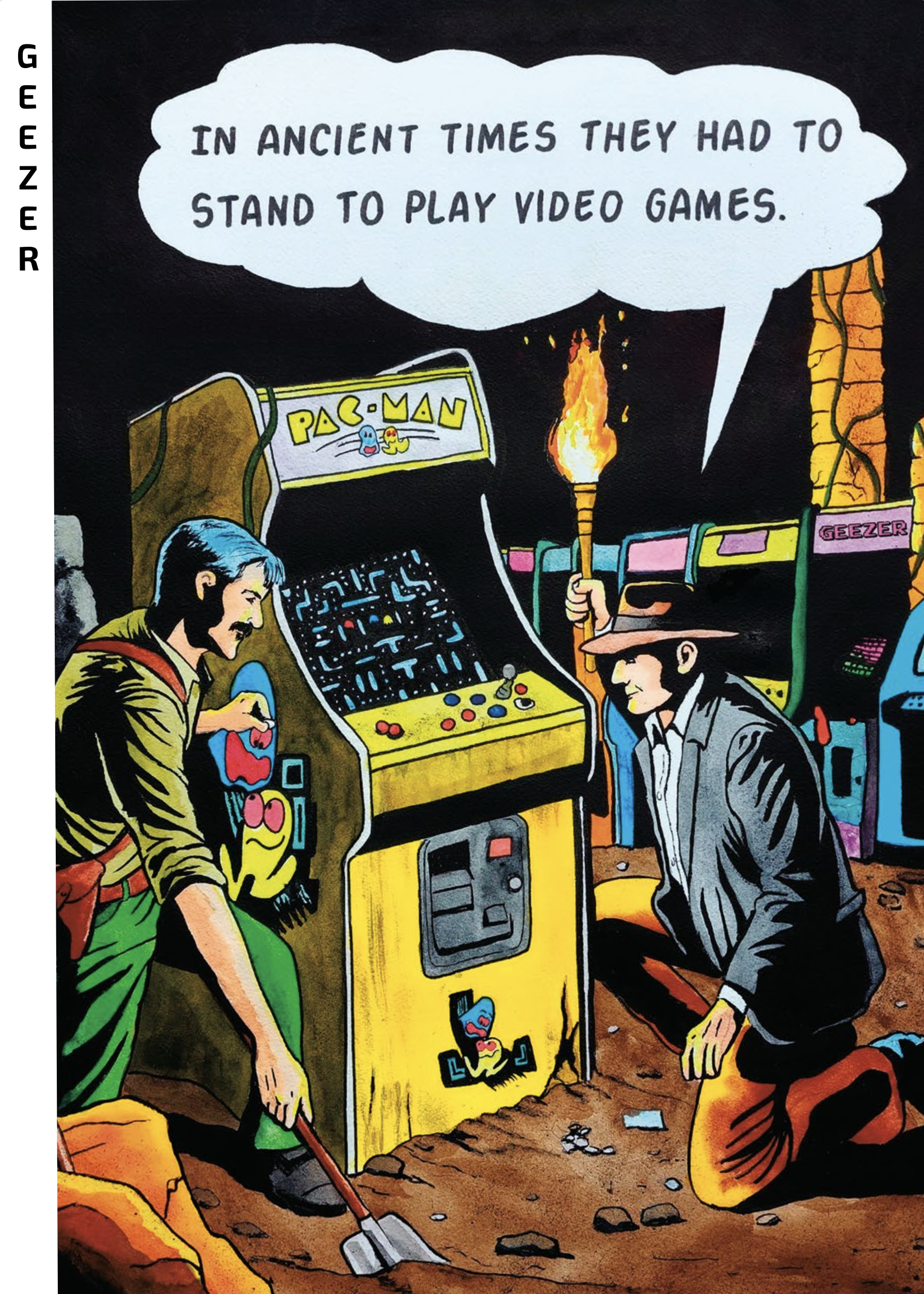
I am Gen X. I’m telling you this because, well, this is hardly something that is ever relevant to any conversation when, in fact, it is also always relevant to everything.
But I just don't talk about it because who cares when I was born, or that we Gen Xers all live in the long and darkest of dark shadow of Boomers, or the loud echo of Millennials, or the annoyingly brash and unknowing living of whatever the other younger generations are called. I’m Gen X, and I just know one thing: there are more of you than there are of me, and there always have been.
I'm saying all this because today we're gonna talk about Geezer magazine, as if any Gen X-er in their right mind would ever call themselves a geezer, because that's Boomer stuff. And hey, did you see we're turning 60? For fuck’s sake. As if.
So yes, Geezer, a magazine by and for Gen X that is both completely irreverent and surprisingly serious and even tender, that balances nostalgia with irony. And while Gen X’s favorite word might be whatever, the secret is we care what you think. We always have. You just have to first extract a whole lot of other stuff, that cold exterior built up as a defense mechanism against a world that is stupid, and that for whatever reason the Boomers keep running. Meaning sure, we like to say never mind, but we also sang “Don’t You Want Me” and “Debaser.”
So just take a chill pill. I promise we’ll talk about a rad magazine on today’s show.
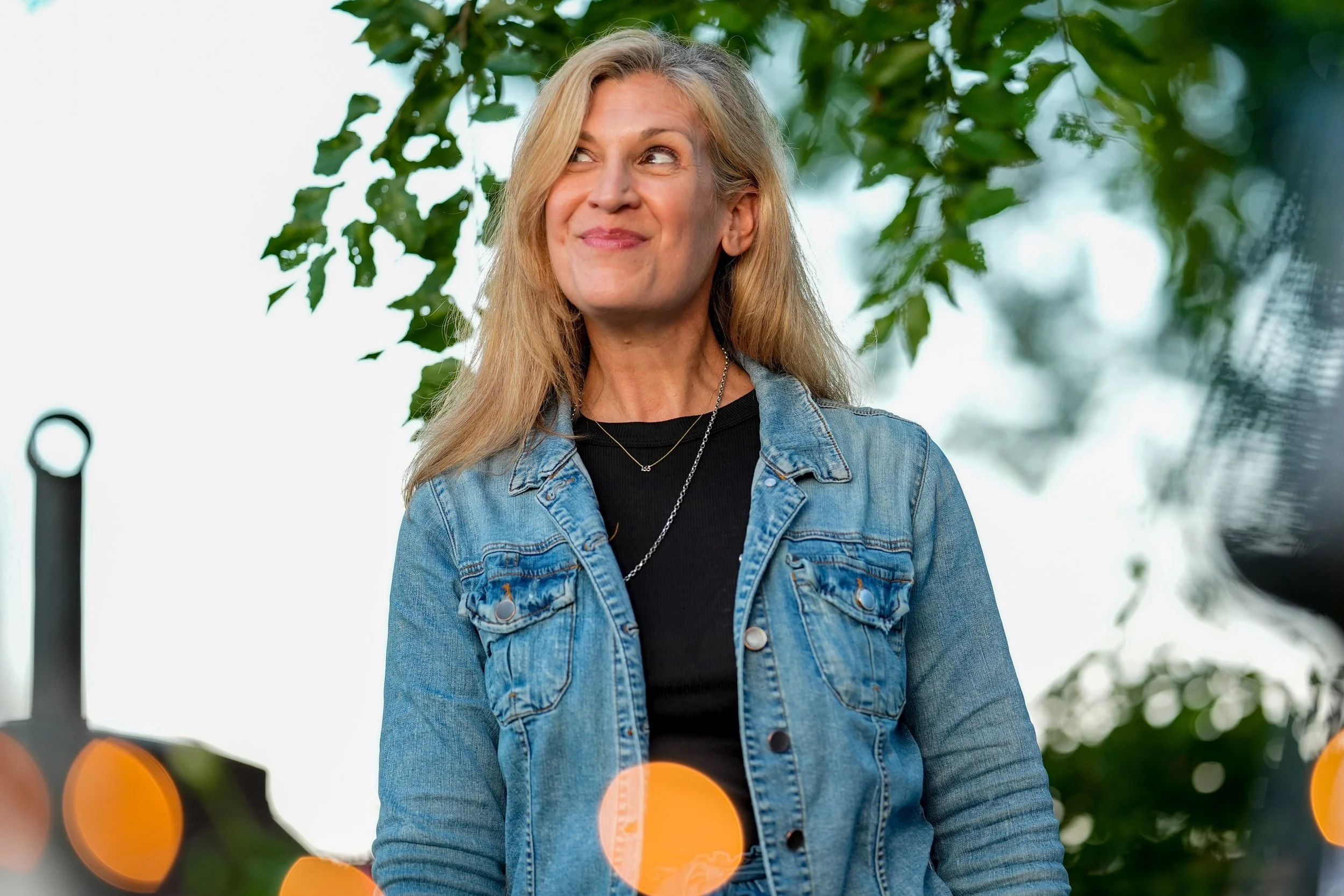
Arjun: Laura, Paul, thanks for being with us today.
Paul von Zielbauer: Great to be here.
Laura LeBleu: Yeah. Thank you for having us.
Paul von Zielbauer: Yeah, this is gonna be a good conversation.
Arjun: So why don't you quickly -- before we get into the magazine -- just tell us your story individually. Laura, you can go first.
Laura LeBleu: Absolutely. This is a brand new world for me. I'm not a native of the magazine land. I actually came up as an actor and a writer, and for the last 15 years or so I had a foray into advertising, copywriting. For 15 years, I've been working as a writer for technology companies.
The impetus behind Geezer was really driven by this visceral need to express myself creatively as I hit my fifties. So it just felt like it was the time that if not now, when. I really wanted to create something that spoke to our generation, to Gen X, and told the stories that we could not find with honesty. I like to say we don't keep the dirty side down. We really want to dig into what it is to be middle-age today. That is the very quick version of how I got here. Paul?
Paul von Zielbauer: I am a journalist by trade. I've been a journalist at heart probably since I was a kid, but didn't know it until my mid twenties. And so I spent 11 years at The New York Times as a staff reporter.
Some of that's investigative reporting. Which, The Times nominated my work for a Pulitzer back in the day. This is like, gosh, 20 years ago. And then I also covered the war in Iraq from Baghdad. And so I've covered conflict overseas and then also was the Connecticut bureau chief.
I like to call it myself the bureau chief of a one-man bureau in Connecticut, which of course no longer exists. Neither does any of the other bureaus that are around New York City, Newark, Long Island. They had a Westchester Bureau. That seems back in the 1800s now.
I'm a reporter and a writer at heart, and I've dabbled in tech for a while up until now, but part of the reason I'm at Geezer is because tech no longer worked for me and no longer wants me to work for it, by the way. So that's a longer story.
Arjun:We'll get back to the idea of tech and digital and everything, because there's definitely a subtext in Geezer around that idea. I don't know if I'm being flippant or not, but is this like a midlife crisis writ…?
Paul von Zielbauer: That's a great question. We haven't gotten that one yet. That's great. Laura, you can take that one.
Laura LeBleu: Oh yeah. You know what, we like to reframe the idea of the midlife crisis, right? It's like the midlife transformation. But it is absolutely, 100% dealing with the general weirdness of middle age that no one ever warned us about. I know that I think of myself 20 years ago and I thought 50, 50-something, you have it all worked out, you're gonna have your life pretty much set. And I basically dismantled my life because I realized I had built it on a foundation that was no longer structurally sound. And so in the process of dismantling a lot of things that weren't working for me, I had to create something that did work.
And Geezer is very much an outlet for needing to create something that actually was an expression of myself after years and years of writing for other people -- from advertising into writing for technology -- and just having that sense that I don't wanna die not ever having created something that brought me joy and felt like it was close to what I love and what my voice is and also that I was able to share with other people. Paul is a huge part of that. We're partners in this voice.
So it is definitely. I would've not been able to do this 10 years or 20 years ago. Yeah.
Paul von Zielbauer: That's a really interesting… it's funny, I was going to… I was expecting you to say no, it's not a midlife crisis. We talked about this, between Laura and I, a lot. And yet that answer somewhat surprises me. I have a slightly different one, Arjun, if I could just throw it in there. I think it's interesting that Laura's and my answer are a little different, but I understand why she said what she said.
So anyway, my part of Geezer, it is not a midlife crisis reaction the way that Laura described hers being. And that's because I come at it from a rather different reason and angle. I'd been thinking about what it means to be in my fifties. I'm 59 and I have a 10-year-old daughter. So I'm an older dad and i've been an athlete my whole life. And I had been thinking, for years now, about how do I maintain myself? Physically, emotionally, cognitively, the food I eat, my social life, 'cause I tend to be a bit of an introvert.
How do I do this so that when my daughter's 35, 40, I'm still active and able to hit a tennis ball with her, or walk down the street without her pushing me? How do I do this? Because I wasn't set up for the things I need to do.
So I started a Substack. I started writing about it. I joined Substack and started writing this Substack called Aging with Strength. And so that was my way of processing, okay, what do I need to do to, be a 50, a 69 and a 79 and an 89-year-old guy who isn't broken by his fitness routine? 'Cause that's my MO. And the reason I was doing that and thinking about it so much was because I was trying to find my next job in tech and just couldn't find it. Could not even get a job offer after, Fulbright scholarship, New York Times, Columbia University, blah, blah, blah.
And so I felt like the world had changed underneath me, vis-a-vis, it saw me as an old, older guy now which surprised me. But because I was I had to make my own success I'd been thinking about the elements of Geezer, and then Laura one day came up and said, I'm gonna do a magazine. It's gonna be called Geezer, and it's about this: the Gen X aging experience.
Laura LeBleu: Yeah,
Paul von Zielbauer: And I thought, okay.
Laura LeBleu: Paul, do you mind if I mention, his Substack called, Aging with Strength. And so while he was developing that, we were talking about it a lot. Because I've been marinating in our conversations about what it is to get older. I was literally in the shower and the idea came to me. I was like: I wanna do a print magazine, and I'm gonna call it Geezer. And basically I did, that same morning. I was like, Hey Paul, guess what? I'm going to do a print magazine. I'm gonna call it Geezer. Do you wanna do it with me? Are we gonna do this together? And that's how that happened. And I had been inspired by Mountain Gazette and Adventure Journal and ORI Magazine -- I know you've talked to Kade. So I had been really drawn towards print and being able to hold something in my hands and have an analog experience. And so it's from this interesting intellectual brew that Geezer came to be.
Paul von Zielbauer: Yeah, so the answer is yes and no. And they're both right.
Laura LeBleu: Between the two of us, that's often what our answers are.
Arjun:The fact that both of you guys, in different ways, came outta tech... it's ironic in a way, but also typical, I think. The tension between the digital realm and everything else is like a theme. I remember I was asked to write a blurb for a book many years ago called The End of Absence by Michael Harris, and he argued where the greatest loss that like us faced was that loss of absence itself. He called it a loss of lack. That people younger than us didn't know what that felt like. And I feel like that is the tension that runs through Geezer.
Laura LeBleu: That is a conversation actually that I had with a contributor in issue number two. His name is Chris Clews and he wrote at the very end of issue number two, he wrote what we call a pho-bituary, and he wrote it for video stores. Blockbuster. And as we were talking about it, we were both lamenting that we don't have that experience where you have to physically go somewhere. You don't know if you're gonna get what you want. On that Friday night in 1988, you would go to Blockbuster and you didn't know if that movie was gonna be there. You had to wait, you had to hope, you had to strategize.
And you know what, if it wasn't there, then you had to...
Paul von Zielbauer: You had to be ready to be disappointed, which is like such an old, '90s idea. What?? Disappointment?
Laura LeBleu: Exactly. Like not everything was just there at your fingertips. The beautiful thing is, that would lead to adventure. That would lead to a new experience. That would lead to something outside of the algorithm. And I feel like you're absolutely right. The algorithm has us just swept up into sameness and that makes me sad.
Paul von Zielbauer: Yeah, sorry, I think this is infecting -- and I use that word intentionally -- a lot of different parts of our lives. For example, just last week I was reading in The Wall Street Journal about " here's how to incorporate AI into your daily life."
And there was an example of, like, a CEO of a funded tech company I hadn't heard of. She was using OpenClaw or maybe it was the version of Claude that you download to your machine and let's read your emails and write emails for you and so on to just order her tofu when it ran out. She would go to Claude and, say, order another rounded tofu. And then it would, through Instacart or something. And I thought, oh, that's cool. I should do that. Why do I have to go to the grocery store?
And then I, after about – I just got back from Trader Joe's last night – I'm like, you know what? I don't want to do that because that's just ordering a food and a brand. I'm not sure. It's probably from Amazon. I don't know. But I just want to go to the store and hold the apple and hold the tofu and yeah, drag it up the stairs, in the grocery bag.
Laura LeBleu: Have some human interaction.
Paul von Zielbauer: Yeah I don't want to have everything just delivered like it's some kind of it's an old movie about 1984 where you know this air like saucers and it's the Jetsons. No, I just want to go to the store and buy my own food. And I think to your point, Arjun, of the question, maybe it's like we're all being asked to move faster. You should do this, you should do that. You should go figure this out. OpenClaw, Anthropic. GPT, whatever. And I think there's a real art in just saying, nope, I'm not gonna do that. I'm gonna keep on living this part of my life. Like it's 1992. But it's really hard to do that.
Arjun:So much of tech is about reducing friction and we've given up so much because of convenience. I just think about – and I don't want this to be a nostalgic thing – but I just think about the simplicity of how we grew up. On the streets, when we were like feral kids, we had few channels on TV. We had outlets for music. But if we wanted to find the music we wanted, there were people we trusted. We went to our record store. We had choices in more ways, oddly enough, because we made them. The choices were meaningful. And then, I get back to that idea of the lack.
You and Laura in an interview I read while researching this, you talk about “the void.” And I think it's the same thing really. You talk about – one, I think the void is a really good name for the generation too – but in this case, we're talking about the void, about conversations about our age.
And you mentioned that no one was really talking about this generation meaningfully or purposefully, really. And it was about aging, it was about, yeah, we're getting older now. We're still wearing concert shirts, but we're grandparents. We're gonna become grandparents, or some of us already are. So is this what it is? Is this like a management tool? It's not just nostalgia.
Paul von Zielbauer: No. In fact we got our ass kicked a little bit by a reader or two after our first issue came out. We've only had two issues. The last one came out just this week actually, hitting mailboxes. But it was a guy who was saying, like, if you guys keep this up, I'm gonna cancel my subscription, 'cause I want more nostalgia.
Laura LeBleu: Accused of being too artsy fartsy, and that's okay. But we acknowledge that there is nostalgic element to this, but Paul go ahead…
Paul von Zielbauer: We wanted to include, like, reportage, that's where I come from. Laura is the artsy-fartsy person. I'm a little bit like that, but she's really like that. So we had some really interesting pages with just art on them or poetry, and they were really good.
Like, it's really high-quality stuff. But this guy, in particular, and another reader, wanted more throwback. He wanted us to show and talk about, like you were saying, Arjun, back in the day when we didn't come home until the streetlights came on. Which is again, it could be from the 1800s.
It just seems like an ancient way of living, riding your bikes without a helmet, so on and so forth. So we heard that and in issue number two, the one that just came out, I think we really nailed it because we mixed the nostalgia with the reportage, with the art, with the poetry, with a look at HRT hormone replacement therapy and how some major medical study in the early 2000s screwed that up for two generations of women.
So we put it all together in a formula that I think is hitting the different parts of our audience.
Laura LeBleu: Yeah. We're a work in progress and we're very open to listening to criticism and feedback and trying to adjust. And this is correct. The guy, the reader's name was Hutch. I remember Hutch. He was like, "This is artsy fartsy." and I'm like, "All right, let's figure out what to do for the Hutches of the world." And outta that came a couple of very specific stories. One of them is about Heavy Metal Parking Lot. It just makes me so happy. It's this 16 minute documentary from 1986, that's just a whole bunch of kids getting totally trashed in the parking lot before a Judas Priest concert. And it's brilliant. And this is the 40th year anniversary. A wonderful writer named Jack Boulware from San Francisco founded LitQuake, which is a really well-known literary festival in San Francisco. He actually had a magazine called The Noseback in the day, like in the nineties, eighties, nineties, I think. And so he wrote a piece on the 40th anniversary and I was like, “Hutch, baby, this one's for you, man.” This is the kind of nostalgia that we will all get behind.
Paul von Zielbauer: And if you watch the video, it's a bunch of kids, like Laura said, trashed, but there's no cell phones, obviously, 'cause it's ‘86. So they're all just making eye contact and talking to each other and just hanging out. Like it seems like an archival video of a different civilization that we all want to get back to.
Laura LeBleu: It really is true. We also wanna have conversations that are very relevant to where we are right now as a generation. The things we're experiencing, being the sandwich generation, taking care of kids, taking care of your parents simultaneously. Sex, like what's that all about? Relationships. Long-term relationships. Getting divorced. The things that are just really top of mind for us are also things we want to address along with kick ass art and just weird, random stuff. We have a section called "Ephemera" where we just toss in things that we think are fun or interesting or have a good message or will make people laugh. That's it.
Paul von Zielbauer: It's like a coffee table size, it's 11" by 15". And we chose to buy some expensive paper. And pay our writers. And so it's an expensive proposition. But, we want it to be not only just a work of art, Oh, that's pretty, I'm gonna put it on the coffee table, but also, everyone's so sick of looking at screens, this podcast excepted.
Everybody's tired of the digital interface at the beginning of the day, not even at the end of the day. And so we hope that we're hitting the culture at a moment when they're, like, just the right time. When people are like, You know what? I do want to have a paper magazine in my hands, with a coffee or a glass of wine or something, and just read words on paper that are well constructed, that's interesting, that tell a story that provides some nostalgia, that take me back, but also give me the insights of what it's like to be 50 or 60 now.
And so that's what we're trying to achieve with Geezer, I think.
Laura LeBleu: Yeah. It's funny. The kids too, they like the Gen Zers are “Wow, what is this?”
Paul von Zielbauer: That's the weird thing. The 20 year olds and 30 year olds are like, “This is cool.”
Arjun:Yeah. I didn't expect to hear it here, but every guest I have at one point will talk about how surprised they are, how young some of their readers are. And that you guys said it too shows that a lot of the stuff you're talking about is... maybe not articles about menopause or something, or sex when you're 60. But definitely the rest of the stuff, the cultural artifacts too, are universal. They're not aligned to a certain age group.
Paul von Zielbauer: Yeah. No, I think that's right. I don't think we try to appeal to any certain age group. We're just writing authentically about what we think us and our audience is interested in. But yeah, it's appealing to multiple generations and I think that's a result of the screen fatigue. Everything's too slick. Like you were saying, Arjun, in the beginning.
Laura LeBleu: Agreed.
Arjun:When you decide to go to print... go through that decision, because you're building a business at that point. If you're just doing something like a newsletter on a website, or on Substack, that can become a business. There's a lot less preparation and investment in it.
But when you decide you're going on print, you have to prepare.
Laura LeBleu: Yep. Yep.
Paul von Zielbauer: Let you take that one, Laura.
Laura LeBleu: Take that, you're absolutely right. The first issue was like, Hey kids, we got a barn, let's put on a show. Let's just do this thing. And I'll be super transparent: Geezer is the magazine that my filthy lucre from tech has built. I decided to invest in this on my own. That's where the funding is coming from right now. And I would do it again. I will go do it again! Because I really believe in this magazine. I believe that people want it. And we're getting an amazing response. That said, we made the magazine and we're like, Yay, look at this cool thing.
And then it was like, beat, beat, crap. Now we gotta really sell this thing. Now we are business owners and we do have to approach this with a business strategy and processes in place to grow our business. We're definitely assembling the mechanisms as we're also creating the magazine. So I guess this is to say that we are really a work in progress. We are working on marketing, trying to get the word out and figuring out, okay, what's next? How do we expand? How do we reach people?
When I first started this, I'm like, “We're gonna be a print magazine, and I don't wanna be a digital creator.” That doesn't interest me because I feel like I 've seen the trap of having to create digital content. Just like blah. It's relentless. And I was not interested in being a part of the relentless need to just churn content out. And I use 'content' very specifically here because no one likes that word. What is content? It's ugh. It's just generic, empty calories.
But that said, we can't be Puritans here. We need to also find the ways to reach our audience. So we're really going to invest in our Substack. Right now I'm loading it with stories from issue number one so that people can have a better idea, okay what are we doing? We can't just say, "Hey, we have a great magazine, come drop $120 on it a year." Because that's a big ask.
So we wanna make sure people understand the kind of stories we're telling and what they will get when they order the magazine. So yeah, we're doing Substack. And we're really just trying to find different ways to reach people to show them how cool Geezer is.
Paul von Zielbauer: I will say, so I will push back, I think we can ask people to pay $120 and we are in fact asking them, but Laura was making a finer point. We're not trying to create the minimum viable product. I think we're creating a premium product that costs a lot of money to produce. We don't pay our writers $25 for a 2,000 word story. We're paying them. We're paying for the ethically sourced Canadian paper. We're paying to make a really beautiful thing. Whether that's a barber jacket or a Maserati, I'm comparing us to premium brands that offer premium quality, and I think that's what we're doing.
The value proposition that we think about when we create Geezer is: does this look, feel, sound, act like anything else that you can find in the marketplace? And if the answer is yes, then it's really not Geezer.
Laura LeBleu: Yeah, we won't do it.
Paul von Zielbauer: And I think we've been able to uphold that value proposition across two issues, especially number two. In my editor's note for number two, I was saying... issue number one, like Laura was alluding, it's like, “Hey, let's put on a circus!” And we did, and it was a pretty good circus. And the metaphor I used--
Arjun:You were exactly. Yeah. The gyrocopter.
Paul von Zielbauer: Yeah, the gyrocopter! So in Mad Max Two --
Arjun:Yeah, you referenced a gyrocopter and that now you're learning to fly. And so I was wondering, what's issue three? You're flying?
Paul von Zielbauer: We haven't gotten there yet. We're in the throes of putting that together. But yeah, I hope, this is a good marker in history 'cause we can come back to it and see if we fulfilled it. But that's the goal, is to go from being a lawnmower-engine-powered go-kart with a whirly bird on top to being, like, a turbine-powered engine that is starting to learn how to fly. And so from number one to two, I think we're really proud of number two. We think we really honed in on what we're trying to achieve and what our audience is asking for. And from two to three, we're gonna have to do that even more.
But yeah.
Laura LeBleu: Paul and I, we actually pretty much have the editorial locked for issue number three, although we give ourselves leeway, and issue number three is shaping up to be very much about sex.
Paul von Zielbauer: It's the sex issue.
Laura LeBleu: This is definitely gonna be a summer, a lighter tone, I think. It's like this convergence of different storytelling opportunities that came our way. And a lot of it is about, what's it like to be in a long-term relationship at this point, sexually speaking? How would you sustain that? What happens if you are divorced and you're exploring?
Paul von Zielbauer: It's not the AARP sex issue. It's the opposite. It's not like bullet points on how to maintain your erection and bullshit like that. I don't know if we can cuss on this thing, but you can bleep me out.
Arjun:You can say whatever the fuck you want.
Laura LeBleu: Oh, good. I wasn't sure.
Paul von Zielbauer: Yeah. So we're trying to be the anti- AARP in every way possible. So the sex issue is gonna be very real and multidimensional.
Laura LeBleu: Multidimensional. Yes.
Paul von Zielbauer: Illustrated, right?
Arjun:So that leads me to a question about, it's obviously still evolving, but what is the editorial process?
Paul von Zielbauer: Laura and I argue at 9:00 AM and then we fight until 1:00 PM and then we have a coffee, and then we are friends at 3:00 PM and then we repeat.
Laura LeBleu: I don't think it's that contentious, Paul. I think we, I…
Paul von Zielbauer: Light exaggeration.
Laura LeBleu: …Light, yeah. But we definitely, you can probably just tell from the tone of our voices and our personalities, Paul and I are quite different and we approach these things differently. I'm definitely the Labrador retriever of the two. I am that enthusiastic person. But I get shit done. I am the one who says, “Hey, we do have a barn? Let's put on a damn show.” So I have that energy that drives us.
And Paul brings to the mix a more reserved kind of approach, I think. Where I'm big and sloppy he's much more exact. Being a journalist, he will ask the hard questions that I'm, like, “Stop it! I just wanna do this.” But he makes me have to stop and think through the editorial.
Once we combine our two approaches, that's how we create this weird creature in the woods that is Geezer Magazine because I think it really is an expression of that wrangling. Of that, If I can convince him and he can convince me that a story is worth running with, then that means that story is worthy of our test. Which is, “Does it sound and smell and look or act like any other thing?” Yeah, that feels about right.
Paul von Zielbauer: Can I give you an example, Arjun, of the alchemy of how a story? So I pitched a story that was going to be in issue number two on... I like shooting guns, like sports shooting. So I have a bunch of pistols and revolvers. And there's this revolver I have, it's a Sturm Ruger, it's made in Connecticut, and on the side it says, "Made in the 200th year of American Liberty" or something like that. It's this chrome revolver, stainless steel. And I was like, I just like cleaning this thing. It's such an old school thing.
And Laura's, like, “Why is this a Geezer story?”
And I was, like, “Because it is!”
And she's, like, “Nope, that's not good enough.”
And as a result of her asking me, like, “I know you like your guns, but why are we writing about this and who cares?” That turned into – we kicked it to issue number three – but it's now a story about, we're in the 225th year right now. And back in '76 it was the 200th, you know, it was the bicentennial. Remember the bicentennial? I do. 'Cause I'm an older Gen X. I was born in '66. And there was all these things going on when I was 10 or 11 years old. I was collecting these 7UP cans 'cause they each had a different state on them, like saying when it was founded and all this stuff. The quarters, there's like bicentennial quarters.
Laura LeBleu: Yep.
Paul von Zielbauer: Bicentennial was just in the culture and it was burned into your brain. So that's really the story. Like the gun is part of it. But it's really about nostalgia, but also an ethnographic exploration of this thing called the bicentennial.
And I think that's a really good illustration of how a kernel of an idea gets pulled apart and made into a fabric rather than just the string of the idea.
Laura LeBleu: Agreed.
Arjun:Talk about the design also. We mentioned it, the size, the feel of it, the quality of the paper. The cover for the first issue, it didn't even have to have words. You knew what it was with the mix tapes on the cover, it was fabulous. So how did you land there?
Laura LeBleu: Because I have a background in advertising and I have been a creative director on and off throughout my life, I definitely have developed a more visual aesthetic. And that cover itself... oh man. That cover was actually shot about a week before we had to go to print. I was not entirely sure what we were going to do, how we were gonna do it, but I remember it was just a real mental process of allowing my brain to wander – to think about what this would look like and what expressed Geezer in its most pure form. And eventually landed on the mix tape. It's just such a totem of Gen X. We all get it. We all had our mix tapes. The mix tape to me was what Geezer is. It was a method of communication when we were young. It's how we told someone we loved them. It's how we shared what was important to us with someone who we wanted to communicate with.
That photo shoot was done after I went and I outsourced, I gathered all of these tapes. The blank tape that is the Geezer mix number one, I ordered a whole mess of tapes off of Etsy 'cause I didn't have any blank ones anymore. And that Radio Shack one came to me totally blank and I was just like, hallelujah, praise be. I knew exactly what I had to do with it right then. That's my handwriting that says “Geezer Mix Number One.” I did it really quickly and without thinking 'cause I knew if I overthought it, I would screw it up. So I wanted to get my brain into that place where you're 15 years old and you're just, like, scrawling on it. And I'm also really lucky enough too, one of my good friends here where I live is a brilliant photographer. I brought all these over to her house and I'm like, Here, we need pictures. And so she did a photo shoot for us, and that ended up being the cover and the back of issue number one.
Our aesthetic is eclectic, I think. But it all feels to me like it has a message when you put it together. I like to bring joy into the pages, visually speaking. I look for messages. I look for interesting artists that I just wander around. I was in New Orleans and I came across this fabulous print that's in issue number two. And it says, “Only everyone can save us now.” And I fell in love with it. I reached out to the artist and I said, “Hey, I would love to put this in the issue.” And he said, “Go for it.” So really it's like a lot of rambling around and looking for things that inspire me and I think will also inspire and connect with our readers.
Paul von Zielbauer: It's like a digital version of... if there were a neighborhood in San Francisco where everyone just throws out their computers with all the gold plated circuitry in it, we're the people going through -- and this is not a put down of anybody who does this or has to do it -- but we're just going through and asking people, "Can we have that? Can we use this? What you did is really interesting." And we're getting a lot of yeses because I think people are just interested in, "Oh, it's print only." We're celebrating with the originality, the creativity that these people have, that are not necessarily widely known.
I think a lot of people are willing to say yes because of that.
Laura LeBleu: And you know what, issue number two actually came to us. Jay Samit, who we profiled in issue number two, when I first talked to him, I was like, Oh, this is this cool artist dude, he shared his stuff with Geezer. He's like, “I saw your magazine. I think you'd like my stuff. Here it is.”
The first thing I opened of what he shared ended up being our cover of issue number two. And then I got on a call with him, or on a Zoom, and we start talking and he was like, “Oh yeah, back in the time when I was running marketing for Sony And EMI records…”
And I was, like, “Wait, what? Who?” And then it ends up that he was a pioneer of creating DV ROMs, games, original PC DV ROM gaming. He was an integral part of that. And then he was an integral part of streaming. And so I'm fascinated.
But he came to us as an artist. So we're finding these hidden gems of people. And those are the stories that I love telling. Paul and I have talked about it, like we would love to interview Flea. Like he's someone that we really dig. In issue number two I was able to interview Michael Shannon doing the entire album of REM's Life's Rich Pageant. And that was just a spontaneous, like, this is something he's been doing and it's really started to catch fire.
And he, as a musician, is really riding this wonderful wave of success. But in talking to him and I got to dig in a little bit, he spent 20 years sustaining his life with a house painting business. He had to paint houses. So he is part-time rockstar, but really what he was doing to pay the bills and to support his family was to create and run a business where he painted houses in the Chicago area. So that to me is so much more interesting than being able to profile a rockstar who we might know a lot about. So I think that is, is representative….
Paul von Zielbauer: I think we still want Flea. Flea the bassist for Red Hot Chili Peppers.
Laura LeBleu: Yeah. Yeah.
Arjun:He just released an album where he plays trumpet.
Paul von Zielbauer: Yeah.
Laura LeBleu: He has this video for a song called “A Plea,” I think it is, and that was released a couple of months ago, and I saw it, and I just think I started, like, breaking down crying because it was so beautiful and so pertinent. We love to have Flea. Absolutely.
But I'm more interested in kind of those people who live, like, in that more liminal space between maybe stardom and being a house painter.
Arjun:That is a Gen X thing right there. We are liminal.
Laura LeBleu: Yes.
Arjun:For sure. Demographically we are. What has been the most difficult thing about creating a magazine. What have you learned?
Paul von Zielbauer: We learned how many readers it'll take to get to break even. That's pretty hard.
Laura LeBleu: Yeah. Yeah. Part of me, I'm definitely guilty of magical thinking which can be very good because I'm able to achieve things when I just go Let's do this. But then reality crops up and it's Oh, I'm not just gonna make a magazine and everyone's gonna love it and subscribe. This is the hard part. The hard part is getting people to be a part of Geezer, to want to subscribe. To want to support what we're doing.
Paul von Zielbauer: Hard part is the marketing because Laura and I are not marketers. We're not self promoters.
Laura LeBleu: Allergic to it. Honestly, both of us. This is an interesting, sorry, Paul, but this is, I think, interesting. I think one of the most difficult things that neither one of us really thought about before we embarked on this little adventure was that Paul and I both bring the same strengths to Geezer. We're great writers, editors. We understand storytelling. We understand how to create a magazine that holds together. But we are not business people. So learning where that deficit is as far as running a business, I think has definitely been the most challenging thing, just getting processes together. Managing subscriptions. Sending things out in the mail. Doing those things that are absolutely necessary, but not necessarily the fun bits.
Paul von Zielbauer: I will say I was up till 2:00 AM last night putting together our P&L just so we understand, like, where we're spending money, where we're not, and where we're making it. We're making enough subscriptions, but where we're spending it needs to be reigned in.
But to Laura's point, neither one of us enjoy the marketing part. Like the Here's why you should buy this product. Here's our product, here's why you should buy it. That's marketing in some form or another. And it can be done well, of course, it doesn't just have to be like selling Fritos.
But it feels—this is the downside of being like a purist journalist, and an artist in Laura's case – is you just wanna create the product and then you don't want to have to put it in the storefront and attach a price to it and display it and haggle and get people to come in and look at it and then buy it.
You just want to do it and then hope people buy it. But that's not how business works. So we're actually working with someone who may end up coming on board to be, like, the business, the operations person, because we just need that. That's not how our brains work.
Laura LeBleu: Absolutely.
Arjun:Yeah, the whole concept of the media brand is, you say a word like that, and a lot of the people I speak to on their show, they recoil. But they understand that they've already created one. They might actually have the print magazine and the website and events and merch and all that stuff, and they just got it tied together.
And at the end of the day, you have to create a community and then sustain it. So they keep coming back. And that, I think, is the key. You guys are on the way, but yeah, you probably do need someone to look after that side of things...
Paul von Zielbauer: Ha! Even Arjun knows, You guys are not gonna do it.
Laura LeBleu: Yeah! [laughs]
Arjun:Okay. We usually -- I could go very Gen X and talk like this for days, but we're not gonna do that to our listeners -- we end the show usually with three magazines or media that you recommend to people right now. So we'll start with you, Laura.
Laura LeBleu: First of all, Ori. You know I mentioned that before. I love Ori. I think what Kade Krichko is doing there is really brilliant. I actually listened to his interview with you. You pulled out this concept that travel journalism is one of the last kind of colonialist exercises that are alive or existing.
And so what he's doing for those who are listening that don't know is he's actually, I think, he calls it “travel from the source,” where he gets people who actually live in the places to tell their own stories. It's through a travel- adventure lens. And I just thought that was a really cool way to learn about the world and to explore it via a magazine. Can't give enough like props, to Ori and to Krichko for putting that together. Let's see. Oh, am I gonna do all three? Okay.
Arjun: Do three and Paul’s gonna do three.
Laura LeBleu: All right Paul, get ready. I'll just tell you, like I mentioned before, I think Mountain Gazette is inspiring. If I could figure out their marketing formula, I think we would be well on our way because Mountain Gazette found me. It found me at the right time. And I'm like, yeah, I want, I wanna be a part of this world. This is a cool world. And, I'm sporty and I do snowboard and I'm a runner.
But I'm not a mountain girl. Like I live in the mountains, but I'm not exactly what the lifestyle they sell, but I sure would like to be that lifestyle that they sell. So I think between the beautiful large format, which definitely inspired us, and this kind of really gorgeous aspirational storytelling that they do, thumbs up.
I also get Bust Magazine. I just got one recently.
Paul von Zielbauer: Excuse me?
Laura LeBleu: Oh yes!
Paul von Zielbauer: Bust Magazine?
Laura LeBleu: It's a ladies feminist badass magazine. You know what it reminds me of? When I was young, I was obsessed with Sassy and then Jane Magazine. And Bust is kinda like a grownup Sassy magazine. I like it. And actually, Jane Pratt, who created Sassy back in the day, I 'm going to be interviewing her in New York in a couple weeks. So she is going to be a part of issue number three.
One thing about creating Geezer is that it has opened doors and allowed me to connect with so many people whom I'm just in awe of, and who are inspirations and Jane Pratt is one of them. So, yeah, there's my three.
Arjun:Okay, Paul.
Paul von Zielbauer: That's a hard act to follow. I don't subscribe to Juggs Magazine or whatever the hell, Bust.
Laura LeBleu: Come on, von Zielbauer
Paul von Zielbauer: Oh no. Juggs was a magazine that, [laughs] so when I was a teenager, my friend, his dad cleaned carpets and had a janitorial business. And so we had to clean a local electric utility after hours and it's all men who work there.
So you'd go there and you'd, the toilets were a mess, but you'd have this table with stacks of like lightly pornographic, nothing too hardcore. And Juggs Magazine was like all over the place. That's why it came to mind. I assume Bust Magazine is slightly different. You'll probably have to cut this part out, Arjun, but it's up to you.
Anyway. So you said three publications or shows?
Arjun: Three. Any media.
Paul von Zielbauer: I have to say that the way that I've always described Geezer to people who are not familiar with it is if you took Interview Magazine, which if you recall, Interview was a large format, beautiful magazine of interviews.
If you took Interview Magazine and Mad Magazine from our youth and McSweeney's—a literary magazine by Dave Eggers—and you put them in a room and they had a threesome, the bastard child offspring of that tryst would be Geezer Magazine. It draws its DNA from all three of those. So I would say McSweeney's for sure.
I was also like, my, my humor comes from a lot of of satire. So I would say the other media that I would mention is the heyday Saturday Night Live shows, like, from, Belushi and Chevy Chase and Dan Aykroyd, Steve Martin was like on every other week. That kind of humor.
Arjun:Like the first four or five years.
Paul von Zielbauer: Yeah. Gilda Radner, Jane Curtin, those and then Second City TV would be the other. Like John Candy, Eugene Levy, Catherine O'Hara, who just died this year unfortunately, in her sixties.
All these people who are now famous, but I was watching them at 12:30am on a Saturday, in front of the TV with the thing you had to change because they were part of SCTV, the small Canadian Toronto-based, comedy troupe.
Arjun:They actually filmed it in Edmonton.
Paul von Zielbauer: Oh yeah, it was Edmonton. You're exactly right. Yeah. Yeah. You remember the opening where all the TVs are launching out the high rise and smashing on the ground? That was like—just comedy, and they're still going. That was be the second one. I probably mentioned four or five by now, but SCTV/SNL, McSweeney's because it's just such smart, things like the creature out of the forest kind of thing, where you're just like, I don't see this anywhere else.
Laura LeBleu: Yeah.
Paul von Zielbauer: Yeah. And I would say Robert Glasper who is a jazz pianist. I think he's from Brooklyn. And he's a guy who plays piano and creates rhythm and blues. He's produced these series of albums called Black Radio Two, Black Radio Three with Snoop Dogg and Gil Scott and so on. Really creative, musicians. Artists that happen to play instruments. And I find that hits me in a way that sort of comes out, allows me to express myself in other ways that non-musical forms typically that I use. So those would be my three.
Arjun: Thank you very much and long live Geezer, which is a weird thing to say, but there you go.
Laura LeBleu: Hey, man, I—
Paul von Zielbauer: Say it a hundred times, it starts getting easier.
Laura LeBleu: Long live Geezer. Amen.
Paul von Zielbauer: Thanks for having us on Arjun. This was really a lot of fun.
More from The Full-Bleed Podcast