
The Joy of Reading
A conversation with David Wolf, editor of The Guardian Long Read. Interview by Arjun Basu
—
THIS EPISODE IS MADE POSSIBLE BY OUR FRIENDS AT FREEPORT PRESS.
Newspapers are in trouble and that’s not news to you. Print is expensive, the ads moved to Facebook and Google, the classifieds bled over to Craigslist. You know all this.
So, hats off to the newspapers that succeed today. And the ones that do, the big ones, the legacy media, have a surprising thing in common: magazines. The New York Times. The Times of London. Le Monde. Germany. Italy. All over Asia. A lot of them produce print magazines as editorial add ons, supplements, not just for reader loyalty and engagement, but as a way to expand inventory for advertisers and a way to diversify business and the brand.
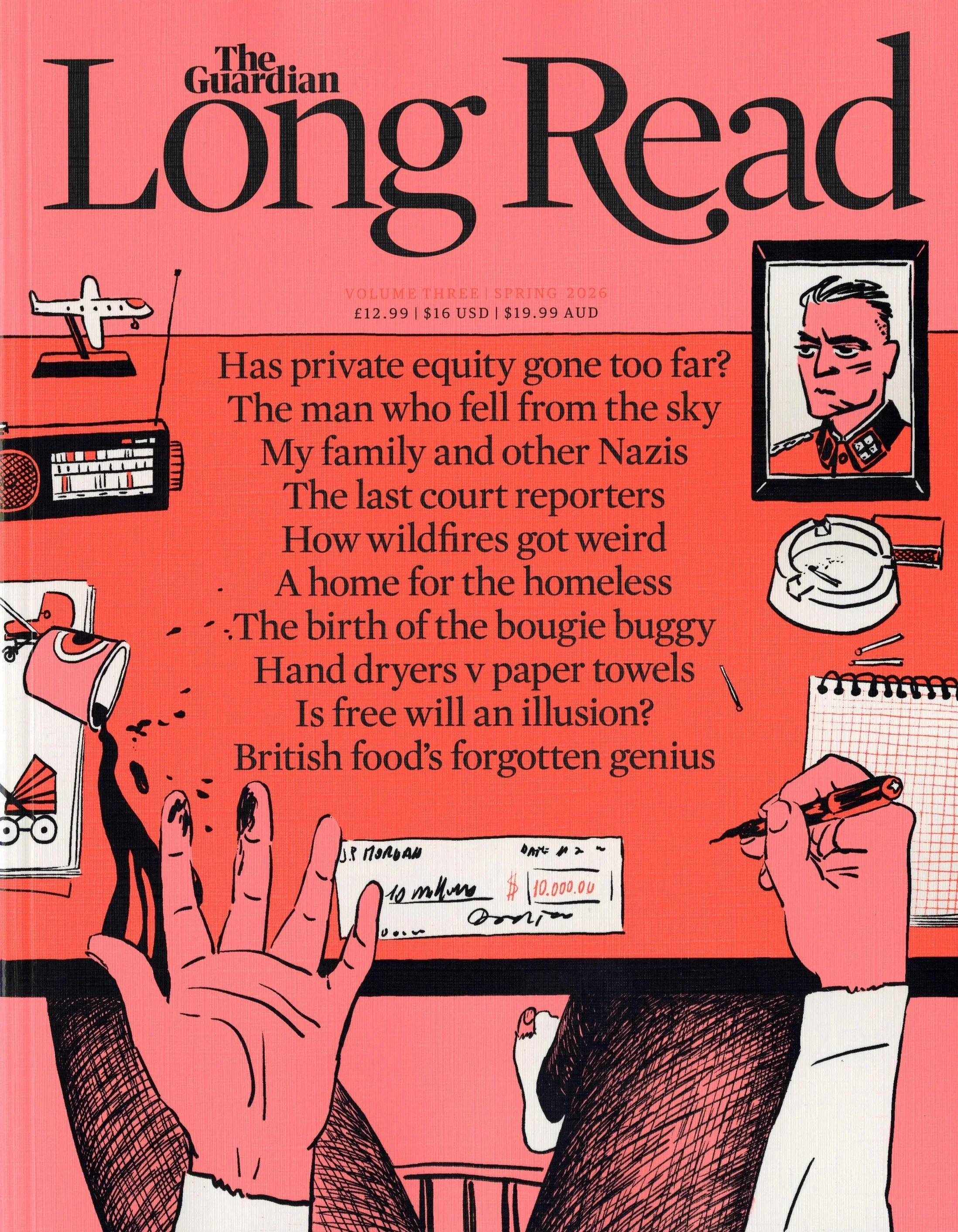
That’s what The Guardian newspaper is doing and, being The Guardian, they are also doing it differently than their competitive set. How? By taking an existing feature of the newspaper, The Long Read, and reproducing their favorites in a stand alone magazine. A kind of greatest hits package if you will. Well designed. Very printy. Heavy stock. Debossed covers.
So why do it? Who benefits? What is the business rationale behind it? To answer those questions, I spoke to David Wolf, the editor of The Long Read, the section and the magazine, about these topics and, mostly, about the joys of immersive storytelling, the state of journalism today, and the absolute joy of long reads in a world of shortened attention spans and general slop.
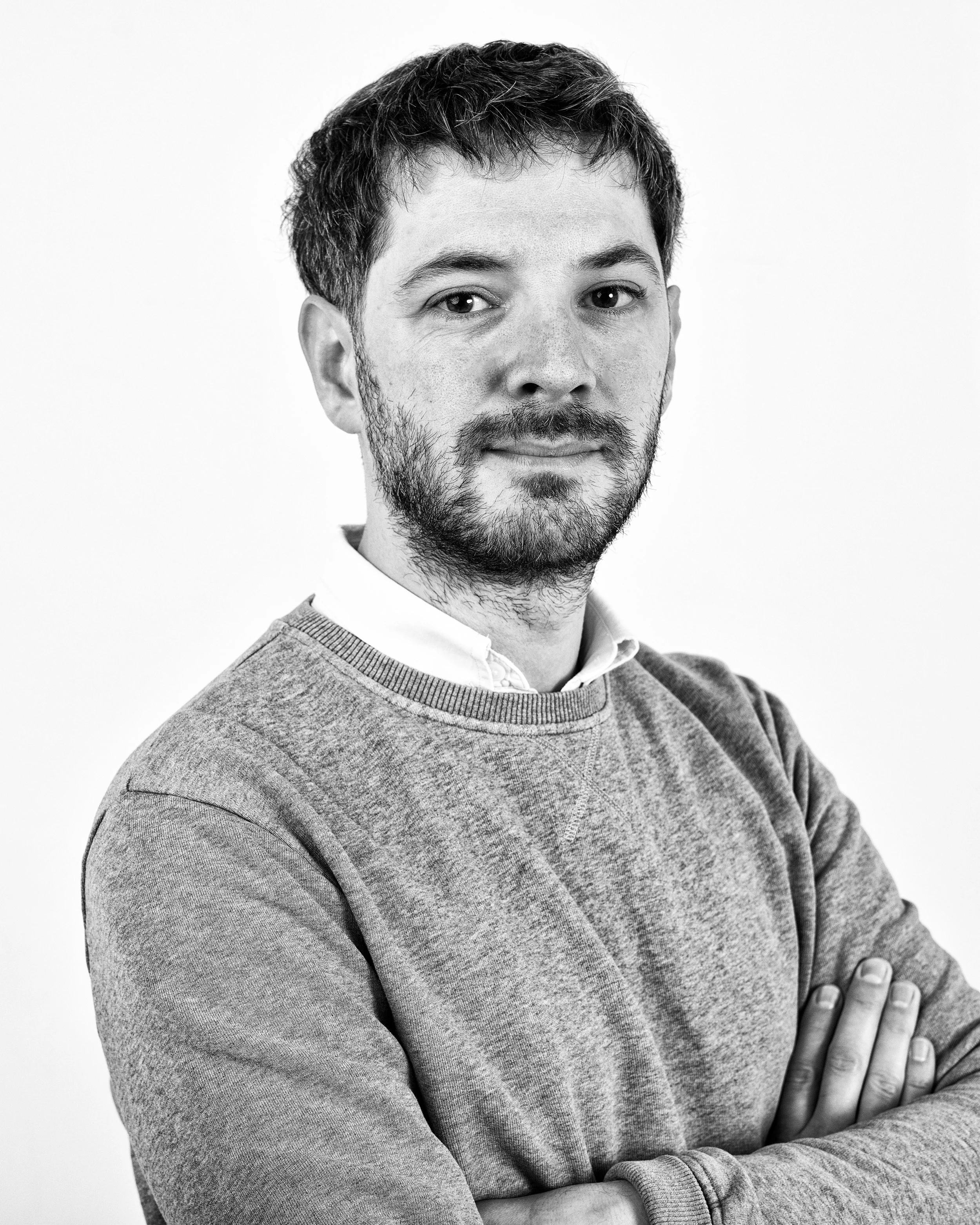
Arjun Basu:Before we get to you, I guess we have to talk aboutThe Guardian. It’s a newspaper from England, but it’s so much more than that and it’s been around for a long time. So can you do a really quick update for our listeners, for those who don’t know what The Guardian is and maybe, you know, a bit of what it represents?
David Wolf: Okay. So first of all, thanks for having me. I love the podcast. The Guardian, it’s a big question. The newspaper’s been in existence for 200 years, a bit more than 200 years. I think we celebrated our anniversary in 2021. I’m going to get killed by various colleagues if I got that wrong.
But anyway, something around there. More than 200 years old, started in Manchester. It’s always been a liberal newspaper. Obviously the exact meaning of that has changed over the years, but I think that’s very much part of the ethos of the news organization. In the UK, I’m sure a lot of your listeners will know this, there’s a cliche, sort of Guardian-reading, liberal, right? It’s a sort of byword for left wing, woke, right-on views.
That’s more than a little bit of a caricature, but certainly one that exists in the UK. Speaking more broadly though, I think in the last 20 years really, The Guardian’s become an increasingly global news organization. We have separate operations i the US, Australia, and most recently, in Europe. We have come quite a long way since we were just a sort of newspaper from England.
Arjun Basu:The global expansion has made The Guardian—and it’s had a few ownership changes recently as well—but it is making The Guardian think of itself as more than just a newspaper, but as a media brand.
David Wolf: I think I just pull you up on ownership changes. As you may know, the organization has this unique ownership structure and it’s owned by the Scott Trust which exists to continue The Guardian in perpetuity. That’s been our ownership structure for a long time now. No changes there.
Arjun Basu:We’ll get back to The Guardian as a brand, but what’s your story in terms of your career?
David Wolf: At university I did not do any journalism. I studied French and philosophy but it was the case that in my third year when I was in France, I went to a French university. The French university went on strike. I was left without a plan. I got a job in a restaurant. They fired me after a day. So I ended up spending my time in France reading American magazines, which were plentiful at the Toulouse library that I went to. And that was how I stumbled upon the New Yorker and American long form journalism and I didn’t really know something like this existed. And that was a sort of eye-opening thing for me. We have a tradition of feature journalism in the UK and quite a distinguished one. But certainly I hadn’t come across in my own readings stuff like—there was a particular article by Keith Gassen about the trial of the alleged killers of the Russian journalist, Anna Politkovskaya, and I just found it a mind expanding experience to see someone blend this kind of factual writing with a sort of attention to detail and character which I had previously associated with fiction writing. And from then on I was hooked.
After university I managed to get an internship at a magazine called Prospect. It’s based in London. It’s a sort of monthly politics and world affairs magazine. A little bit like a much, much smaller The Atlantic, or a bit like the American Prospect, in fact. And I was lucky enough to get a job at the end of that, and I worked there very happily for years. And then in 2014 The Guardian created this section, which I still work on, called “The Long Read” which was designed to be a sort of dedicated home for long form journalism within The Guardian. The Guardian had always published long essays, features, and brilliant reporting. But this was formalizing it in a particular space and they brought on a new team to lead it. And I was part of that.
Arjun Basu:One, your French sojourn just sounds like the most French sojourn. They all sound kind of the same.
David Wolf: Yeah.
Arjun Basu:You hit a lot of the highlights of the French Sojourn journey there.
David Wolf: I think that’s fair to say. How much French I learned is debatable. Please don’t test me. But it certainly was very intellectually rewarding in the end.
Arjun Basu:“The Long Read” is a section in The Guardian.You published a magazine a few years ago, and now you’ve done it again and you’re going to make it regular. How did that decision to put it all into a magazine come about?
David Wolf: I think I should explain a little bit about what The GuardianLong Read is. We publish at two pieces a week, 5,000 to 6,000 words, all kinds of things. Classic pieces in this genre. So profiles, reporting, essays, memoir, things like that. Since 2014, we’ve published a lot of pieces.
The pieces are written in a way, like a lot of this journalism, where the hope is it will stand the test of time. Not every single piece, but your hope is that the majority of pieces, you could read them a year after they were published and they’d still work almost as well or as well as when they were published.
And the longer we’d been doing it I feel like the more we felt like, “Oh, it would be nice to resurface some of these pieces in a more formal way, perhaps in a book or a magazine.” And so it was a long term idea of ours. I think, probably started talking about it in 2017, and then in 2023 we finally managed to get it together.
We decided the best way of doing it would be a sort of beautiful, thick quarterly magazine. And we put something together and I think it worked very well. It sold well. We were selling through The Guardian bookshop and then it took a couple of years to make it into slightly more of a formal plan. And then at the end of last year, we launched the magazine. A little bit more in a more structured way.
The first one was really an experiment to see if it could work. From last year we’ve got a plan in place to publish three times a year. You have read our second issue, which came out in the UK towards the end of last year and in the US in January. And we’ve actually just gone to press on our new issue which is about to come out in the UK.
Arjun Basu:Okay, so now I go back to my brand questions. You dipped your toes into the magazine in 2023. The Guardian as a media is expanding to different territories. So how much does the magazine play into that? Was it green lit as an entity as a part of this plan, or is it really like a separate thing that just is happening?
David Wolf: It’s somewhere in between those two. It wasn’t conceived as, “This will help push our brand further in Europe or the US or Australia.” But if it does that and it’s on sale in all those places, then that’s fantastic. I think there was a feeling, as I mentioned, that we had these wonderful pieces that we could do even more with.
And I think there was a feeling, and I’m sure you’ve had this on your show, which is there’s a sort of longing, I guess it’s a reaction to a world of screens and phones. There is a sort of longing amongst many readers to return to print. I think there’s a feeling that creating a kind of beautiful object that you can step away from your phone with, relax, read pleasurably, is something the more and more readers that we’re meeting are saying they want. Speaking for myself, that’s definitely my own experience.
I’m not a print purist. I don’t think that everyone must read on print and that phones are evil. But I think I personally just enjoy reading something where I don’t have the option of opening a hyperlink or checking my email and checking the weather, whatever it might be. A lot of other people are feeling like that. So I think we were partly hoping to tap into that. Partly trying to resurface the pieces.
And it’s also, as you’ll have seen, because you’ve read it, it’s a sort of chance to do something quite special in terms of design, illustrations, and work closely with the incredible in-house design team. And it’s a chance for them to show off their skills.
Arjun Basu:Yeah, I was going to say that later. It’s quite a creative magazine. It feels great. The cover, the little embossed part, the cover and the art. I was going to ask: it a dedicated team or is it just part of The Guardian’s overall art department that creates this? How do you guys sit within The Guardian overall?
David Wolf: For the first issue we work with a guy, Chris Clarke is the deputy creative director of The Guardian. And he’s overseen all three issues so far. He’s the point of continuation throughout all three. And he’s designed all of the covers with the illustrators and helped launch it. And then in individual issues, we have had different designers who bring their own things to play. All of the designers working on the magazine are in-house staff who we already have existing relationships with.
As you’ll have seen, especially in the second and third issues, we’ve used a lot of illustrators as well, who again, often we have relationships with, and in some cases it’s the first time we’re working with them, and that’s one of the definite pleasures of the magazine, is seeing how these illustrators are responding to the pieces and ideas we’d never have imagined. And that’s been really exciting.
Arjun Basu:It seems like also the creative team is experimenting a little with things that maybe they can’t do in The Guardian? This is like where they’re trying things out and then we see it in the paper later. On the editorial side, the work is already done for the most part.
You’re curating the best for those stories that you think should be in the magazine or that’ll work. But the creative team, they’re doing stuff from scratch. So is it becoming… is it like a lab for them? In a weird way? Newspapers can do a lot of fun things but the magazine is slightly different.
David Wolf: I think part of it is like it’s a chance to experiment and the experimentation is an end in itself. As in, it’s in the magazine, and I think it’s the kind of chance for some of these people to really stretch their legs and do things that they, as you suggested, can’t do in the newspaper.
As you mentioned, we’ve got this—I learned the word for it—is debossed cover, so it’s like the opposite of embossed, and that was a real thrill. The colors are really bold. The textures are quite unusual. They have all kinds of kinda mad ideas, which I love to hear. We don’t necessarily do all of them, but one of them was, for instance, Chris Clarke wanted to see if we could get special color glue that would stand out on the spine and things like that. So I think for them it’s a real chance to have fun.
And I think that comes across. If you pick it up, it’s controlled, but it’s pretty inventive and it’s been really fun to work in a slightly slower way than you do on the newspaper. You are always obviously onto the next thing, onto the next thing. Whereas with this, we have five or six weeks to put it together. And we can really think through each of the designs and make sure every design is meaningful. And it doesn’t feel like design for its own sake, but it’s also as creative and boundary pushing as possible.
Arjun Basu:You spoke about the rise of print. The show’s about that, that we’re all in on print, obviously, but I think it’s just a muscle memory that’s coming back, and there are more stores now. They might not be the same stores that they were in the past, especially in North America—at least in England, in Europe in general, you still have newsstands in that culture. The availability of the magazines in different places is, that’s part of it. And then I think the other thing is not just that we don’t want to be on screens, but that AI is coming in and we can’t trust anything. And you talk about AI in one of your editorials and you make the case for long form in that age. Can you talk about that a bit?
David Wolf: I think there’s this interesting thing with AI, which is, I talk about this in the editorial, sometimes you encounter it and it can just be very dispiriting. One way is you read it and this is you’re like, “God, this is crap. What a waste.” The energy spent looking at it is itself is “God, what a waste of my life.” The other way of it being dispiriting is you are like, "Oh shit, this is really good." Like, its summary is amazing. It’s turned this actually rather hard to understand the article into a very, like, cogent 400 words or whatever it might be.
And if you work in the industry especially that can be, like, “Oh my God, what’s happened to my future? Or what will happen to my future?” But I think it can also be quite enlivening to, aside from the ways in which AI can just be straightforwardly useful, having these kind of encounters, I think the latter kind that, “Oh my God, this is really good” thing is quite enlivening or even clarifying in what are we doing.
What can we offer as journalists or editors that AI can’t do? We talk about having sometimes fed in our old pieces to an AI to see if it could offer me, like, a good five minute podcast summary or video or something. And if it can offer something that is truly satisfying, and it sometimes can, it feels like, “Okay, we’ve missed the mark on the piece itself.” If something can be boiled down in a way where you are, like, getting the raw facts and that’s all you need, that’s really useful. That’s an important part of journalism. But I think if you’re going to ask people to sit down for 20 to 40 minutes to read a piece, you need to offer more than raw information.
Often it’s about the subjectivity of the writer being inherent in every sentence of the piece and feeling like, “Okay, I’m getting a particular person’s particular view of things and they’ve chosen to write something in a particular way.” And you feel a sort of connection with the writing and the thing they’re describing in a way that’s quite special and in a way that you are obviously not going to get from a machine. I think that’s part of it. It ups the stakes, but also clarifies what’s useful. What can we do that is truly AI-proof?
Arjun Basu:Yeah, no one’s ever really described it that way before to me. AI-proof. As a writer, of course, I love your answer. And I agree a hundred percent. But to me it’s always been—even the summaries when they’re well done—it’s like you have a bunch of things on a dinner plate and you eat one of each, but you don’t eat the whole thing, so you don’t get full, but you’ve tasted everything. You know what it all tastes like, but you haven’t had the meal and you haven’t actually enjoyed yourself. So that to me is what AI does, and unless you’re on, like, a diet plan, then it doesn’t seem to work.
David Wolf: Slightly contrarian response to that though—just to continue food metaphors to the breaking point—sometimes you eat the meal of the long form piece and you’re like, “Ah, that’s left me feeling really bad. That wasn’t tasty at all or nourishing at all. It had the form of a meal. It looked like a meal, but actually I ate it and it was like, blah. That didn’t fill me up or didn’t satisfy me in the way that I’m looking for.” In those cases, sometimes it is actually all you wanted, all you wanted was the bare facts.
I sometimes feel like with the advances or the diversification of different forms of media, podcasts, video, things like that, there is a real case to be made with any story. And you get this a lot as an editor is: what’s the best form for this story? Sometimes you get great pictures and you’re like, But actually this would be much better as an audio thing than a long-form piece.
And again, I think these kinds of technological innovations focus the mind. And that’s something I’ve tried to think about more over the last 12 months. Is the best form of this a long form piece? And if so, let’s do it.
And the stakes are high because I want every piece we publish to implicitly make the case that this is a really valuable, powerful, gripping, even delightful or magical kind of form of writing that will stay with you. And if we fail to deliver that in any piece, I feel like I fucked up for the day or the week or whatever. I do feel like it’s a kind of an invisible pressure, but not necessarily always a bad one.
Arjun Basu: This happened very quickly with the internet. Because there was no physical limit to it, it was very easy to write long. There are so many pieces on the internet that are long because they can be and not for any other reason, at least, even in a section that celebrates the long in The Guardian, you are still constrained by a physical limitation. And so there’s still that interaction. A great writer can say, “Okay, 8,000 words.” And land at 8,000 words. There’s still that discussion they had with the editor that has informed the piece. There’s so much of the internet that you just don’t feel that has happened. They’ve just blurted this out and it’s there.
David Wolf: I completely agree with what you’re saying. It brings to mind two things that I think about all the time. One is that, I think it’s Samuel Johnson quote, which is, “I would’ve written you a shorter letter, but I didn’t have time.”
The other, which I think about often when I’m editing, is something that our old production editor Tom Hughes said, which just sticks with me, which is like, “Sometimes a 7,000 word piece just feels like 3,000 words because it’s just so well done.” So you’re like, “How long was that piece? Oh, whoa, it’s 7,000!” I didn’t even notice.
And sometimes a 3,000 word piece can feel like, “God, this is endless. When is it going to finish?” So, yeah, the sort of subjective experience of reading these pieces, it really varies. It’s about how well done the piece is rather than the actual number of words.
Arjun Basu:So how do you go about choosing what’s going into the magazine from the many pieces you can choose?
David Wolf: It’s decidedly un-algorithmic, I would say. It’s just through conversations with me and my deputy editor, Claire. We’re looking for a mixture of subject matter, tone, recency or not. It’s a little bit like making a mix tape. You want it to feel like it flows together in a satisfying way. But there’s nothing more than that. And because we’re also planning on doing many more of these, there are one or two pieces that I wanted to get into previous issues that felt like, “Ah, it’s a little bit too similar to this one.” We can save them for other issues. And that’s the beauty of doing this kind of journalism that I—
Arjun Basu: —I imagine that many of the stories that appear are evergreen.
David Wolf: Yeah, I always say to writers. So yes, people will say, “What’s the hook for it?” And I often think that’s setting people up to think about it in the wrong way. It’s not that you want a hook, like an anniversary or the release of a new film or whatever, though that can be fine sometimes. But the piece needs to have a certain urgency to it. You want to feel like it’s responding to the world as it is now in an interesting way.
To give some specific examples in the issue, which is currently on newsstands in the Barnes & Noble in the US, we have pieces about Mr. Beast, have pieces about the growth of steroids use; we have pieces about what it’s like to be a refugee in the UK from someone who herself arrived as a refugee. So these are all pieces that, you know, very much speak to our moment. But they’ll also be one or two pieces in the mix that could have been published five years earlier because they’re just amazing yarns or whatever it might be.
But I think urgency, and the responsiveness to the world right now, is part of it. Everyone listening to this will know about this, but it’s like the pieces take ages to do. If we’re commissioning something now, it’s March. Many things we’re commissioning won’t be out until September or onwards.
We once did a piece that took seven years to come together. But it was a hundred percent worth it when we published it because it was an incredible piece. And yeah, so that’s how we think about it.
Arjun Basu:So here’s a very sausage-making question, too, in terms of when you’re putting the book together, are you looking at how the pieces work with each other?
David Wolf: Yeah, definitely. We started this issue with this profile of Emmanuel Macron by the great French writer Emmanuel Carrère. And I think with all three issues so far, we’ve wanted to start with something that feels quite heavyweight and then I think we’ve gone from that into something, in all these cases, a little bit more cultural, perhaps more of a narrative, and then we might have more of a memoir piece.
So it’s about mixing it up. Of course you don’t want to have that awkward thing again, mix tape analogy where you’ve got a ballad and then it’s followed by a crushingly heavy song or something like that. You’ve got to be careful. We had a piece, for instance, a piece by Sophie Elmhirst in our first issue about the guy who is head of condoms innovation at Durex.
But in the same issue we had absolutely, like, a wrenching personal essay by Nesrine Malik about seeing a city that she grew up in, Khartoum, destroyed by the war. Obviously those two aren’t going to be together. So those kinds of considerations as well. Both wonderful pieces, I should say.
Arjun Basu:I’m sure they were, this is why I also dislike media on the internet, because you’re watching something and then it stops and this completely idiotic commercial comes on. That may have worked on a sitcomat 9 in the evening, but it does not work during a discussion about—name your poison—and then suddenly, they’re talking about garbage bags and it just doesn’t…. That’s where I think the computers are not going to take over. I say that, of course, knowing that they have it very well. You’re talking about three issues a year. Is that set? What’s the cadence going to be? Three issues a year?
David Wolf: That’s the plan at the moment. But all of these things are open to variation. I think we’re still in a sort of experimentation phase, seeing what works, what sells, what readers respond to. One thing that we’re talking about that I’m interested in exploring is whether we want to do themed issues in the future.
So we’re still at a sort of experimentation stage, but I think three times a year is a sort of manageable amount. Every magazine is, I think, a hundred pages, 10 pieces. Each of them are long. It’s a significant thing. So you don’t want it assaulting your doormat every few weeks or whatever. But equally, I think you want it to be present enough in your life. So three times a year seems good at the moment, but if you disagree, let us know.
Arjun Basu:I know that when you hit four issues a year, you’re talking about a full-time job and at three you’re not quite there yet. Some magazines are biannual, but they’re hundreds of pages, and so that’s a full-time job, obviously. But at this size, I just think if you went to four you’re talking about a dedicated team all of a sudden.
David Wolf: I think that is important, that it is a sort of side project. At the moment anyway. It’s not something that we’re envisaging will be a full-time project like you say.
Arjun Basu:Maybe you answered this, so I’m just asking in a different way, but what does it aim to do?
David Wolf: I think it is about presenting the best of what we do. These are the pieces that we’re particularly proud of. And I think sometimes also these pieces, interestingly, look a little bit different or feel a little bit different a few years after they’re published.
Sometimes they’ll have new resonances. I think I mentioned earlier the one by Zarlasht Halaimzai about what it’s like to arrive in the UK as an Afghan migrant. And we published that, I think, in 2020. And it’s an absolutely beautiful piece. She came in the nineties and when we published it, it felt like something that you wish everyone in the country would read.
It felt all the more urgent actually when we published in 2025-26 than it did when it first came out because the sort of anti-migrant trends that’s happening all around the world have particularly, the Reform Party, which is a far right party, is taking, the lead in lots of polls in the UK. And so there’s something interesting that happens with some of these pieces with the passage of time. That wasn’t the intention of the magazine, but I think it’s one of the virtues of it.
Arjun Basu:Good writing endures but sometimes it becomes more relevant and then it fades away again, and then it becomes more relevant. And I think that’s what a lot of the stories here and future issues will probably show. Good writing endures.
David Wolf: The cadence of the publication is obviously so different to the weekly two pieces a week that we do on The Long Read. I was introduced by doing this to terrors that I hadn’t experienced, since I worked at a monthly magazine. We started off with this piece about Emmanuel Macron. And there was a horrible kind of three weeks where I thought, “Oh my!” I think we hadn’t gone to press yet, but we’d done all the artwork and laid it out where I think it seemed like it was possible that Macron might fall. And I was like, “Oh my God.” Anyway I had forgotten that kind of pain. But again, a very familiar one to people working at this rhythm.
Arjun Basu:Whenever someone from the sports world was on our cover, you just pray that they wouldn’t get hurt before it happened. And often, especially around the Olympics, you put someone on there and sure it happened. Like there was a sprinter, I remember, and he tore his hamstring or something and couldn’t go to the Olympics. And there’s the Olympic issue and there he is. You start to look at the world in a very different, very selfish way.
David Wolf: Yeah. That’s true.
Arjun Basu:What’s been your favorite story so far? I imagine that there’s a lot of rereading that you do or you might read a story once in your regular job and so that’s an amazing story and then you come back to it. But what’s been your favorite story so far?
David Wolf: Favorite that we’ve published in one of the magazines so far? Gosh. Clichéd answer, but it is like choosing between your children to some extent.
Arjun Basu:I knew you were going to say that.
David Wolf: No, I’ll give you an answer. I’m not going to wuss out. But I’m just looking at these magazines to remind myself what we’ve actually put in them. I’ll say that the Macron one I mentioned earlier, I dunno if it’s my favorite of all these pieces, but I do think that’s a special piece just because Emmanuel Carrère, the author of it is, I think maybe my favorite nonfiction writer working today. I think his book, The Kingdom, which I try to get people into this book and I say, it’s a book about the life of Jesus and people just recoil at the idea.
Anyway, he’s a brilliant writer and I think you rarely see a national leader written about with the kind of intimacy and wit that he conjures in this piece. I think that was special. And there’s also something special about the whole way it came together, which is uniquely French. I don’t think there are that many countries where there is such a kind of respect for— Carrère is a famous writer in France—writers, that he simply says, “Oh, I would like to profile the president.”
He sends two kinds of emails and then he’s on the president’s plane. I can’t tell you how much that wouldn’t happen in the UK. And I think fair to say, we are not alone in that respect. So yeah, I think of that as a special piece.
I mentioned Nesrine Malik’s piece about the war in Sudan, which I think, again, in a totally different way, is a unique piece because so personal but also so smart on the politics of it, on the origins of it, looking at it from the inside, but in a way that really is totally intelligible to people who don’t know anything about it, like me. So those are special.
And then I’d say just one other one that I’d mention is the Hettie O’Brien piece about the lawyer, the British lawyer, who poses a gentleman but in fact had a fake identity and was stealing money from his clients. It was a brilliant piece of reporting that took 18 months, I think, in total and some of the most startling scenes in that came, I think, in the fourth or fifth draft. She was still gathering amazing stuff and just kept going at it until we had a pretty complete picture.
The other thing that I think is, aside from the level of the reporting and the excellent writing, the whole thing feels obviously like a kind of parable for Britain today, posing as this sort of—there’s a phrase—“butler to the world”—that Oliver Bullough coined whilst secretly currently stealing money from people whilst they have rotting food and bodies in the basement. It’s an amazing metaphor for my country. So those ones just stick in the mind but I do like them more.
Arjun Basu:The writing is great. It really is. And just the level of it.
David Wolf: Did you have a favorite?
Arjun Basu:I read the Macron one first and then I read the Mr. Beast one. I just went through the mag and they’re both so well done and they were so different, they’re just real examples, I think, of good reporting and good writing and they take time and that’s a very human endeavor.
David Wolf: Oh, I was just going to say the two writers—Carrère and Mark O’Connell—are mutual admirers of each other’s work, so that’s quite a nice two to pick.
Arjun Basu: Yeah. And it’s just a reminder of why we enjoy just sitting and reading something. And why newspapers and magazines are so great because you just don’t know what you’re going to read until you do. So what are three magazines or media that you’re recommending right now?
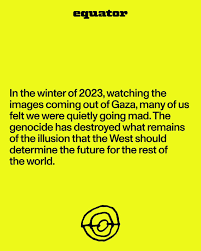
David Wolf: This was a fun exercise. There are so many examples I can think of actually, smaller magazines that have started in the last few years. The first one I’m going to mention is Equator. I dunno if you’ve come across Equator. It was started by a few friends of mine. One of them, in fact, is one of the writers in our newest issue, it’s about Superman. It’s currently online, although they’re planning to do a print issue as well, I think, not totally dissimilar to what we are doing, picking their favorite articles.
The idea of it is, I think it’s too crude to say it’s the world told from the point of view of the global south because it is truly global. They have writers from all over the world, but the idea is it’s filling some of the holes that you find in mainstream media.
So it’s giving much more subtle accounts of how global shifts are perceived from within different countries, different points of view. To give one example, you were talking about surprise and the unexpected things you get from magazines. One of their first and most delightful pieces was a piece by a Chinese journalist who was working for a Mongolian newspaper. And he describes what it’s like working at this newspaper and the drinking culture and the censorship. But it’s the kind of thing where it might sound like, “Oh God a memoir piece by a journalist working in Mongolia is a bit random and a bit heavy,” but it’s so funny and done with such kind of wit and sharpness of detail that it really feels like, “Oh wow, there’s a whole world out there that I dunno about.”
And I feel like with all of their best pieces, it’s, God, they’re such rich, fascinating worlds, points of view, ways of seeing things that seemed familiar that you weren’t aware of until you encountered this piece. There was an amazing one about Iran in January by a novelist who had witnessed the protest and it was full of just surprising ambivalence about what he was seeing and his own conflict, but again, that sounds maybe self-indulgent and it wasn’t at all; It was a perfect piece of writing. And again, I just felt “Oh, I got so much more out of that than I got out of 10 op-eds in mainstream media.” So Equator, it is fantastic. I really recommend that.
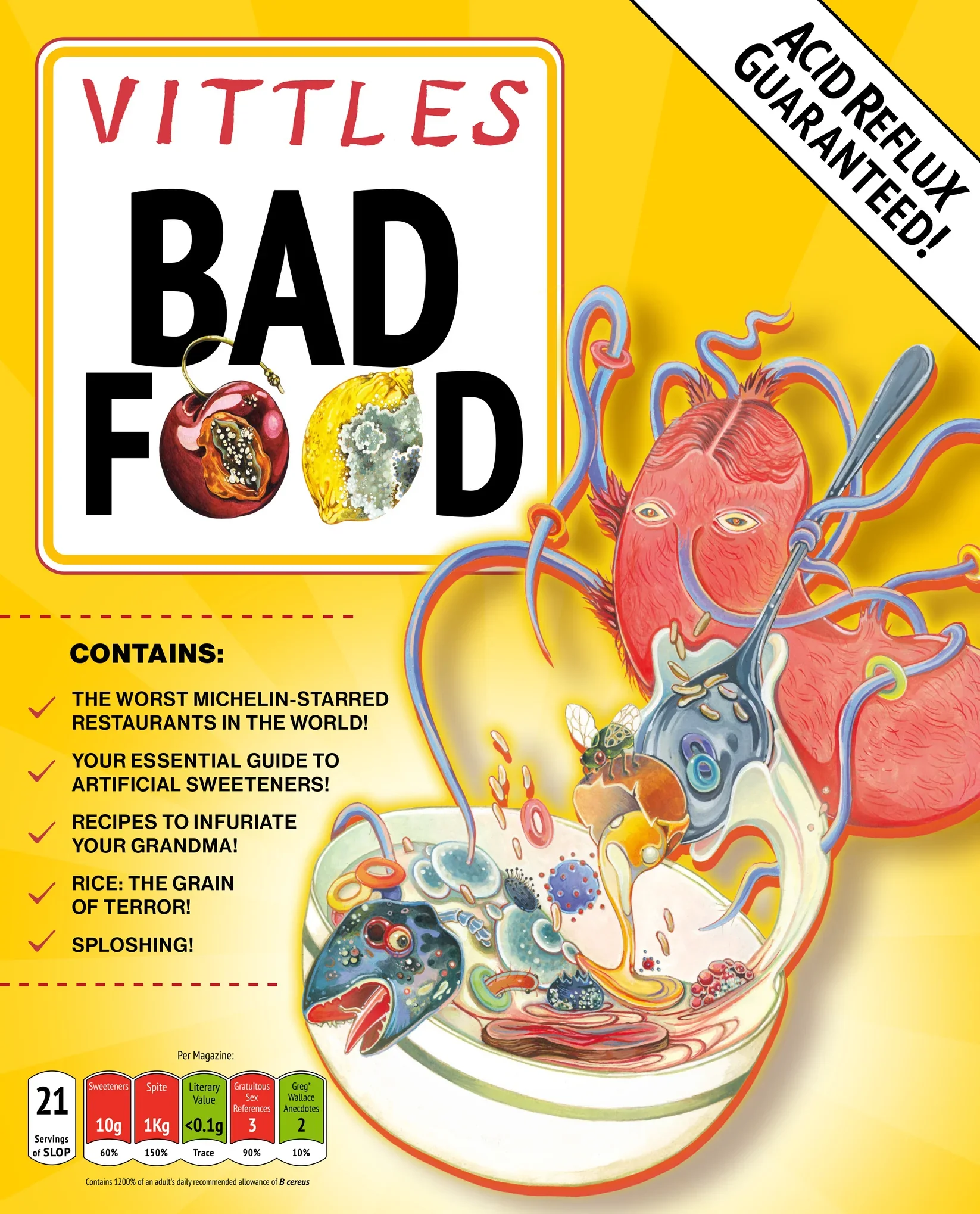
The second one I’m going to recommend, called Vittles. Again, Vittles. It started as an online newsletter, Substack, set up by Jonathan Nunn, who’s one of the contributors, in fact, to the new Long Read magazine and I think is one of the most brilliant journalists working in the UK today. It covers food in the UK from a sort of ... I think, to an American audience the closest analog would be Jonathan Gold’s writing about LA. It appreciates food in itself, but the food is also a way of talking about the country as it is today in every aspect: Migration, economics, culture, all kinds of things. But it’s done with real wit and there’s the sharpness. I think they’ve done two print issues, which are absolutely beautiful and full of inventive little features and add-ons and extras that actually aren’t in the newsletter. So I really recommend seeking that out.
And then the last one I’m going to recommend, it doesn’t have a print outlet as yet, or a print incarnation as yet, I’m doing very UK centric ones, but this one is London Centric, which is, again, it’s newsletter based. It’s just brilliant reporting, really original reporting, constantly breaking new stories about London, which weirdly has, until recently, been … news desert is way too strong … but it hasn’t been covered as well as it should have been because a lot of the local newspapers have been hollowed out or gone bust. And it’s reporting on things that would otherwise not be covered. And they did an incredible story last year about a man who is running some of the most elaborate tax evasion schemes in the world I would say, involving snails and snail farms and empty buildings. And if you type in snail farmer of London you will get that. And I highly recommend it. London Centric.
Arjun Basu: ‘Snail farming.’ This is like the second time in two days that someone has said that word to me.
David Wolf: Snail farming? Yeah, I hadn't come across the concept until I read the piece, but yeah.
Arjun Basu:Thank you. This has been great.
David Wolf: It’s been really fun chatting and as I said, I love the podcast, so thank you for having me.
David Wolf: Three Things

Click images to see more.
More from The Full-Bleed Podcast