
Check, Please
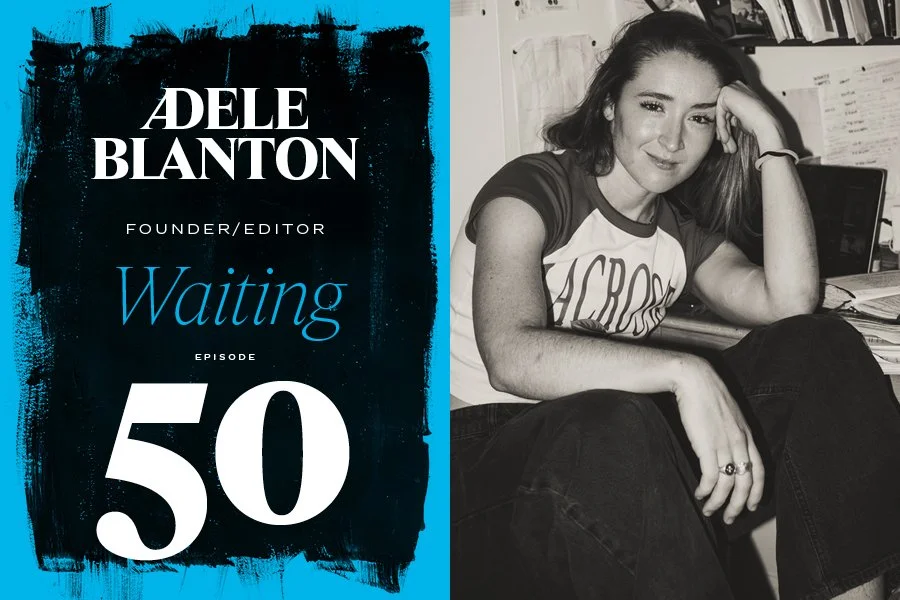
A conversation with Waiting founder and editor Adele Blanton. Interview by Arjun Basu
—
THIS EPISODE IS MADE POSSIBLE BY OUR FRIENDS AT FREEPORT PRESS.
Thanks for tuning in. Just a note before we get going: This is the 50th episode of The Full Bleed, and I, along with the team here at Magazeum, truly appreciate the time you spend with us.
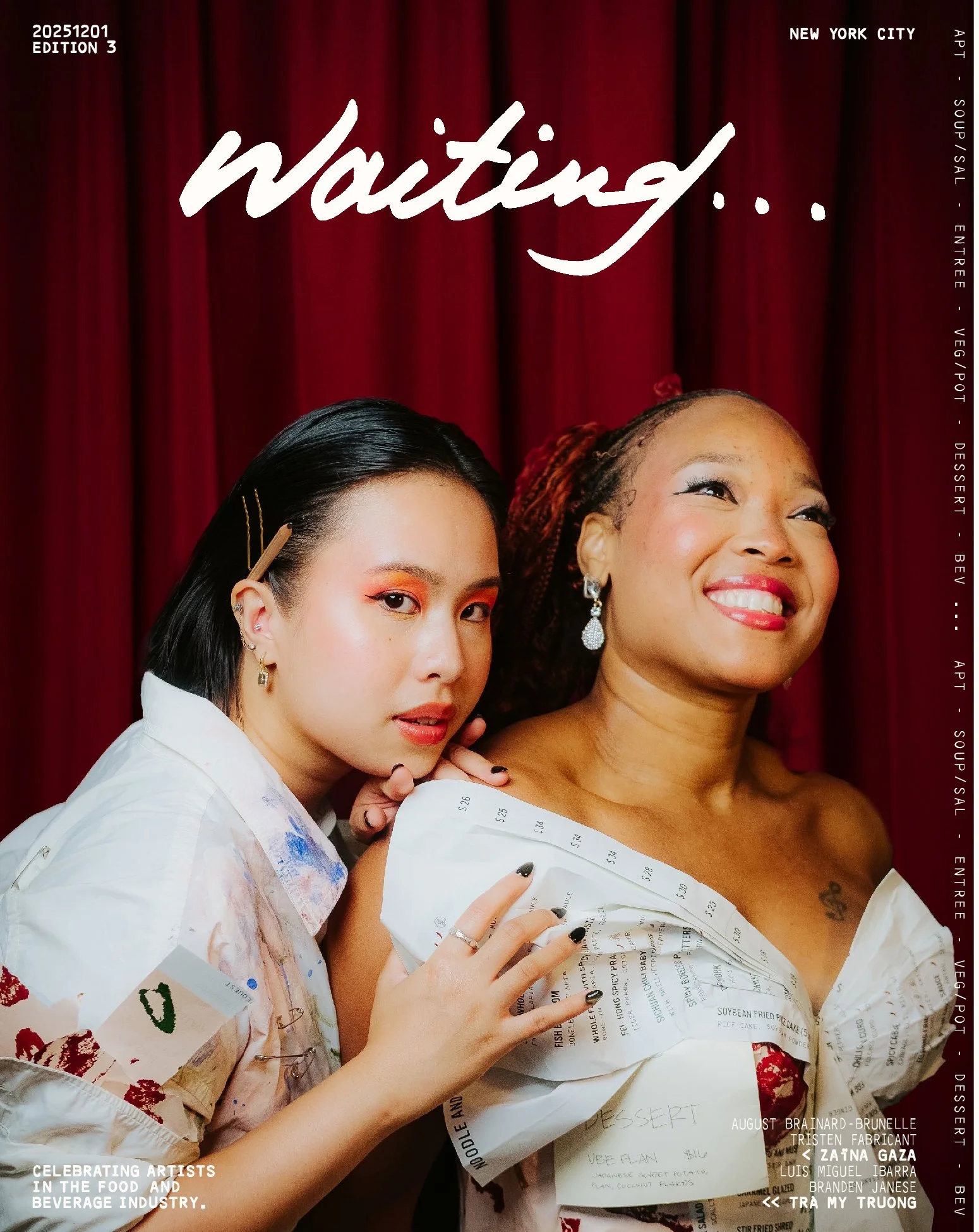
Waiting is what I consider a perfect magazine. Not because of its design or the writing, though both are stellar. But mostly because it functions as a closed loop. How? The subject and the audience are one and the same. Waiting, you see, is a magazine about creatives in New York’s service industry. And it is a magazine for creatives in New York’s service industry. That’s a neat trick and also makes me wonder why no one had done this before founder, editor in chief and complete magazine neophyte Adele Blanton hit upon the idea.
Adele has done the math: 10 percent of the estimated 700,000 people working in the food and beverage industry in New York are artists of some kind. Artists, actors, writers, dancers. You name it. And that number is a healthy baseline for any publication. Waiting has published three well-received issues and now she and the team behind it has to figure out how to maintain and grow the media. That’s one of the many things we talk about on the show.
Did I tell you this is our 50th episode? Because it’s our 50th episode.
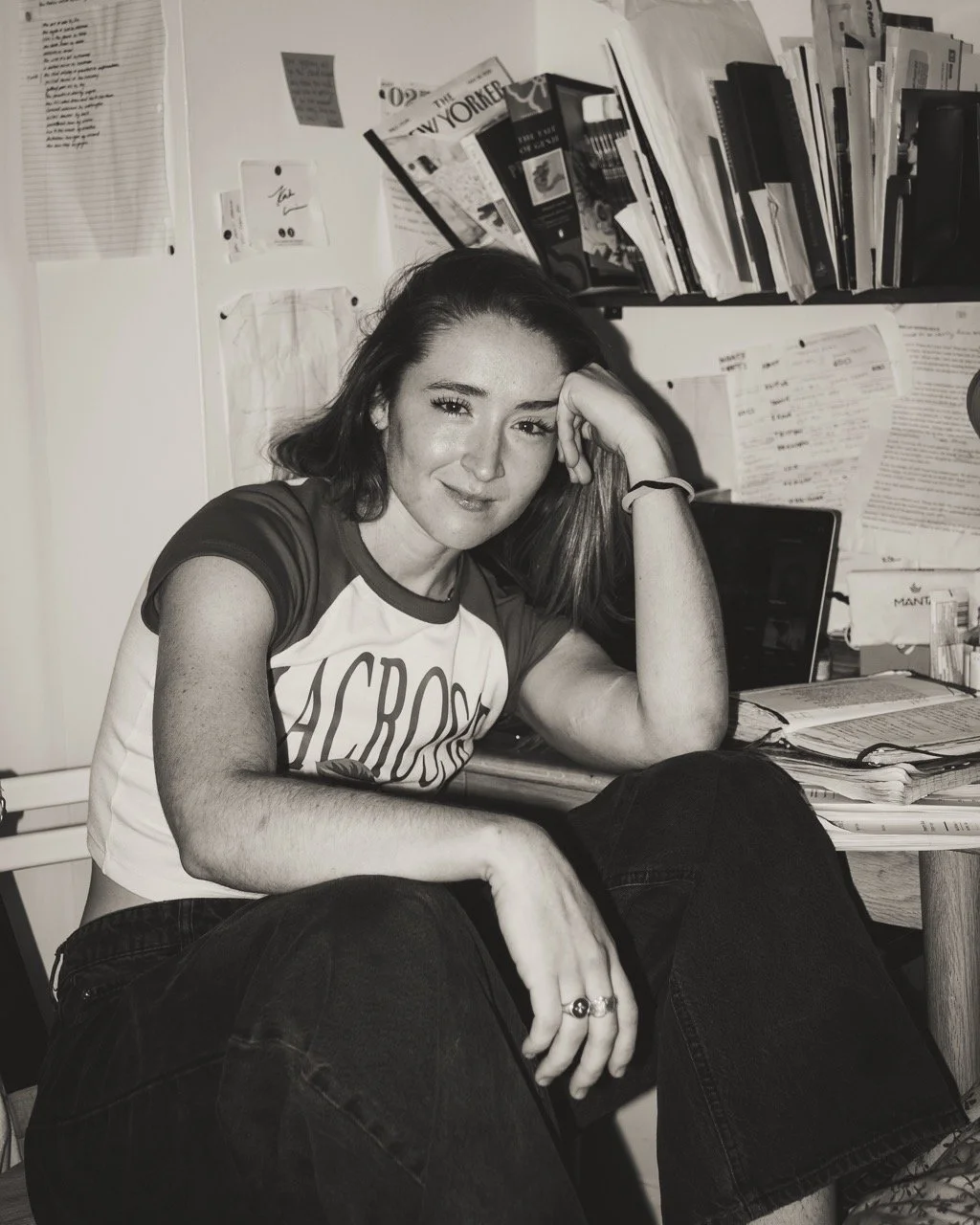
Arjun Basu: Adele, thanks for being here.
Adele Blanton: Hey, thanks so much for having me.
Arjun Basu: So before we get into the actual magazine, what’s your story?
Adele Blanton: Well, I’m, I’m from Virginia originally, and I went to school in Boston at Boston College, and I moved to New York the day I graduated school. I always wanted to move there, and I came here to pursue…
Arjun Basu: Couldn’t wait to get out of Boston?
Adele Blanton: Couldn’t wait. No, it’s a great place. It was a great place to go to school. It was amazing. So many music venues, so many concerts. I love music, so it was a blast. But I grew up coming to New York. My family is from around the area, and I always knew I was going to end up here at some point. And as soon as I left, as soon as I finished up college, this was the move.
So I came here to pursue satire and comedy writing in some sort of respect. I didn’t really know what that meant, but I knew that that was what I wanted to do. I grew up loving David Sedaris, you know, sketch writing, comedy writing, anything like that. So I moved here, and my parents have a little apartment on the Upper East Side, and I moved to Williamsburg a couple of months after being here.
And I started taking improv classes at a comedy club at Upright Citizens Brigade against my wishes. I did not want to take improv. But I spoke to some people about comedy writing and about writing, and they, they just told me that I had to, you know, get a little bit used to performing and hearing how words were delivered and reacted to.
So I took an improv class, and I got a restaurant job on the Upper East Side at an Italian restaurant because I’d always worked in restaurants, and I needed something to pay the bills, you know, while I looked for these TV writer’s assistant jobs and while I was trying to afford improv classes. So I got that job, and as I was getting further into the comedy world and further into the restaurant world and meeting more people and growing a little bit of a community, I realized how many people around me were working in hospitality or working in service and were doing so to be able to actively pursue an artistic or creative career on the side.
Everyone, almost everyone in my improv class, fell into that demographic. Everyone I worked with was either a singer or an actor or, you know, an artist in their own respect. And so, you know, I just realized that these people are so vibrant, and they’re so gritty and determined. I know you asked me to talk about myself, but I’m now—
Arjun Basu: Well, it’s part of the story, and these people are also creative, which sort of helps with the next step.
Adele Blanton: They’re amazing. They are amazing, Arjun. They have the most insane backgrounds, and what’s so incredible about them is that—and I guess I’m included in this—is that we fall in the same category. We’re all in New York trying to make something creative or artistic happen, and we’re all doing it in kind of a similar way, right?
We have these side gigs, we have these restaurant jobs. You know, we’re waiting tables, we’re working sometimes excruciatingly long shifts, and then we spend the rest of our time pursuing something that we really came here to pursue, and we chase that. And it’s a very gritty lifestyle.
It can be isolating as well, and that’s a reason why we started Waiting additionally, as I felt that these stories needed to be shared. I felt that these people, they resemble such, or they’re, they are such a reason why New York is so magnetic. Because New York has this, uh, reputation that you can come here and you can do anything, you know?
You can make anything happen for yourself, and these people are living, breathing examples of the process of making your dreams come true. But yeah, you know, it’s an isolating lifestyle as well, and I certainly felt lonely early on, you know, because I would go work at my restaurant job, and then I would spend the rest of the time writing or, you know, trying to look for jobs, and I felt alone, and I knew that I wasn’t.
And that’s the thing with Waiting that we really are chasing, is that we know how many people are like us in the city, and we just want to connect to all of them because they all are the same and so unique at the same time.
Arjun Basu: So I want to get to that number in a second. At what point did this happen? What was the flash that said, “Oh, these people around me are also not just a community, but this, but an interesting subject?” And how did you come about going about getting a team together?
Adele Blanton: So I first had the idea because I was writing these satirical essays every week and posting them on a Substack, and they were just ridiculous things. I would, like, do commentary on a green bean casserole recipe. They weren’t grounded in any reality.
But I was telling my boss at my restaurant about what I’m trying to do, why I’m here, and we were closing up one night, and he was... he told me, “You know, you’re always here, and you’re interacting with people all the time. You have these coworkers who have been in the industry for a very long time. I’m sure there are some stories here that you could probably write about.”
And he, I think he meant that I could just include them in a blog or include them in what I was doing already, but that kind of sparked something in me. And I had an improv show the next day. I- it was a class show. And, you know, I was performing the show, and I... then we went out for drinks, all of us in the class, and I just kind of was still thinking about these, like, this kind of storytelling, you know, platform that I could make for people like myself.
And, you know, I mulled over the idea a lot. For maybe two to four months. I went from November to March, and I didn’t say a word to anybody, and I didn’t say anything because I didn’t know how I would ever get it to work. I studied English in college, but I didn’t study how to start a magazine in college.
So, you know, I had no idea what to do. And I met Elliott Rosenberg in my Improv 101 class. Elliott is a, he’s a graduate from Brown and RISD. He studied furniture design, computer science. He’s extremely talented, very bright, and we became friends instantly, and we started writing together every Sunday while I was kind of secretly thinking about all of this.
And I remember one morning we were writing in my apartment, and I was working on an essay that I was writing for my Substack. He was working on selling lamps that he had made at the time. He’s in- he’s insane.
And I, you know, just looked up from my laptop and I was like, "Hey, I think I have this idea. I think I want to make a magazine for artists in the service industry. I think that would be cool, and I think that they would have really great stories, and I think I could write them, and I think we could, I think we could do something there, and I think I want to call it Waiting. And I, what do you think?"
And he’s very kind of stoic in his behavior, and he just kinda nodded and he was like, “Okay. I like that idea. That’s cool. Can you write it down?” And so I wrote... I took a red pen, which is now our Waiting red, and I wrote down Waiting in cursive and I gave it to him. And then he went back to his computer and he fell silent for maybe an hour.
And I was, you know, I was just like, “Okay. Well, there was an idea that I pitched to my friend and I guess that’s it for now,” because he didn’t say anything. And then about an hour later he’s like, “Do you have a second?” And I looked up from my computer and he turned his laptop around and he had built the skeleton website of the first website Waiting ever had.
It looked like an old guest, an old diner guest check, which is exactly what I had explained to him that I wanted it to look like. And it was really, you know, robust and stiff but he turned his cam- his computer around and looked at me and he was like, “Now you have to do something with this.” And it was incredible.
It was one of the most amazing moments because I realized if you’re passionate about something or if you have an idea, you can find people who are equally as excited. And he was initially going to just help me get the first edition started. We started this, this was now a year ago. We started the magazine in, on this day that I’m talking about is March 23rd of 2025.
And luckily enough, I had made some friends who, you know, someone I worked with, another person down the street at a bar who were interested in being a part of this. I got to interview them. We included four other artists in our first edition. And, and then, you know, at another point, Elliott said to me, “You know, you love satire so much, you should write satire for this.”
And so then I started writing little essays about my experience in the service industry that I plucked right out of my shifts, really, you know, easy to, easy to find, uh, experiences to write about. And then, you know, we needed it. We had a cover photo idea for the first edition, and we met a week before we were supposed to shoot it.
Elliott was taking our photography, but a week before we were supposed to shoot the cover photo, I met Dillon Gadoury at another improv show after party. He was friends with someone I was in a class with, and he is a cinematographer, videographer, photographer. He’s incredible, and he was new to the city. He had just finished the page program at NBC, and I was telling him about what I was doing because at that point we were, you know, we were supposed to send our magazine to a printer, you know, in a week and a half, and we were scheduling this cover photo shoot three days before.
And I met him and I was telling him what I was doing, and he was like, “If you ever need any help, let me know.” And so I texted him the next day and asked him if he wanted to meet at the 96Q subway station at 6:00 in the morning on Saturday, and he said yes. And he’s been working with us ever since.
And Elliott is our designer. Elliott is our web designer. He does all of our layout. He does a lot of the business operations and logistics. Dillon has shot almost everything we’ve ever put out, video and photo. And then a little bit down the line, we found some interns to work with who were in college, and we have an illustrator.
Her name’s Sara Kashani-Sabet. She’s from California. She’s so talented, and she’s been with us for the last two editions. So I don’t want to put everything on improv. I don’t want to say that this magazine is because of improv, but in a lot of ways it kind of is.
Arjun Basu: Well, it kinda feels like it because you have yet to introduce anyone to a person who knew what they were doing in terms of magazines. Like none of you had any background in this. I’m trying to think of a magazine that feels, at least the finished product feels so turnkey from the start. Your contributors and the audience are basically one and the same, or at least start in the same place. It’s almost like a B2B product in that way, you know? I mean, it’s a closed loop. Um, you know, And on the website I mentioned, you offer that stat. There are 700,000 people in the industry in New York City, and 10% identify as artists, which is a funny way of putting it. Um, you know, or creatives, what have you. So your potential base audience is 70,000, which is healthy for anything. So So that’s like the background, that’s the research. And, of course that 70,000, that’s only assuming that people in the industry will be the only ones to care about it, which is not true. So no one has put a magazine together before.
Adele Blanton: No one has put a magazine together before. No one has done anything they’ve done for Waiting before, ever. I, you know, I wrote a lot in college. I would take... I wrote a little bit for my school newspaper, but I love writing, and I love getting to listen to someone’s story and tell it through their voice and hold them well.
And I think the biggest thing to respond to what you’re saying, which is 100% true, you know, it’s that everyone who’s ever worked on Waiting, and our small team, are some of the most passionate and humble people I’ve ever come across. They are extremely talented, and they love what they do, mm-hmm.
Every time, you know, Elliott’s favorite part of all of Waiting is when he can sit down and lay out the first draft of an edition. Dillon, you know, we have had shoots where we are biking around New York when we have, you know, a shoot with an artist somewhere, and then he’s filming me on a bike, and then we’re shooting an artist in a totally different borough, and it’s a chaotic day.
And then he can go home and put it together and edit these photos and make these people shine, you know? Sara will read these satirical essays that I’ve written, and she’ll take what she sees and, like, what we are thinking of, and then she’ll put it through her own lens. And it really has given everyone to be so passionately dedicated to a concept without lots of experience just because they love it.
A lot of them, or everyone has worked in restaurants before. Everyone understands, you know, the creative energy. And like you were saying, first of all, we found that number that you’re talking about after we started the magazine. We did no research before this. We were not like, “Okay, 70,000. Okay, if 10% read it, then, that’s a viable business strategy.”
We didn’t do a lick of that. We just knew, and we still know, that the population of artists working here in the service industry, and we’ve since expanded. You know, we call it, we call our demographic the working class creative. Anyone who’s in New York and is working these side jobs and has this dream of being an artist full time or being a creative full time, or at least being able to have it be a constant in their lives.
It’s such a, you know, energetic part of New York, and you don’t need numbers when you know that. And for some reason, we were all just so sure that we could tap into that community. And you’re so right that it is a B2B product, because it was so easy to start really. I mean, it’s been grueling, very hard. My hair is probably 50% the thickness it was when we started.
But we would go into restaurants with these flyers that looked like guest checks, and it would have an email address if an artist wanted to get in touch with us. And, you know, usually when you go into a restaurant, you know, and you say, “You know, I don’t need a table.” They’re like, “Ugh, this person’s going to come bother me.”
We never had that problem. Last summer I would spend days walking around neighborhoods just filling out flyers, or not filling out, handing out, excuse me. And, I would walk into a restaurant and I would say, “I’m not here to bother you. I’m here for you actually. I want to help you. And if you help me, I can help you too. We grow together.”
That’s the most important part of Waiting, or a very important part to me, is that nothing I do or nothing our team does is not without the artist that we feature in mind. We want to be a sustainable magazine so that we can be a source of community and inspiration for this population that is always growing, by the way.
It is living and breathing as we speak. Five minutes ago someone just probably moved here wanting to p- wanting to be a painter, and they’re going to go get a bartending job, and five minutes ago someone probably left because it was too hard to do, or they, you know. It’s always moving, and if we can help that and if we can be the platform for those kinds of people, then we can help each other. We all help each other.
Arjun Basu: Yeah, I want to get back to the idea of New York as a magnet in a second, because that’s part of a larger discussion. But you chose the hardest path to create this community. I mean, I’ve never said this on this show before, ever. But I’m going to play devil’s advocate. Why did you make a magazine? It could easily have been a website or a newsletter that got bigger word of mouth, and then maybe you became a magazine. But this was a magazine from the start. I can’t believe I’m saying all of this. But why? Why did you choose the absolute hardest thing that you could possibly do?
Adele Blanton: Well, I mean, I’ll play devil’s advocate right back. Why not? Where else would—
Arjun Basu: It’s, it’s, it’s a good question. But you have to answer mine first.
Adele Blanton: Fine, I’ll answer your question. Fine, I’ll answer your question. So, you know, I mean, I think the why not starts my answer, and the reason I said that is because first of all, New York is such a physical place.
You... You know, people dream about coming here, but being here and living here is a totally different experience, you know? And it is, you know, this magnet that we’ve been talking about a little bit, and the reason why we did print is because we believe that there is a physicality to waiting and to this community that is vital.
We are now online. We have our articles online, and as we secure funding for another print, we’re putting out online articles, and obviously social media. If you don’t have social media, you’re basically dead, and so we have that as well. But you know, the fact that you could read in a print about an artist working at a restaurant performing at a show next week, close the magazine, walk down the street, and go see them, that’s insane.
That’s amazing. You can’t do that when you’re, you know, just online. There’s less tangibility and touch to that experience. And the other reason, and I’ve been thinking a lot about magazines recently, because as I’m doing this, I’m learning more about magazines for the first time in my life, which is great.
And you know, when I think about all these different forms of media, like you’re saying, you know, online only or video only or all of these different options that we could have had, why do a magazine? And when I think about magazines that I’ve loved and that I grew up loving, like National Geographic and The New Yorker, even Vogue, they are these symbols of a character and a personality, and they are these boundaries or world, uh, world parameters.
And with every edition, they evolve right alongside the world evolving next to them. They are reflections of what’s going on in the world, but through the lens the magazine has stabilized and called their own. And with every print comes a new, you know, take on the world right now through The New Yorker, through National Geographic, through Waiting.
And that is why we really have loved it because, you know, it’s hard to put out something online that can really physically resemble a point in time or a place or something. Maybe it can, but it can’t do it like a magazine can. And so, you know, it is hard. It was maybe not the smartest decision on the planet.
I maxed out my credit card to print the first edition. My parents don’t even know that, but I guess that’s out there now. And you know, it's not easy. It is not an easy world to be in, and it’s not an easy industry to enter, especially with the experience that we have. But we believe that physicality and having a physical presence, just like these people have a physical presence in New York, that is what the connector is. And without that, Waiting is something different, and it’s not as much as it could be
Arjun Basu: That is as good as an answer as I could have hoped for when I asked my devil’s advocate question!
Adele Blanton: Well, it was a little better than—
Arjun Basu: You had to start somewhere. So this feels like on another level an anthropological, anthropological guide to New York. It’s about New York as much as it is about the creatives in the service industry, and it’s about people who inhabit a certain place. So that makes it a city guide in a weird way, in a very weird way. Mm-hmm. But also, I wonder, I want to, I want you to talk about also, um, New York as a magnet, because, I mean, the one thing you’ve heard about New York for quite a while now is how expensive it is, and it’s just hard to be a creative in a place where the rent is too high, right? The rent’s too damn high. And so how does that impact, how does that enter into the conversation? And is that something that New York might actually... Look, New York’s still a cultural hub, but it’s getting harder and harder for the artists to g- as you well know, to get there and then, and stay there and afford it.
Adele Blanton: I mean, it’s a huge part. I th- I think 30% of the time that I talk to someone about Waiting and they’re over the age of maybe 45, they will talk about the nostalgia that the magazine has, and how it’s like, "Oh, my gosh, you’re, you’re celebrating the art- artists in New York. Like, that’s so, you know, that’s so old school. That’s so whatever."
And, there is a vintage element to what we’re doing. There is a hopeless romantic vibe to what we’re trying to do, you know? You’re so right. This is such a hard place to live. I’m uncomfortable 80% of the time, and it is really challenging, and a lot of the artists that I talk to feel the exact same way.
And, you know, I think the way of just dealing with that is just realizing that it is hard, but it’s still happening, and there are still people who have come here and who are here and who plan to come here who believe in New York the way that more people did. And, you know, who’s to say about the future?
Who knows, but how lucky am I to be able to be here when there are still people here who resemble, arguably, I’ll say it, one of the best parts of New York, which is you can come here and you can try to be anything. You can be an artist, you can be creative, and you can get some bartending job and pay your bills and make it work.
And there might be, you know, 10% more people who are doing that now than there used to be. And that’s a bummer. I always wish I was born earlier in time, so you know, this is another reason why. But you know, they’re still here, and if we can catch them and if we can help them, then that’s good enough for me because I think when an artist population leaves a place, that place becomes a shell of what it is.
These people build the culture around New York, and the ones who make it help, you know, market New York to people. You know, Broadway, comedy shows, you know, amazing galleries, sculptures, museums, all these people, you know? The ones who make it show you that you can, and the ones who aren’t, haven’t made it yet are who we’re talking to, and both people can exist here, and both people still do.
I think that’s like the only thing I would really want someone to know who is teetering on moving to New York or, teetering on New York as a whole is that it, yes, it’s expensive and it’s tough and it’s really, really hard to live here, but there are still people who believe in it. And as long as that’s true, even to a small extent, New York will still remain this kind of magnet that made me want to move here.
This was the only place I wanted to be, and there’s a reason for that, and that reason still exists and we’re just trying to celebrate that reason.
Arjun Basu: There’s a quote in the third issue, “The beauty of this industry…”—and you mean the service industry—“...is you never bring it home. But being an artist, you take that everywhere.” So on one hand, you have two jobs, like your subjects and your readers. You probably have three because you have your creative side as well. So is that your guide as editor-in-chief? You know, because the side hustle is the job, is the one that’s paying the bills. But then you have the creativity, which is, of course, not something you can turn on and off. If you’re an artist or any kind of creative, you’re constantly thinking about it, even if you’re taking an order or whatever. How does that guide you as you’re, as, as being the, you know, when you’re the editor of the magazine?
Adele Blanton: I mean, I find myself in a very fun, uh, situation where the concept of the magazine that I’ve created with my friends and the people we feature are reflective of the life that I live.
So I don’t have a work-life balance, and I don’t ever stop thinking about Waiting. I feel like I don’t know what it’s like to be a mother, but I have never thought about something or cared for something more, and I know that’s aside from your, your question.
Arjun Basu: It’s not actually, because I used to tell, when I was editing a mag- magazines, I used to tell people who asked, “How do I become an editor?” I said, “Well, the first thing is your antenna can never be off.”
Adele Blanton: Right.
Arjun Basu: You have to keep it on all the time, which is what you just said. So you live and breathe, when you’re an editor, you live and breathe it.
Adele Blanton: I live and breathe it. I live and breathe it, and it doesn’t matter, you know, it doesn’t matter where I am or what I’m doing, I’m always looking around, I’m always thinking about it.
Another beautiful part about Waiting is that Waiting’s everywhere, it’s not just, I don’t go into some vacuum when I work on the magazine or when I think about it, or I’m not just in some vacuum in my mind. I’m walking around, I’m in a restaurant, I’m in a cafe, I’m watching something on Instagram.
I’m looking at all of these people, and you can’t help but think, Oh my God, could I help you? Could I write about you? Could you come hang out with us? Could you be a part of our community? Maybe. And it’s just like, I mean, it sounds so cheesy and I sound so dorky, but it’s an endless amount of friendships you could make and the people you could talk to.
New York is just, it’s just bubbling with these kinds of people. And so no, I never, I, my antenna is never off. And in my role as editor-in-chief, it’s just so funny to even say that out loud because like we said, no magazine experience. But I, you know, it’s my job to take these stories that I hear and take these relationships that people have with New York that are similar and different than my own, and let an artist’s story shine through the current state that they’re in.
We’re not a talent scouting agency. We’re not looking for the coolest thing we’ve ever seen. We’re not, you know, And we’re not a restaurant guide, like you said. We’re not that completely either. We’re in the middle. We’re about the people, and it’s my role as editor-in-chief to make sure that those people really shine through, because we’ve found that the more you can humanize someone and the more you can show their authentic lives and how they got to where they are and how on earth they’re still going, I mean, some of these people are just...
They’ve got the most incredible stories, and they’ve been so determined to be in the city and- make it work here that, and I guess that’s part of, you know, loving what I do so much is that, you know, I, I just love and I cherish that people share their stories with us. And, they don’t have to, but they’re doing it because of how- whatever reasons.
And yeah, it’s, um, it’s my goal to, to just make sure that the person and the story and the love of New York comes through. And I think also one more thing here is that in terms of antennas, the antennas for our artists are very similar, like you said. You know, it’s hard to turn a creative’s antenna off.
It’s a little easier to turn it off, you know, when you go in and out of a restaurant work or a restaurant job, but most of the people that I talk to say that the restaurant work actually helps them in their artist practice. And whether or not that’s just them, you know, really healthily managing their current lifestyle and being able to put a positive spin on the fact that they do have to work in the restaurant wor- world, or if it’s just them really realizing that everything is connected here, there’s very few things that exist in a vacuum in New York, or kind of anywhere, but we won’t get into that. And they, you know, they realize that... You know, I talk to actresses and actors who have landed auditions and know that that is, you know, in large part because they are constantly having to talk and having to project themselves while they talk to a table, or they’ve had to get really comfortable with themselves.
We’ve ha- we’ve had painters who have gotten studios because they, you know, have become friends with regulars at the cafe that they work at. The antenna turns off, but the, the connection stays. You know what I mean?
Arjun Basu: That brings to mind Wendy Wasserstein, who was a playwright many years ago. She said, you know, I think it was the ’80s or ’90s, she said, “Restaurants are the new theater,” and that’s, like, a different spin on that for sure. So you’re, you were getting at it. So how does an issue come together? I mean, you’ve done three of them now. How does it come together, and how do you achieve a balance when you’re building the book? Because on the surface, all of your stories could sound the same.
Adele Blanton: That’s true. They could. I... So the way that we kind of embark on an edition is we go through a process. Like I said a little bit earlier, I used to spend a lot of time walking around handing out flyers to different restaurants, and we were lucky enough by the second edition to have about 50 to 60 artists in a dashboard wanting to talk to us and wanting to be featured.
And so it’s my role right at the jump, at the beginning of an edition, to go through and almost call all of them and talk to them, and talk about their experience and look for kind of like the coolest story or, you know, the most... It’s always best to just choose whoever’s most passionate. I mean, that goes back to what I was talking about with our team.
You know, the minute I would get on the phone with an artist and they felt like they were really truly here because they loved being here and they loved their art, we would do anything we could to feature them. And so I would, uh, I’ll just talk about the third edition because it’s our most recent. So I would go through and I called a bunch of different artists.
I made sure that we were, you know, spreading our range in terms of diversity across a ton of different, you know, categories to make sure we really show New York, because that’s another part of New York. It’s so diverse and, you know, visibility is so important. So we would find six artists and I would land on two satirical essays I was going to write.
And once we had that, we kind of had the outside structure of the magazine. We know... I used to, we used to separate our artists by stacks. So we used to have features, those were the longest written, and then we had tall stacks and short stacks, like pancakes in a diner, and those would all be reflective of the amount of word count that they had.
So, uh, we would separate each artist into one of those categories. We usually had two in each, and then I would talk about the satirical essay I was going to write, and then we’d talk about anything else we needed, and in terms of photography, in terms of, we have a map in our third edition of everyone and where they are and where they work, which is super cool.
It’s on our website as well. Uh, and so then Elliott would take all of that information and put together this deck that would show the spread of the magazine, what it was going to include, and our timelines, pencils down, layout, you know, editing timeline, all of that. So everyone on the team knew, "Okay, I have this amount of time to do my work, and then I’m going to come together with the whole team and we’re going to do it all together."
And, um, so my job and my kind of role with everything is I then embark on interviews. I sit down with e- each artist. I have about an hour and a half to a two-hour interview with them. I learn all about them, and I usually go and see them do something. I’ll go see them perform. I’ll go see them at their restaurant.
I like to see them in the wild, if you say. And I worked with an editor. I have an editor I’m very lucky to have. I think everyone is lucky that I have an editor, and I would trade drafts back and forth with her and kind of move through all of these articles, satirical essays included. While that’s happening, Dillon, our photographer, and I are scheduling photo shoots.
So after I’ve interviewed someone, then a photo shoot is scheduled with them, and we... They’re usually in their restaurant before their shift. And so we would go around, you know, 3:00 is the golden hour, we call it. And we would go and photograph these artists in their space, and we would, you know, then Dillon would have the footage that he would edit, and then Sara, our illustrator, would read the first draft of the satirical essay, and I would be kind of drawing out concepts of what I would want to see as an illustration component to the satirical essay, and she would get working on that.
And then everyone kinda just spins around in mayhem for about three months, and we’ll have crash outs. We don’t think we can do it, we need more time, we’re so stressed out, you know? I mean, even personally speaking, and I think for everyone on my team actually, not only is this new to us in terms of magazine experience, this is new to us in terms of workload.
We’ve never done anything this large as individuals or as a team, you know, ever. I think I wrote 36,000 words last year, and I think the longest essay I wrote in college was 20 pages. You know, like, these are large numbers. Dillon has... I think Dillon’s done maybe 34 shoots now in a year for Waiting. Sara has done satirical essays for five...
Like, she’s just like, everyone is just kind of putting forth insane amounts of work to get this done, and Elliott is laying out the entire edition. Like, come on now, that’s crazy. So, you know, we’ll kind of all work together. We’ll have a read-through where everyone will sit down and they’ll read my work, give notes, give feedback on what people think, um, you know, make sure that the stories do sound different, because you’re right, they can sound similar, but it’s actually not that hard to make them sound different.
You just have to honestly tell the story that the artist is telling you. It’s not that hard, and what’s amazing is that there are so many through lines, with loving New York or loving the industry or loving their work and being passionate. Like, all of that is so clear and comes out always, but the reasons and the background are always different, so different every time.
So it’s very... The stories really write themselves in a way. They don’t, and they’re really hard, but they do at the same time. So anyway, yeah.
Arjun Basu: So what’s the reception been like?
Adele Blanton: The reception has been, you know, varied, but great as well. You know, we are, we’ve got our books and our magazines in a bunch of different stores and, you know, people are reading articles that we’re publishing and they’re enjoying them.
And the... I think the biggest thing for us is that we really are getting to know our artist community, and they are feeling like we are a platform that they can lean on and they can find other people through. And, you know, I think for the reception in terms of our artists, you know, when they read their own story, it’s been really touching because remember, these people do not think they are worthy of being in a magazine yet.
They are in the, what they, I guess, would call the middle ground of their artistic career, where they’re still working to try to do it full time. And anyone you read about in a magazine almost, you know, has some type of massive accomplishment or, you know, they are doing publicity for a big project that they’ve just done and they are, more or less, full time.
These artists are not, and that’s why they’re successful in our minds, because they’re working and they’re doing everything they can to get to that place or to get to the place they want to get to, and they’re refusing to give up in a very hard city. And that's what we think is worthy of s- telling the story of.
And so when they read their stories, it’s really amazing. They feel really seen and they feel very, you know, encouraged and, you know, they’ve said wonderful things back to us about what it’s like to hear their story, which they thought wasn’t anywhere near worthy of telling yet. And I think that’s the biggest thing with Waiting right now is that we just want to tell those stories and give those artists the ability to kinda see themselves back and see each other.
And so, the, Our audience is still, you know, growing. It’s growing really well, and we have so many plans for the year to receive more people in and include more people. But, you know, I think the c- the coolest thing is that anyone I talk to about this, anyone, they are like, “Oh, that’s such a good idea. That’s a great idea.”
And I’m like, “I know, right?” And it’s just a matter of being able to slowly gain experience and learn how to build this thing well and how to keep growing and keep going, because it is really hard, and there are challenges every day. I feel like I learn 10 new things I don’t know every single day. And the more we learn as a team, the stronger our reception will be, I’m sure of it.
Arjun Basu: I just think, for a magazine like this, servicing a community that is relatively—the proximity between the magazine and the community, let’s just say, is really close.
Adele Blanton: Mm-hmm.
Arjun Basu: Building out a brand in terms of a media brand that includes all sorts of other things would be almost easier for you because the people you highlight and the people you work with are, I mean, they’re multidisciplinary thinkers. They are creatives. And so, you know, the idea of creating a community around this brand feels like, um, a natural.
Adele Blanton: It is. It really, in a lot of ways, feels like we’re just bottling water. I mean, these people want to hang out with each other, they want to know about each other, and they want to talk about their work.
So yeah, you know, we, we are a magazine. We publish articles, we tell stories, but we do those, we do those through different, different, uh, you know, avenues. We’ve got video interviews, we have, we’ve got artists writing their own stories right now that we’ll publish. I’m still writing feature stories.
And we have events, and we have parties, and we have celebrations of this kind of person all the time. And, you know, we, we want to be multifaceted and we want to, you know, reflect all the different art mediums that are present in New York through Waiting. You know, it’s, we haven’t even scratched the surface of what Waiting will end up being really.
Arjun Basu: Yeah, I mean, it really is in service to the service industry. It’s like, again, it’s it seems like a given. I was, when I was reading the last issue, I was just imagining, like, how different would this be if it was in another, like LA, you know, where another magnet where creatives show up and, and a lot of them have to, you know, work in the service industry for a while before they make it. It would probably be a different magazine, but, um, the relationship that people have to LA is very different from the relationship that people have to New York.
Adele Blanton: It is. It 100% is. But you are, you’re right on the money, Arjun. We think about that all the time. I think about Nashville, I think about LA, I think about London, I think about Berlin, I think about places in Australia.
I mean, New York is where to start this, but it is not where it has to end. And, you know, it’s a dream—could you imagine? It would be so cool to have Waiting in different cities that also reflect such a celebration of food and art and creative exploration. And those cities are all over the world, you know?
I have this kind of fantasy of reading a Waiting edition that I can’t read because I can’t speak the language, you know? I would love that. I would love that. And I think we can do it, you know? There are artistic people everywhere, but I say it all the time, and people are always asking, you know, “Why New York? Why do you love New York?” And I don’t think I could do what I’m doing anywhere else in the world, and that’s it.
Arjun Basu: Yeah, I mean, it’s still a, it’s still a magnet city. I just hope it remains that way, for sure.
Adele Blanton: Well. We’re working on it. We’re trying.
Arjun Basu: We always end these with the same question. What are three magazines or media that you love right now?
Adele Blanton: All right. Three magazines or media. Well, one that I have to shout out is Bias Cut. They are another independent magazine that are around the same age as us. They just came out with their third edition, I believe, and it rocks. It’s got three different covers. Uh, it’s really... It’s fantastic. I recommend everyone go check that out.
I love Untapped, which is a furniture and architecture magazine run by Tiffany Jow. She’s incredible. She’s amazing. She’s a mentor of mine, and she’s taught me so much, and I think the magazine is so sleek and well done and well designed, and the stories are wonderful. I love that magazine, and I’m not in the design world very much, and so it’s, it’s lovely to get to tap into that and read about what’s going on all over the world with that.
And then I think of the last one that I’d love to say... I mean, I love The New Yorker, but that’s so basic. But I love The New Yorker. I mean, it’s great.
Arjun Basu: Well, it’s basic, but it gets repeated here a lot because it’s so good.
Adele Blanton: Ugh. Yeah, fine. I’ll do that one.
Arjun Basu: Well, Adelle, thank you so much.
Adele Blanton: Thank you for having me, Arjun. I just light up when I get to talk about this, so I’ve had so much fun talking to you. Thank you.
Arjun Basu: Okay, Patrick.
Adele Blanton: Okay. Thank you, Adelle. Thank you. That was so fun.
More from The Full-Bleed Podcast