
The Doctor Is In
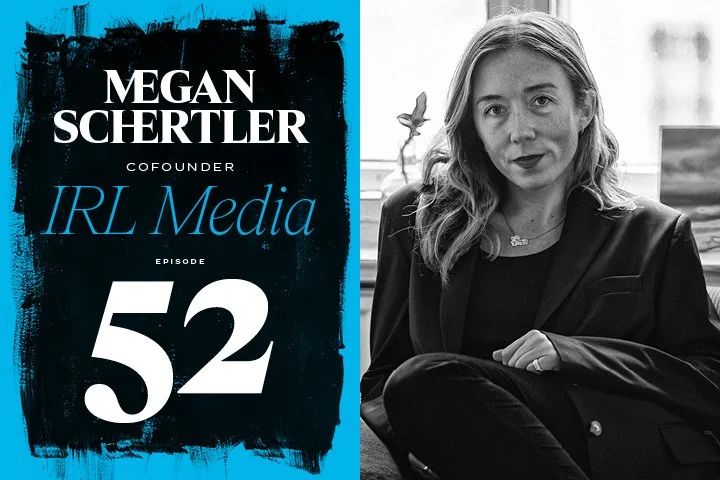
A conversation with In Real Life Media cofounder & managing director Megan Wray Schertler. Interview by Arjun Basu
—
THIS EPISODE IS MADE POSSIBLE BY OUR FRIENDS AT FREEPORT PRESS.
Photograph by David Pike
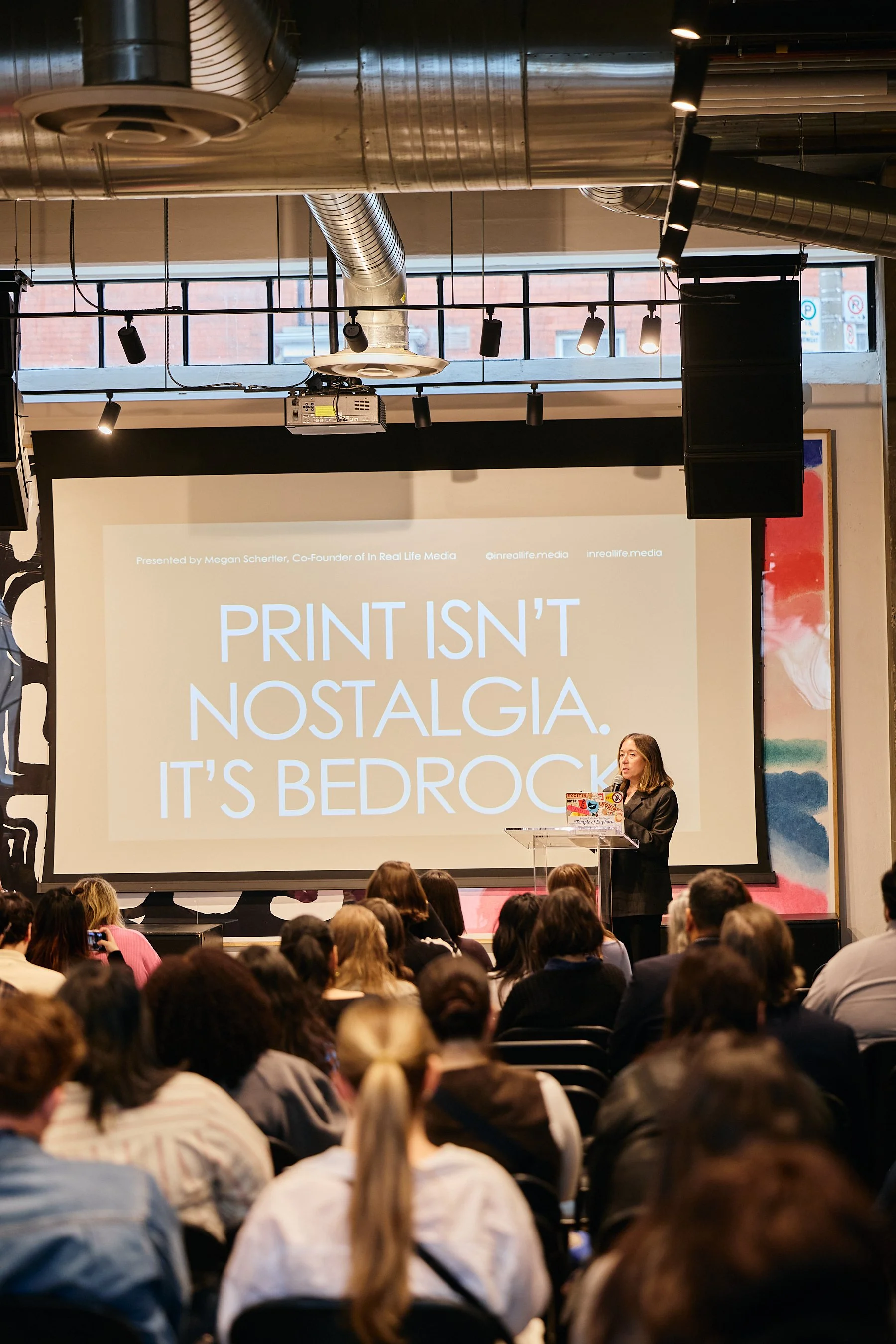
Megan Schertler wants to help you make magazines. Yes, you … and you … and you too. But she also wants to ensure that once you make a magazine, you make another one. And then one after that. She wants to make sure that you know it's not easy to create a magazine or to run one or to publish a second one or to sustain a magazine or media brand or to run a business.
Megan is big on print. She’s one of those extremely rare people who’s held down numerous magazine jobs while never working on the digital side of things. Yes, really. People like her exist. So she knows more than many her age that print is more engaging, produces more loyalty, and creates a deeper and more meaningful connection with the message on the page than any other medium.
And so with her partners, Megan now helms In Real Life Media to help would-be magazine makers sure, but also some of the world’s largest brands navigate the realities of the magazine world. Because while we all love print here, it’s hard, it’s expensive, and it is, quite frankly, a pain in the ass. But it also results in something glorious, and Megan travels the world speaking at conferences and to people like me to spread the word.

Arjun Basu: Okay, so before we do the diving, let’s just talk about you and how you got to this point. What’s your history?
Megan Wray Schertler: Oh, gosh. This is a long one. I’ve been in print for a long time. My very first job in magazines was at Marie Claire UK, and I’d always been a print freak even since I was a kid. I was obsessed with magazines. Never really knew that it was something you could kind of work in as a non-creative. Everyone had always encouraged me to be a writer. Or I was into fashion, so maybe like a stylist.
But it was at my job at Marie Claire UK while I was still in college in London that I learned about the whole back end, like the business side. There’s production and a managing editor and kind of the whole publishing team and all of that. But this was also 2010 when I was working there, and for anyone who was working in magazines at that time, they’ll remember the Apple Newsstand app, which was basically the bomb that changed everything for print magazine businesses.
I mean, gosh, it was essentially, you know – my skepticism will become clear – but it was like this shiny new object that promised, kind of huge, cheaper to produce, returns for publishers to kind of venture into these new digital products. And so they started really pouring a ton of money into developing their Apple Newsstand versions.
They were essentially glorified PDFs, if we reflect on them now. It sat in this kind of little fake bookshelf thing on your phone. And it was meant to be the future. And it was really that product that encouraged a lot of the big publishers to reallocate their internal resources, lay people off to consolidate their print teams.
And so when I was at Marie Claire UK, you know, it was folded into Look Magazine, and I believe InStyle at the time, all to chase this shiny new digital publishing dream and the revenue that it promised.
At the time it cost them their brand, essentially. You know, they weren’t seeing the long-term effects, but now when we look at those titles that really invested in that way, there’s no there there. They’ve all just become content machines. And so I, luckily, was just an arrogant 20-something New York kid when I was in that job and was like, "This doesn’t feel cool. I don’t want to do this. This isn’t why I love magazines." I had no interest in digital content or, kind of, publishing at that speed.
And so I just promised myself I would always work in print and kind of chase that regardless of what, you know, money or compensation it would offer, because at that time everyone was saying print was dead. And I was really lucky. Out of college, I had done my dissertation on Fantastic Man, because it was my favorite magazine at the time.
Still is, honestly. It’s so great. And so I moved to the Netherlands to do my master’s, reached out to Gert Jonkers, who’s the editor-in-chief, and was like, "I’m in town. Let’s get a coffee. I wrote this thing about you that’s 40 pages long. You should read it." And he did, which was awesome. He was so generous and invited me to the office. And long story short, I ended up being their managing editor for three years.
And so I went from seeing, you know, the scramble inside Time Inc. at Marie Claire to seeing the polar opposite brand model, where here was a team that was, like, really intentional and, like, really stubborn about the type of magazine they wanted to make. And they wouldn’t budge an inch on, you know, their standards and who they wanted to collaborate with.
And because of that, they were also the defining indie title, kind of at that moment. You look at every luxury brand now, and they’ve essentially ripped off Fantastic Man and The Gentlewoman’s brand identity in terms of, like, the typefaces they’re using kind of the whole utilization of white space.
So they were IT at the moment. And so it gave me confidence that a print-first business could work. You just had to do it in a really particular way, and it was essentially building a brand. So I was with Fantastic Man for three years, and then decided to move back home to New York. That’s where I’m from originally.
And I took over Document Journal as their managing editor. I was the first full-time hire there. This is when Nick Vogelson was looking to build a kind of digital extension of the magazine, which, you know, as I’ve just said, I’m not the most enthusiastic person about digital media.
But it was a really interesting challenge for me to think, you know, how do you take an 800-page book, like a fashion magazine that’s mainly visual? What is its purpose online? How do you think about that? You know, what’s the user experience?
And so it was a really interesting exercise for me. I also helped him staff up for the first time, so kind of hiring a digital editor, assistant editor, you know, getting a full-time visuals editor, et cetera, which was great practice for me as well.
And then after Document, had the amazing opportunity to join the Interview team as Interview was relaunching after its bankruptcy. You know, I was there with Richard Turley and Mel Ottenberg. Tom Bettridge, you know, was the executive editor at the time. And that was my first time really working with such a legacy title, you know, really having an archive at our disposal and thinking about the responsibility that you carry at a legacy title like that when you are kind of utilizing and kind of, bringing an archive into the future.
And then the biggest curveball ever happened. So I was hired then by Hypebeast, which for those that don’t know Hypebeast, it’s predominantly a digital media company. It’s based in Hong Kong. It started as a sneaker blog back when blogs were kind of prevalent or, like, the main thing. It evolved into, like, streetwear culture but still very sneaker focused, and they hired me to run all of their English language publishing business, essentially, and to oversee it.
So that’s, social media, the website, the magazine, handling any kind of brand partnership deals that require editorial extensions. And at this point, I had zero digital experience, but they hired me for this role, and this was the light bulb moment for me: Where this is 2018, their traffic was tanking.
Their plan of just churning out content, every editor had to publish 10 pieces per day, and it wasn’t working anymore. The traffic was declining rather than increasing. And so I came in and did the only thing I know how to do, which is an indie print first playbook, which is really investing in what your audience wants, investing also in the kind of USP that you own, you know, the unique space that you own, and doubling down on authority ultimately.
So I decreased the amount of content that we were publishing, focused on more long form, and within the first month had it- our traffic up by a million….
Arjun Basu: I’m just amazed that you got this far without any digital experience. Like, you are a weird-
Megan Wray Schertler: It’s crazy ...
Arjun Basu: …you are like a reverse unicorn or something. Okay, so that and then you get to, you’ve done all that, and you’ve had this…
Megan Wray Schertler: So serendipitously, you know, when I went to Hypebeast Tom Bettridge had left Interview to go to Highsnobiety, which was Hypebeast’s biggest competitor. And again, it was a sneaker blog, only this one was started in Berlin had grown into kind of a streetwear culture media site.
And Tom and I were essentially kind of, you know, exploring the same thing at competing companies, and Tom brought me over to Highsnob so we could essentially partner up again. We had a great working relationship. I still think Tom is one of the best at what he does. And so Tom was editor-in-chief at Highsnobiety, and I was publishing director, which was really kind of seeing how Highsnobiety could evolve its agency side of the business into non-media products.
So what I mean by that is up until that point, they had really just been selling programmatic and, kind of extension, uh, brand deals where they would do, like, sponsored editorials on the site with brands that they worked with on the agency. And so the mission given to me was thinking about how do we create non-media deals and essentially grow a strategy division of the agency.
So that was really essentially leveraging editorial to build authority. So we started doing more white paper projects thinking about, you know, how we position the magazine as much more of, like, a kind of cultural driver rather than just a cultural reporter. And we had great success. So I was there for a few years, and this is peak COVID time that I’m at Highsnob.
And it was during that time that I’m sure you saw the same, just like all these indie titles were launching during COVID. I think actually I remember you and I both said the same joke where it’s, like, if you weren’t making a sourdough starter, you were launching a magazine. Like, they just were…
Arjun Basu: …It’s just incredible the amount of people…
Megan Wray Schertler: It was wild
Arjun Basu:...that have been on this show that say, you know, it was COVID. That’s when they start, that’s when they started thinking about the magazine. It’s just unbelievable how many people are like that.
Megan Wray Schertler: Totally. Yeah. It’s really, it was like an instigator for so many. And so personally, you know, because I, I guess I am that kind of print analog freak, I was like, "Yes, this is our moment. They’re back. Everyone who said print was dead can just shove it, essentially.”
But then I would be so bummed because these titles that I would start getting into would disappear after like the third to fifth title. And so I, just out of my own curiosity, started reaching out to some of them to find out what happened, and it was pretty consistent across the board.
It was burnout. The reason that that was happening was a combination of, one, a lot of the best magazines now are not founded by people who come from media or publishing. They’re really creatives who have a vision for something, and a magazine feels like the best medium, or they’re people who are really active and passionate about being in service of their community, and they also see a magazine as a vehicle for that.
But they don’t come at it from media or a publishing training. In combination with, also, all of the advice that has been given for the past 10 to 15 years, and largely still continues to be given, is digital first. So it’s this advice that you’ve just got to produce more content and get your social media followings up through the roof, and then brands will want to work with you or, then some miracle thing will go viral and unlock all of this money.
And that happens sometimes, sure. But largely, no. We’re not seeing that conversion in the same way. And so there was no one really talking about how you actually make print work. And so that’s why we launched the agency that I now run, um, which is In Real Life Media. And my business partners in that are James Laffar from Ra & Olly, which is a distribution company for those that aren’t aware.
So he has been my distributor for years. He understands the kind of global shifts in terms of, like, the US tariffs, what happens with Brexit. There’s now a three euro charge for inbound magazines in the EU if they’re under €150. Like, all of these things he’s kind of staying on top of, so I rely on him in that way.
And then our other partner is David from Newsstand, and his kind of area of expertise is really single copy fulfillment and subscription management. So combined, we’re just these kind of end-to-end print first nerds
Arjun Basu: So In Real Life Media is what? What’s the what is it?
Megan Wray Schertler: The way I like to explain what we do is we’re really a business development agency for print first businesses, and that takes so many different shapes. You know?
So it’s indie publishers that come to us that are either looking to launch or scale, or it’s brands often coming to us understanding that they have to show up in trust-building ways now, and that trust just isn’t earned online anymore. And then there’s also legacy media that’s looking to essentially get back to what they do best, but needs help having that print first kind of strategy and advice to move forward.
Arjun Basu: So this is where your lack of digital becomes a superpower because everyone drank the Kool-Aid and continues and, you know, drank it for a long time for good reason. But, you know, everyone was chasing numbers and not depth, right? And if you chase numbers, that can only last for so long because you’ll feel it eventually.
And so this is where I think something like custom publishing as a concept really becomes interesting again. It was interesting once. It’s a brand versus marketing debate, but it…
Megan Wray Schertler: Right
Arjun Basu: ... it sort of goes with the zeitgeist of everything, and that’s an interesting part of your agency’s work is the brand work and getting brands into not just the printing business but the publishing business.
And I always used to say, I mean, I come from custom publishing. I used to always say that every brand is a media brand.
Megan Wray Schertler: Right.
Arjun Basu: Some, but most don’t know it. So what kind of brands are coming to you?
Megan Wray Schertler: The earliest adopters are in the hospitality space because I think they understand the emotional element that plays in conversion.
I think also more kind of luxury-leaning brands, and then also, which I think is a huge education point for all brands, but brands that are really either founded or targeting Gen Z because this kind of... I joke that it’s like a boomer understanding of the younger generations being, you know, totally addicted to their screens, that you can’t get them off, that they’re like this lost generation, is just so far from the truth.
And so print for them isn’t a nostalgic play, it’s that they’re so starved for context, and if brands can come in and be shown to be cultural contextualizers or facilitators introducing them to culture, that’s producing, like, brand loyalty between that demographic and the brand.
So I think those are really the kind of sectors that are early adopters to this.
Arjun Basu: You guys are really good at producing or reporting on studies that sort of obviously help you sell your point, and a lot of the people I speak to here talk about the surprise of the youth of their readership.
Are there any studies that are showing this, or is it too soon to find this so far? Like it’s all anecdotal- It’s...
Megan Wray Schertler: So far. It’s too soon to find, I think, kind of, I’d say, proper data on this. but I do think that
Two things. It reminds me of two stories. One just last weekend I was in New Orleans giving the opening keynote at the City and Regional Magazines Conference, and the publisher from 417 Magazine, which is a local magazine in the Ozarks, came up to me afterwards with her daughter, and her daughter I think was maybe 19 or 20, something like that, hadn’t yet graduated. And she was like, "I’ve been trying to find you all day. I really wanted to talk to you. You’re the only person I’ve heard actually talk about how, like me and my friends really use our time and what we’re interested in."
She was, like, "Everyone else is talking about, you know, kind of how to capture us on social and how to find us on all these different platforms." She was like, "But honestly, there’s days where I just leave my phone at home."
And so I think what makes it harder to measure is that if they’re going offline and we’re so addicted to measuring things online, we need to rethink about the tools and what we’re measuring. You know, sometimes like the absence or the kind of void is a behavioral pattern too.
And then also, you know, something that really was a light bulb moment for me and I think a lot about is an observation I had when I was at Highsnobiety, where so much of what we talked about internally were the kind of data metrics, you know, we even had a kind of data team and a research team internally to help us, kind of, navigate trends in our traffic and what was switching where, et cetera.
But it was always reading how our content performed, and our content was commissioned by our editors, and our editors were essentially our target demographic, or at least I had hired them in a way to be kind of culturally representative. And it was just their intuitive interest in these things. It was their enthusiasm.
So I think we need to remember that there’s work that needs to be done or there’s kind of like a cultural intuition that is feeding the data, but we need to be in that point of being the cultural leaders if you’re going to be ahead of where culture is actually going. You know, that’s something like I think Tom Bettridge is a genius at that, understanding or reading the tea leaves of culture before data and research gets there and kind of tells us where it’s going to be going.
So I think we need to be honest about the fact that often those reports are a little too late to capitalize on if you’re wanting to be a media brand that is driving the culture forward or seen to be.
Arjun Basu: Yeah. And I think we’ve seen that certain social media entities release their data with false narratives attached to it, and the data isn’t even 100% true. But they…
Megan Wray Schertler: Absolutely
Arjun Basu: ... they’re all numbers, so you have to take them at face value because, everyone says the numbers don’t lie, but the numbers lie all the time.
Megan Wray Schertler: Yeah.
Arjun Basu: And data is just a story waiting to be told. And often, as…
Megan Wray Schertler: Absolutely
Arjun Basu:... you suggest, it’s an old-fashioned story because it’s capturing the past. It’s sort of like AI. It’s capturing the past, it’s not leading you towards-
Megan Wray Schertler: Exactly
Arjun Basu:... the future.
Megan Wray Schertler: Also, we’ve been brainwashed to think that growing numbers is an end in itself. I think this is a trap that a lot of print publishers or kind of print titles get caught up in is, they see their Instagram growing- But to what end?
Are those really the people that are going to be subscribing to you and showing up to your events and coming along this journey with you? If they’re not, then who cares if they’re following you? It really doesn’t matter. Unless you’re trying to be a social media influencer, having a huge following is of no service to you if it’s not converting, and I think that’s what we really need to focus on again in this business.
Arjun Basu: Yeah. I agree. It’s almost like they’ve set up a KPI and it’s wrong in the first place, and no one has challenged it. I’m convinced that a lot of people just aren’t asked why enough, and sometimes you have to go in to a meeting and just say why and ask why until you’re blue in the face, and almost sound like a child about it.
Megan Wray Schertler: Absolutely
Arjun Basu: Because you know these things need to be challenged. I remember when I was at an agency, you know, and digital was just – I’m old, so digital was just starting to happen – and our remit was to have more followers on a certain platform than the competitor. And I was, like, "Why?" It’s great, I understand it superficially, but what’s the point? So we can do it, and we did it within, like, a few weeks. But why? Who are these people? We don’t even know who they are, and so you’re telling me as a salesperson, for example, that you’ve been hammering home about the quality of the reader, the quality of this, the numbers don’t matter, it’s the who is there, and that’s how everything’s being sold, and suddenly it doesn’t matter?
Megan Wray Schertler: Right.
Arjun Basu: And now we’re coming, of course, we’re coming back to it. But these people just need to be asked why. So do you as an agency go to brands that you think should be doing more or are you just waiting for the brands to come to you?
Megan Wray Schertler: So I definitely plant seeds. I think in our current stage, we’ve only been around now since last August. I was freelance for a bit, and kind of James and I were collaborating in our different businesses a bit before we officially launched last year. So it’s still just the three of us, and then we’ve just now, which is really exciting, brought on Holly Anderson as our brand partnerships director to help kind of orchestrate and really architect some of those brand opportunities for the titles we represent.
So in our kind of current capacity, I see it much more as, like, educating brands that this is something they have to be doing and planting those seeds, and also really thinking about the brands that are willing to invest in doing this long term. Because one of my most frustrating kind of moments, or something that really upsets me all the time, is when brands get into print and don’t think about it beyond the content, because also we’ve become so content obsessed that we forget that it then needs to show up in the world.
How is it getting into the right hands? Are you showing up authentically? What’s the follow-up to that? You know, are you having event activations, et cetera? And so there have been so many brands in the past few years that have launched titles, done a big huge announcement about it, spent a ton of, of money to make a, you know, amazing magazine, and then they stop after an issue or two because, again, they’re evaluating it just based on the numbers, on the PNL, and not really understanding that print is an ecosystem.
You know, it’s essentially a community play. And so on the brand side, it’s a much, I think, longer conversation to get them to understand that you’re not just investing in starting a magazine, but you’re investing in the marketing mechanisms that go in that; that some of it might be measurable in different ways than you’re used to. So it’s actually even changing internal structures sometimes when these brands launch magazines.
Arjun Basu: Because you’ve, you’ve created a sub-brand of your own brand and that…
Megan Wray Schertler: Exactly
Arjun Basu:... always, that always takes a little ... It’s hard to wrap your head around when you’ve been so focused on your own brand that you’re just creating another one.
Megan Wray Schertler: Exactly ...
Arjun Basu: Whenever we used to get new business when I was at an agency, the first question was always: is the person who called you in brand or are they in marketing? Because that was two very different conversations and different people were better at that conversation depending on the person and, you know, brand people got the idea, and which is why they called you in the first place, and marketing people were just looking for a new activation and were like, "Well, you know, you should really... This is what we think you should do, and use an event as a flywheel, and yada, yada, yada. But, I don’t think you should be doing a magazine. Do you even have a brand person in your office?"
Megan Wray Schertler: I am so happy that you say that. I was even bringing that up at the city and regional conference, because I ran, like, a whole studio workshop, and a lot of the questions were about, well, when you’re in those deal conversations or pitch conversations, how do you position yourself?
How do you define your value, of the print product to a potential advertiser or to a brand? And truly, it’s about knowing who you’re speaking to, you know? And it’s understanding that most marketing teams and advertising teams with those budgets have KPIs that are really dictated by digital metrics now.
And so to get them to convince their mind, that would be essentially risking their own internal performance in their job if they take that risk, you know? Whereas if you go to a brand team or a lot of the luxury houses even have kind of like culture departments now. Just know if you’re speaking to the right team even.
It’ll save you so many headaches right now. But I have this hypothesis that we’re also starting to see traction on where as the tsunami of AI descends upon us and our trust in digital content continues to erode, more and more brands are going to have to show up off-screen. And so that really will be more investment in print and more investment in experiential, but certain categories will be more early adopters than others.
Arjun Basu: Yeah, I mean, all the ones that you’ve mentioned as long as your industry is tactile or emotion-based, I think, you know, so luxury, fashion, hospitality. Hospitality is interesting because the aesthetics of the hospitality industry worldwide have flattened. And, I’m not sure the hospitality industry even knows what luxury is anymore other than silence. But they need to differentiate themselves somehow, because everything else looks the same. And you know, you could argue it has for a long time, but magazines or, or print or media is one way to do it, and they also have great data on their customers.
Megan Wray Schertler: Absolutely ...
Arjun Basu: We’ve been talking about brands, but then you have these indie media, indie magazines that are coming to you as well, and the flip…you’re doing almost the opposite. Like, you’re showing them how to become a viable business, but also to talk about themselves or think about themselves as media brands.
Megan Wray Schertler: Well, I think our approach, and really kind of how I work with each founder, is first distilling what it is that they’re actually passionate about, and then thinking about how print best serves that mission. You know, for some titles, it actually could be a great marketing mechanism or authority driver for an agency that they might have, or for thought leadership work that they’re doing. Others are much more kind of like community service-driven or kind of being in service of, like, you know, the needs of the community, both politically or kind of quality of life-wise.
Others are really driven by content and kind of content creation and storytelling. So that might be in line with much more of, like, a traditional kind of media structure. But each one is unique, and each one requires its own unique ecosystem to be created. And the comparison I like to make is, you know, the way that you sell a white T-shirt from The Gap or Cause is going to be really different than how you sell a white T-shirt at, like, Balenciaga.
It’s technically the same pattern. It’s going to be really similar fabric, but the whole ecosystem that needs to be constructed around it in order to complete that purchase or have that conversion is going to look different brand to brand. The story. So that’s really what we help…
Arjun Basu: The story ... exactly.
Megan Wray Schertler: Brand is storytelling. And the experience. The experience. You know, I think that’s what we’ve forgotten with, like, storytelling is such a buzzword. You know? It’s like it’s so in our culture now.
Arjun Basu: Yes.
Megan Wray Schertler: But we forget that we’re also hosting an experience when we’re creating a magazine. So thinking about where your magazine shows up, which environments it’s seen in, whether it’s retail stores or hospitality places or direct to consumer, like, what are you offering them off-screen right now? Because off-screen time is the new wellness really. And so knowing that you’re facilitating a personal experience for someone and that you’re hosting that experience is an added layer to being a storyteller ultimately.
Arjun Basu: 100%. And I think, so the first commonality of all my guests is age, but really right up there is also distribution, and just the stuff they had to learn that was the biggest hurdle.
Megan Wray Schertler: And it’s really the shifts in distribution and retail that, in addition to that damn Apple Newsstand that changed our landscape. It wasn’t people not being interested in print, you know? But as the retail landscape shifted with big box stores and, kind, of major chains coming in, our points of discovery became less and less. And, you know, I think that’s what’s really interesting post-COVID is every single demographic felt exacerbated by screen time during COVID.
And so now being out in the world and kind of investing in our communities or being present in our communities is also a part of what we seek. And so these smaller indie stores are popping up at such a rapid pace. More and more magazine stores or curated stores that have magazines. And so understanding that retail is not just a revenue driver, but it’s a point of discovery for people to engage in your brand and also be validated by the curated retail environment, it’s a huge opportunity for these new titles that are launching.
And so thinking about how you funnel that point of discovery into then a long-term subscription relationship or membership relationship is really the opportunity for these indies right now. Because to have a huge retail network isn’t going to be a huge revenue driver for you. You know, the margins are 40% at best.
There’s added shipping costs. Shipping gets more and more complicated and costly it seems, like, per year. It’s like Whac-A-Mole, you know? It’s like there’s some new tax, some new tariff, you know, and it’s constantly changing. It’s a nightmare to navigate. Also the terms are in flux, and that’s something that my business partner James has been really hands-on in trying to navigate, where it’s no longer about consignment.
How do we get these retailers to really believe in firm sale for indies that are quantities of, you know, maybe five to 10 that they’re ordering, like smaller batches. So that whole landscape needs to be, or I’d say the expectations for retail need to be managed when it comes to the indie world.
Because a red thread that I see on my side when I work with indies is that the thrill of seeing themselves on a newsstand encourages them to maybe over-prioritize newsstand as a revenue driver. You know, it’s like of course they want to be in every store and they want to be in every city, but then when they realize it’s kind of sometimes a break-even point, it’s disappointing for them. Whereas if you really think of it as a discovery and kind of pulling it into your funnel for D2C, it’s a game changer.
Arjun Basu: It’s interesting because I’ve never... I have, but I’ve never heard it said that way that, you know, newsstand sales or distribution is really a function of strategy.
Megan Wray Schertler: They can be. You know, I think there are…
Arjun Basu: And brand strategy.
Megan Wray Schertler: There’s certain titles that then push it over and have really robust distribution. Monocle’s a great example. I haven’t worked with Apartamento, but you know, Apartamento, you see everywhere. I can imagine that’s pretty robust. So there are titles that kind of break that point. But when you’re starting and you have limited budget and are working with a smaller print run, it really is best to think about, like, okay, what are the key retail stores that I should be in, almost as a validator, to kind of put you in the family of best-in-class indies.
And also remembering that, you know, of course, to launch a magazine, you’ve got to be a magazine obsessive, but to run a magazine store, you’re even more of a magazine obsessive. And so if you can get those store owners excited about your new title, they’re going to be blasting it out on your behalf, and there’s added, you know, organic marketing opportunities there. So it’s a huge opportunity in terms of, like, strategic marketing
Arjun Basu: You talked about AI a little before, and I don’t know if I want to talk about it, but I feel like I need to because I think this is a, like you said, it’s a huge opportunity actually. And, you know, we’re in that era where people are going to really screw it up before they get it right, at least in the public-facing part of it. So what do you tell like a, you know, I’m a person, I’m coming to you with an idea, or I’m a brand and I think I can do something. And I’m not sure that I want to do a magazine because it might take too long, and the world’s changing too fast. Like, what do you say to that person?
Megan Wray Schertler: I would say... this is actually step one of all my conversations, is really trying to get to the root of what their core mission is. And it’s funny, a lot of my initial conversations with publishers end up being a little bit like a therapy session because indies aren’t people wanting traditional media careers.
These are people who really are either feeling called to have a more kind of mission-driven life and kind of work or kind of career or are feeling really passionate creatively to make a magazine. And I have to essentially excavate if, one, they have the passion and the commitment to make it an ongoing investment.
You know? It’s like passion and creativity isn’t enough, and you might have an idea for issue one, but can you make 10 of them? You know, are you excited to keep doing it? And, you know, with the way that the world is, it’s on fire in many ways, and there’s so many variables that are out of our control. You know, I think for the person who is really driven to give back to their community they just have to essentially really know what their North Star is and know that running a magazine is no different than running any other business.
It sounds harsh to say, but I get so frustrated when I hear people almost kind of giving those complaints. They’re like, "Oh, it’s impossible," and, "Making a magazine is just impossible." Like, "I’ll never make money," or, "Traffic’s declining because of AI," and just "The whole thing is doomed before I start."
It’s like, do you think running a restaurant is easy? Do you think opening a store is easy? Do you think running any product business is easy? Like, you’re launching a business in addition to making content. And so knowing that there’s going to be a lot of non-creative work and frustrating things that you’re going to have to learn along the way has to be a part of what excites you or adds to the kind of creative challenge.
Arjun Basu: Yeah. I agree. And I also, you ask the why and then, I mean, have you done the homework? Because if you love something and it exists, then you have to love it more, and it has to exist in a slightly different manner, because otherwise there’s no reason for it to.
Megan Wray Schertler: Absolutely. Yeah, absolutely.
It’s really, you know, was the foundation of this program I’ve developed called The Magazine Accelerator, and I developed it even before we launched the agency as a way to get to the root of, okay, so this person has an idea. Is there actually a magazine business there? And beyond just the magazine, like, what is actually this ecosystem that they need to build in order for this to be sustainable for them?
Because without having that plan and kind of knowing the architecture of what you need to build, you’re going to burn out either energetically, resource-wise or lose your enthusiasm for the project. Because building a magazine requires an investment. There’s time, there’s money, there’s things you need to learn.
And oftentimes, you know, a person will have a really great idea. They’ll be passionate about a magazine, but maybe a magazine isn’t the best vehicle for the idea. You know? More and more we’re seeing great Substacks, which is a much lower lift. Or, you know, maybe they should just be salons that they host, like, kind of curated events. So I’m pretty honest when people approach me with ideas in terms of, you know, does this magazine idea make the most sense for your purpose in life or your mission?
Arjun Basu: Yeah, I think we’re far enough from the pandemic now that we’re going to start seeing some magazines change their focus or reduce their frequency or even, like, suddenly think about subscription, the subscription model again, because they didn’t before. Everything’s mature enough now, at least the ones that started, you know, which is now what, four or five years ago, that they’re starting to think about it as a business.
Megan Wray Schertler: And that’s really my goal. You know, that’s where I feel like my experience can kind of be of service to this new generation of legacy media and how I really see it, because one of the most frustrating things to me also is when I hear publishers who have been making the magazine for a while and just start complaining about, like, a lack of advertising or that, you know, advertising dollars have shifted.
But then when I, kind of, look underneath the hood, there’s no subscription strategy or there’s no direct-to-consumer push. It’s like, well, you haven’t just made content, you’ve made a product. So how are you connecting your product with the people who are totally obsessed with what you’re doing?
Because usually these titles have, like, huge followings on social media, and they’re not converting into sales because they aren’t actually promoting the sales. So it’s a huge opportunity across the board.
Arjun Basu: I could go on about social media and sound like a crank, but social media is not social anymore. It’s a vehicle for a few companies and a bunch of influencers and who are working for those few companies, you know? You’re not converting anything from social.
Okay. On that cheery note, what are three things, media or magazines that you are really digging right now?
Megan Wray Schertler: Oh, man. I know everyone says this is the impossible question, but it’s really an impossible question for me, because I meet so many magazines almost every week. Right now top of mind, because I did just get back from New Orleans and, like, the City and Regional Conference, I’m pretty obsessed with Honolulu Magazine, which I just learned has been going for, like, over 100 years.
Arjun Basu: Wow ...
Megan Wray Schertler: Truly amazing. Also Our State Magazine, which is based near Chapel Hill. It’s an employee-run title that has over 200,000 subscribers. Phenomenal business just totally flying underneath the radar.
And then from the indie world, I talk about them a lot just because I think they’re crushing it, but Untapped.
Arjun Basu: I just got the new issue.
Megan Wray Schertler:I know you’ve spoken to Tiffany.
Arjun Basu: Yeah.
Megan Wray Schertler: I had the pleasure of working with them a little bit last year, and just, you know, one the founder’s commitment to the magazine and to editorial integrity and, I think under Tiffany’s leadership, it’s just defining how you do that properly and well.
Arjun Basu: I think Untapped is just an example of custom media done perfectly.
Megan Wray Schertler: Oh my gosh. I was at their event in New York. Like, after New Orleans I was in New York for a couple of days, and it was at the Judd Foundation, and there was a line down the street for an indie architecture and design title to, like, take over Soho.
It was phenomenal. So yeah, I just, I want to drive visibility to them as much as possible because I would love for more and more brands to understand and be inspired by what they’re doing.
More from The Full-Bleed Podcast