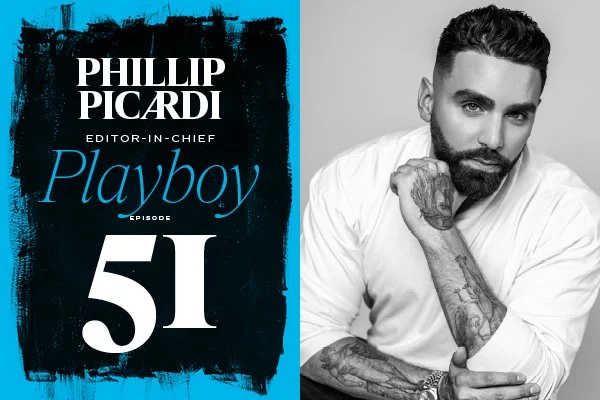

A conversation with Playboy editor-in-chief and chief brand officer Phillip Picardi. Interview by Arjun Basu
—
THIS EPISODE IS MADE POSSIBLE BY OUR FRIENDS AT FREEPORT PRESS.

Playboy is many things to quite a few people. We don’t have to go into its history, but the thing you need to know is this: it’s back. Yes, there will be photos of women in various stages of undress, and yes, there will be sharp writing from sharp minds. But mostly, the people behind it are going to try and build up the media brand, and that'‘ important, because Playboy was arguably the first magazine that used its content at the center of a much larger and much more diverse brand ecosystem.
The new editor-in-chief also comes with another title, Chief Brand Officer, which gives you an indication that these people aren’t messing around. Phillip Picardi has a long history in magazines and has also worked in brand. He’s also gay, which honestly, I have some trouble saying here because it doesn't matter that he is.
But when I tell my friends that the new editor-in-chief of Playboy, an heir to Hugh Hefner of all people, is gay, well, that raises an eyebrow. Because Playboy is a lot of things, but it's also a very male, very heterosexual brand.
But what if I told you that some of the best writing coming out of Playboy now was being written by a cadre of hyper-talented young women, that Phillip’s boss used to work at National Geographic and Disney, or that Phillip received his master’s degree from the Harvard Divinity School? Should I keep going? Because I could.
Just listen to our discussion. We’re going to dispel some misconceptions and then some.
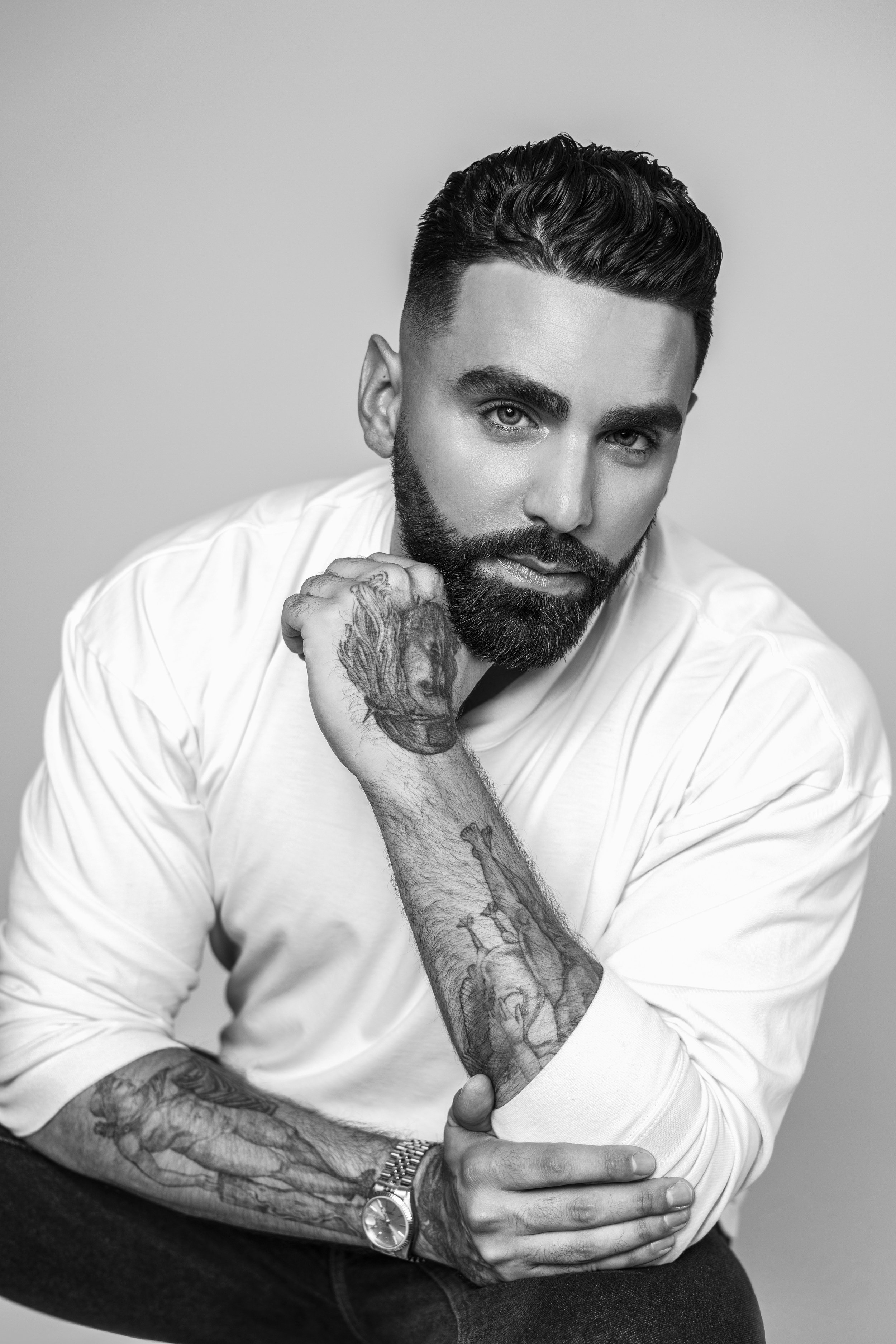
Arjun: Before we get to your actual job right now, your story is long and it's interesting, I have to say, but let's get an abridged version. Tell us about your journey to this point.
Phillip Picardi: God, okay, it's so funny I was just doing this in another interview. I actually ended up apologizing, I feel like when I tell my story people think that I'm mentally ill. By the way, maybe … jury's out.
So long story short I have been in magazines since I was 18 years old. I started as an intern at Condé Nast for Teen Vogue. By the age of 25 I was the chief content officer for Teen Vogue. After that I was also overseeing Allure's digital editorial operations as their digital editorial director and I ended up pitching to Anna Wintour a concept for a publication called Them which would then become Condé Nast's first ever LGBTQ publication and first dedicated brand launch since Portfolio which was over a decade prior.
Then I jumped ship for whatever God-forsaken reason and landed as the editor-in-chief of Out magazine. Of all of my life regrets that is probably my most profound. Out was a disaster. Fun, but it was a disaster.
Arjun: Did you regret leaving the Condé Nast family or going to Out or both?
Phillip Picardi: Both.
Arjun: Okay.
Phillip Picardi: Yeah
Arjun: Okay.
Phillip Picardi: I guess we'll save that for later. After Out I decamped for Los Angeles with my ex, my second-biggest life regret. Just kidding, that's mean. But you can keep it in. That's when I decided to start a podcast with Crooked Media called Unholier Than Thou and I went to divinity school. Just finished, actually, a memoir called Is Jesus Kind of Hot that is a collection of essays about my journey and my relationship to religion. I went corporate shortly after that and I was the chief brand officer for Weight Watchers. And now I have the privilege of serving as the chief brand officer and editor-in-chief of Playboy.
Arjun: See, I told you, dear listeners, that was gonna be something. Why was Out such a disaster?
Phillip Picardi: So Out has pretty much always been a disaster. From what I had gathered from so many of the people who had traversed through that publication. But by the way, it is a fabulous publication with a very rich history and a really cool dedicated group of people who work to make it happen after the worst of the AIDS crisis had taken its toll and the pharmaceutical companies really wanna capitalize on this new emerging market of consumers, which was gay men basically who were sexually active and also were very upwardly mobile.
But I came to Out at a really significant point in the publication's trajectory, which it had just changed hands of ownership. Aaron Hicklin, the longtime editor-in-chief, was out. They brought me in under the banner of Pride Media, which was Out and The Advocate and a website called Pride.com. The owner, though. of Pride Media, the CEO, I think had withheld some really crucial financial realities of the publication with me and effectively halted payments to our freelancers basically just a month after I had joined the publication.
The year prior, I was in The New York Times and I was being called the Prince of Condé Nast for the launch of Them. And then almost year and a half later, I'm on the cover of the business section, and it's, "Out Magazine fails to pay its freelancers amid shiny new editor's arrival." I'll never forget it. It was like it was truly a tragic comedy in a way, but a really valuable learning experience. And even though I do have some regrets about that time for sure, I was really lucky to work with a very stellar and committed team who I still really respect and I think we made a lotta magic out of a whole lotta nothing with very limited resources. So still have a lot of respect for the people I worked with at that time, just not the overlords.
Arjun: We're gonna jump to Playboy now because that's where you are. We don't have to go into the history of Playboy because that's very well documented. But do you have a history with Playboy at all? Do you remember it when you were growing up?
Phillip Picardi: I have two older brothers who are aggressively heterosexual, so I'm very familiar with Playboy and it was a fixture in the household. And so were the women who were inside of it, right. So Brooke Burke and Carmen Electra and Pamela Anderson were all over my oldest brother's walls. He unfortunately had a sloped wall that appeared over his bed so they were often on the ceiling which is probably more information than he would like me to divulge.
But the glamour of that time, and the way that those women were captured, and then watching them on television and reality TV, in some cases, was so fascinating. I think what was even more interesting was I grew up in a very Catholic household. There was so much permission for Playboy to exist in the context of this household.
It was not taboo because it wasn't considered porn. It always had the respect of the men in the house even though we all knew what they were looking at. I did get the sense that they were actually reading the articles and that was also to my benefit because the magazine was a lot more progressive than I think the men in my household were at the time, so I definitely understood what it meant to men, what it could mean to me.
When I was working for Condé Nast, I was approached by Cooper Hefner. I actually met with him at the Playboy Club in New York before it closed. We talked about the future of the magazine, and I think the potential of the magazine, in the context of the current sexual revolution that was happening at the time, which was so focused around gender liberation and the Me Too movement and all of these kind of forces that were coalescing, but that felt really rich as areas of interest to Playboy.
We didn't end up working together – I was very comfortable and very happy at my job at Condé Nast at the time – but it definitely got my wheels turning and I had been approached by the magazine many times. The former CMO Rachel Webber, our current VP of Brand, Reese Lasher, had reached out to me so many times over the past five, six years. I did Instagram Lives for them, I was helping them on some other projects they were working on. So this kind of felt in many ways inevitable. b=But also, I was coming to the publication at a very different time societally and culturally which presented a whole new set of challenges for sure.
Arjun: Why do you think they pursued you over so many years, and different people from that brand? What did they see in you, do you think?
Phillip Picardi: For me I'm sure that there was a business rationale to bringing me on board which I had proven many times and in many different contexts that I was able to grow audience and that I was able to do brands that felt social or digital first, which I think Playboy has, in more recent years, those pivots into digital, video, and social have been really fraught for the brand. So much of the brand's DNA and legacy is still rooted in print and in the analog, which I obviously of course value coming from Condé. But I think there's that, on the sort of, like, logistical side of it.
But on the other side, what I had demonstrated throughout my career is that I could take a storied brand, or a legacy, or I could take a concept or a cultural force like sex, and make it relevant in a way that felt current and that also felt elevated. And that feels like what is really honoring Playboy's legacy, especially within its literary tradition: understanding that sex could be a bridge to so many other issues and areas of coverage that we could pursue. Whether that's fashion, whether that's wellness, whether that's politics, right? There's so many things that make sex fraught in this moment, and I think it needed an editor who was unafraid of sexuality because Playboy still needs to be about sex and it still needs to be sexy, but it also has to offer so much more than that.
Arjun: What is Playboy today? Describe it to someone who thinks maybe it doesn't even exist anymore.
Phillip Picardi: In my most esoteric and my favorite way of talking about Playboy I like to say, in a very prudish, but simultaneously very pornographic era, we are more polarized and more pulled-apart than ever. There are so many forces -- technologically, politically -- that are pulling us apart and dividing us from each other, Playboy is the publication that actively is encouraging you to reach out and touch one another. We are also hoping that you do so consensually, but that is so much of what our magazine is about. I think you should also know this is a publication for men but we love women and women have always been at the center of Playboy's universe. And so much of the content that we do is made for a male audience, but women are always at the top of mind at Playboy.
Arjun: I wanna get back to that in a sec. But first, you've worked for big brands. You mentioned Weight Watchers. What is the pressure of being tasked with shepherding a brand with such a history as Playboy and bringing it into... It is a different age, no matter what anyone says. It's a different age now.
Phillip Picardi: There's so many different kinds of pressure in this role, actually. On the one hand, there's the pressure of preserving a really rich visual and design legacy that has always been at the bedrock of the brand and this really intense devotion to the magazine's golden era, and what that magazine's golden era has meant to some of our most diehard fans and readers and audience members, but also to people who just feel an allegiance to the brand because of that period in time.
And then alternatively, there are real business pressures that are coming with remounting a media property in an era where media is inarguably in decline. There are so many pressures facing the most storied and legacy newsrooms in the world. Like what we've seen at The Washington Post or what we're seeing at CBS. So the bet on Playboy as a media brand is also a really challenging and a really interesting and provocative one, I think.
And then additionally, we're not just running a media brand right? Playboy always was ahead of the curve I think in the media business because it was actually, in my opinion humbly, the first media brand that was able to be a brand first and a media entity second. And so there is the reality of a global licensing business that also accompanies some of this work and that this media business has to ultimately support. There's business considerations, there's audience considerations, and then societally I think, right now, this is a pretty fraught moment for gender relations that sometimes we call that hetero-pessimism, and also encroaching censorship that also make Playboy's premise really provocative but super challenging logistically when we think about the kinds of images and stories that we wanna want to run on social platforms that are moving farther and farther away from provocation.
That makes reach and distribution also a challenge. A challenge that Playboy's always faced, to be clear, it just has a different kind of context, or labyrinth, to navigate
Arjun: Your title, isn’t editor-in-chief in the magazine, but it's chief brand officer, and I think it's the first time I've talked to someone where that relationship has been made explicit. I think all editor-in-chiefs in the end are chief brand officers.
Phillip Picardi: Agreed.
Arjun: You have that title, and I think that means something. There's an implication in it. Where do you want to take it? What does the brand mean today that is different from what it meant, 10, 15, 20 years ago. 30 years ago, 40 years ago?
Phillip Picardi: I almost wanna push back on whether or not it has to necessarily be different in its meaning, because I feel like so much of what I'm doing editorially is returning the publication to its original meaning.
This is a publication about desire, sexuality, the intersection of sex and culture, but it is also a publication that understands that none of those things matter if we are not free. So the pursuit of freedom was something that was integral to the Playboy philosophy that Hugh Hefner published in his 25-part manifesto that he wrote over I think the course of a decade that is just legendary and that really moved me when I was building my premise for the brand.
I think that what Playboy means, that original provocation, actually is feeling more urgent than ever because of where we're at with censorship, because of where we are at with freedom of expression feeling hindered, because we are further divided and we are more apart than ever.
And so it is restoring Playboy to that role of the provocateur in society. But it is, I think, more urgently, in this moment – when we are navigating a Gen Z sex recession and pessimism about things like marriage and sex in general – what's new particularly about Playboy, or what's taking center stage in this moment, is the idea that we want to be guiding men through these life experiences and through these moments. We want those men to be invested in making themselves better and improving themselves, but also in making sure that they're treating women well in the process. We're often positioning women as the experts to do that, which feels exciting and challenging and can often be really funny. There's a certain rallying cry around that from audiences that we've found. There's a mutual appreciation from men and women for this perspective on how we're covering sex and relationships and day-to-day life which is, I really hope, the bedrock of our content strategy moving forward.
Arjun: Talk about that strategy a bit. I've been reading the Substack and most of the writing is done by young women. Really good writing. And the Playboy brand, or the ecosystem, it used to be vast when a lot of publications didn't have anything. Is that ecosystem going to change? How's it going to evolve? How are you going to use the Substack? Is it driving readers? How does it all fit?
Phillip Picardi: Right now we are about beating our chest to make sure people know that we are alive and well and that we are coming back, and that we are building, and that we are growing. The Substack truly is just a brand play for us at the moment, and it was a way to engage with what I consider to be one of the most influential communities on the internet, which are people who are writing, or people who are creatives, and of course our fellow people in the media.
What ended up happening with the Substack was we quickly were discovered by a lot of traditional Playboy readers. We did a reader survey there and 95% of the people who responded were men, and many of them were actually over the age of 40. And so that was a really interesting factoid because so much of what we're doing there is resurfacing some of the greatest hits from the archives that Magdalene Taylor – actually who works for us as our senior editor – curates, and those stories have found a brand-new life and a brand-new appreciation, and we get a lot of great comments from those guys that are like "I remember this woman," which is just incredible.
But when we did a call for writers and we did a call for collaborators I was shocked that the vast majority of the people who responded were women, and that has been just true across the board. I think that speaks to two things: It feels fraught for men to be engaging with open and honest conversations about sex and sexuality right now, so I do hope that changes over time. The other thing that I think it speaks to is women are so deeply invested in men being better, and especially men being better in relationships and in sex, and so they want to be a part of this movement. Women really pursuing us to be published and to have columns or to be able to share about their own sexual experiences ‘cause I think there's a collective understanding that gender liberation isn't gonna come unless men are an invested part of the solution. And that has been and feels, I think, really new, which is super exciting.
To talk about the Substack strategy a bit more, I think we just wanna grow the size of that list as much as we can organically. We don't do a ton of external channel promotion there. It's not like an omni-channel lift. So what we're doing is we're trying to hit the 10,000 milestone; we're just a couple thousand away at this point. The growth there has been enterprise level and super encouraging. But I think our ultimate goal is that we give away a lot less of those stories and are pointing people to the site to subscribe if they wanna see more, because growing our own subscription business is gonna be, like, paramount to our success over the next couple of years.
What we do see is a real high intent to read and consume and engage with content there. Looking at our top stories there, it's like an essay from Josh Gondelman about loving his wife, almost a 5,000-word feature from Camille Sojit-Pejcha about going on a swingers cruise. There's like, real words on there, and people are really engaged. So we're hoping that now that they can understand what the universe is about, they'll feel a desire to support the journalism and the work that we're doing on our own channels.
Arjun: Do you think that a lot of the women especially who have responded with a willingness to write for you, was that because of the brand?
Phillip Picardi: Oh yeah. Even in some of our surveys that we have about consumers of the brand, like people who buy the lifestyle product, there's a really high index of women who are supporters of Playboy's brand or people just who buy the product and wear the logo. So yes, women have felt like a very active participant in this universe for a while.
Arjun: I'm thinking with the bunny, the logo. I don't think I remember a man with it, I've seen a lot of women wearing it either as a necklace or on a T-shirt or a trucker cap or something. There's this hipster nostalgia for... Because it does feel like it was innocent in a weird way, given what you can see now your screen, it just feels like Playboy, it's pure in a way that a lot of stuff that has to do with sex isn't, because it's fraught or political or it comes from not a good place. But Playboy, the word I think of is innocent
Phillip Picardi: So interesting you say that ‘cause creatively, when we sit down with photographers, Playmates – who are consenting to have their nude pictures taken – our creative director, our artistic director, one of the first things that I said when I was going through the archives was like “Guys, there's a clear sexuality and a clear desire here which is inarguable, right?” These are beautiful women. They are not necessarily defying any conventions of beauty here. They're gorgeous and wow do they look good.
There's also this real playfulness to the pictorials. It feels like a lot of the women are aware of the absurdity of the premise of posing naked for a magazine that a bunch of men are about to read and they feel like they're in on the joke. We could argue extensively, and I'm sure many women would love to argue with me about this, that objectification is inevitable when it comes to this kind of work.
I just don't think that the people who have posed for us are unaware of that objectification, certainly not the women that I've worked with. They more just wanna play with the trope and find out if there's power in it, or find ways to be subversive within it that can still feel sexy and playful. That is such an interesting dance, and I do think when you're making a picture and a centerfold and you're working on the retouching and the editing and the posing and you're taking this much time and care with a project like this, it is so different than what you're seeing on Twitter when you're scrolling. That has been areally cool experience, to play with the contours of desire in that way.
Arjun: The old joke, you'd subscribe to Playboy to read the articles. But some of the major figures in the world were writing for Playboy. What are you gonna do there to continue that?
Phillip Picardi: The hallmark tentpoles that Playboy was famous for include, obviously, the Playboy interview where Alex Haley basically had many of his greatest hits. We brought the Playboy interview back. We actually turned it into not just a print interview, but it appears also as a long-form video interview. So it's an interesting place for journalists who have both camera potential and potential with words to really flex their muscles.
Our executive editor, Jesse Will, who works on the book, actually used to work for Jann Wenner at Rolling Stone, and so there's definitely an intent to reach out to the heavier hitters of magazine writing and make sure that they feel called or compelled to participate.
We also brought back things like the fiction section, which allows us to also tap into the literary world to see who's publishing interesting things and who are the interesting voices there. I think right now, I'm really focused on making sure that we're not just going after the most established names in the world who are already writing for the big magazines or the big newspapers.
I feel like we have an obligation to go after the big names as much as we do the next generation of names too, and so that's a delicate balance that we wanna strike. So the writer Rolodex I feel confident in. But I think what's been really exciting is like Camille, Anika Jade Levy, seeing those stories pop off and really go crazy on the internet, has shown us that we're tapping into a new zeitgeist and new enthusiasm for the brand, which also feels really palpable.
We're bringing back 20 Q which will be really exciting and have some exciting names that are being tossed around for that right now. So I think it's about the right balance of both, but I definitely don't wanna swing it too far into Esquire territory, to be honest. I wanna make sure that there feels like there's a good mix and it feels like we're offering something new.
Arjun: You bring up Esquire. I really do feel, and I guess you do too because you said it, is that Esquire picked up the mantle from Playboy after maybe, I don't know, it just became the magazine without the boobs really.
Phillip Picardi: Yes.
Arjun: But it was in the same territory, intellectually at least.
Phillip Picardi: Oh yeah, even going back into the archives, Hefner talks about Esquire all of the time. He poached Vargas from Esquire when Esquire told Vargas that he had to dress up the ladies. I was just talking about that 'cause our February was all inspired by the Vargas girls.
But I do think Playboy has to be different. And so youth, and going after a younger audience, is definitely top of mind for us. And pursuing TikTok We're on Reddit pretty aggressively right now. Those are all strategies that we're deploying to see what's working with audiences and how that's changing up the age split.
Arjun: And how often are you gonna print?
Phillip Picardi: We're quarterly.
Arjun: And widely distributed?
Phillip Picardi: We're distributed nationally, Barnes & Noble, and then local book sellers. And we do have a direct-to-consumer option on the website, which I just think is the best for us and for our lifeblood, 'cause that's how you get subscribers and email capture and all that.
Arjun: And what has the reaction been from the ad community?
Phillip Picardi: That's actually been really interesting. I think a lot of people were surprised to see us back, but especially to see us back with Karol G on the cover the weekend before her headlining performance at Coachella, photographed by Gray Sorrenti, styled by Katie Grand, who's inarguably one of the most important fashion editors in modern history, was a really big showing. And that was a really important symbol and signal to us, to the business community, and our audience. And so something with that kind of power, I think, has opened a lot of doors for us to have meaningful conversations with talent. We are not going for a traditional "please buy pages in Playboy" approach at all.
We are going for custom partnerships, video partnerships, and social and pre-roll and obviously experiential. With that, I think there's a lot of nimbleness from the team and a lot of desire to do things in a way that feels sustainable rather than cater to circulation or demographics on the site, and that's been exciting to open some doors in the fashion sector, the wellness sector, and then of course, Playboy's hallmark sectors are always gonna be liquor and spirits and auto and wine and tobacco and those other categories which we're obviously still in build mode with.
David Miller just joined us. He comes to us from Disney, National Geographic. He joined as our president of media and brand, so he's my boss, and so he's really leading that strategy with the entire team, and it's been exciting so far to see the reception. We have a lot of work to do to make sure that people feel like Playboy is a brand they can align with, but we also have to work with partners who are willing to cross that line. You know what I mean? And that's been a really interesting one, especially coming from a brand like Teen Vogue.
Arjun: You talk about the surprise of some of the people that you're approaching in terms of partners. What's the thing you hear most often when you go out either editorially or commercially?
Phillip Picardi: The thing I hear the most often is, "Oh, boy, Playboy's back?" The second thing I hear the most often is, "You? At Playboy?"
Arjun: What's that reaction? When I looked into you there were a lot of questions, obviously, which is why I asked about your relationship at the beginning. Your role in magazines, obviously you've been at a lot of big titles. You've done a lot of great things so this feels natural for a brand that's trying to recapture itself. But at the same time, you're not the reader that most people would think when they think of Playboy.
Phillip Picardi: I mean, I think that's fair. I'm not really afraid of that, because I don't think that Playboy needed more of the same. I don't think that this moment in culture is calling for more of the same. I also do think, despite my sexual orientation, I am squarely within the target demographic based on my age and gender. And so I may not be a bullseye, but I'm not that far off if you really think about it.
One of the things that I've always said is I think the power of working at the publications I worked at was that, especially at towards Them and towards Out, I had to take a really big topic, like sexuality and gender, and then figure out a way to market it as a cultural and political force that was driving things forward, and I really am applying a lot of those same principles and philosophies to Playboy.
There's a lot of that's rooted in a deep optimism for what happens when people can actually come together. There's a huge belief in sex as a force that can be good and does not need to be shrouded in shame, does not need to be something that people need to fear. I also think, because of my fashion background, I believe that there's nothing wrong with the pursuit of beauty or glamour. Showing women in ways that feel empowering and that also feel provocative or daring feels very native to my DNA, but I do think I'm bringing a different perspective to it, for sure.
But I do think it is a perspective right now that… it's almost a huge benefit that I can come to this as a little bit of an outsider because there won't be things that I'm precious about that I think many people who are hyper loyalist to the brand would be precious about. I also think there are perspectives here that help to diversify what this publication can mean to a modern audience of young people who do not see sex and gender the way that the previous generations who read Playboy do.
Arjun: No, they don't, and their relationship with the media is completely different. Media is completely different. Do you look at this as you're trying to find an audience for people who have no idea what Playboy used to be? How do you approach that?
Phillip Picardi: Our lowest hanging fruit, to be honest with you, is people who are excited to know that we're back and publishing regularly. Those are the easiest people to convert. It's so funny, I was just talking, we have a freelancer who, who helps us with social, Evelyn Kwong, who comes from 404 and Wired, and she was like, "I haven't seen Facebook referral traffic like this in 10 years." You know what I mean? But those guys were just waiting for us to serve them content. And so those were, like, easy engines and levers to pull. They were so excited that we were back and that we were touring the archives and stuff. Those guys are priority number one in a lot of ways because as you're rebuilding this thing, there was no media brand really when I joined.
There's not a lot of media infrastructure. I'm starting from scratch with product, social, everything. So a lot of that was easy to get those guys excited again about the brand. So I'm very happy to have them.
A lot of the young people we're targeting think of Playboy as a lifestyle brand. They know it from clothing and baseball caps and T-shirts. They don't understand. A lot of our comments on Instagram from new followers are like, "Why are you guys publishing about Malcolm X?" It's like, he's a bedrock of the Playboy editorial philosophy. So you have to bring them along the journey.
And so it is, unfortunately, a both/and, which can be a hard line to cross. But I have found that the younger audience is way more engaged with our current cultural commentary, our current coverage of current affairs. They're way less averse to seeing essays and videos that are about things that don't have to do with sex or beautiful women. And so it's a very valuable audience for us to court, for sure. And they're embedded in the social demographics. We're at about a million on TikTok. We have 9 million on Instagram. So the young guys are there, they just don't necessarily know that we are a publisher, which is a funny education point.
Arjun: Yeah, it really is. I'm old. For me that's hilarious. You talked about what you found when you got there. What did you find? It wasn't the Titanic, but, was it a wreck? What was there? What did the brand consist of when you got there?
Phillip Picardi: They had restarted print last year in 2025, and they had two issues that came out. They reintroduced a new class of Playmates, all very well done and very beautiful, but were having a lot of trouble with major bookings for the cover.
There was basically a team of freelancers who were working on the publication, and most of that energy was focused on print with very little original content and things happening on social. Currently we're gonna be staffing up over the next couple of years. We're a publicly traded company, and so we have to do so in a way that is respectful of the EBITDA and making sure that we are growing and showing proof of purchase as we grow.
But I am still working with a team that is on basically a part-time or full-time freelance basis. I had to start some new things like Substack and Reddit and Bluesky, and make sure that the website was gonna be fine-tuned to be a more nimble content engine. And I'm leading a website redesign project right now with Wondersauce, a great agency and then also had to build the spring issue at the same time.
While I was in my introductory months there, I was in the archives, right? So I read the huge Taschen collection of Hefner, like recounting, kind of, the golden years. Familiarized myself with what was in the archives and what else there was to find and uncover. A lot of that ended up being the lifeblood of what appears in the spring issue.
It's obviously not just resurfaced historical stuff, but it is a re-imagining of what the tradition of Playboy was, which is to be really fertile ground for some great stories.
Arjun: Where do you want to take it? Where do you want it to be in a year? What is healthy? What's the goal here?
Phillip Picardi: My ultimate goal is that the media arm of Playboy is the lifeblood of the entire business ecosystem, which is to say, if we make enough noise we get enough audience engagement and following and loyalty over what we do on social, on our video channels, eventually in audio, on podcast, and of course with the magazine and daily editorial content, it's like the tide that rises all ships, right?
So I would hope that the licensing opportunities expand and brand partnerships expand, and we build back the experiential arm of this business. There is tremendous appetite around building hospitality again as a really meaningful source of revenue for Playboy.
These are all logical places that Playboy has a right to win, and I really do think we're in a great position where there is no way but up. And so that feels really exciting. But, also, I do look at the men's media market, and I've seen so much commentary online about how we need a The Cut for men, or we need this for men, or we need that for men. And so I do think there is a really right place for Playboy to very quickly, I hope, if I do it right, and actually become a viable competitor in the men's media marketplace.
I don't need to have the same unique visitors as some of the legacy media brands that have been playing in digital media for the past two decades, where Playboy just hasn't been playing to that extent. And so to a certain point, I think catching up to them in that realm can be really futile.
We need to be innovative and selective about where we spend our budgets. We could have a killer podcast or we could have killer video series, and we can make a killer magazine that people are always gonna wanna buy and subscribe to. And so those are all the areas where we can focus on our growth and focus on our point of difference.
I know I complained just earlier about all of the resources I didn't have, right? But the good thing about not being at a legacy media brand is that I don't have to deal with a stack of tech debt. I don't have to deal with, I don't know, five decades of, This is how it's always been done, and unwieldy teams that are really hard to coalesce or bring together under a huge conglomerate, right?
We can be nimble, and we can be really decisive, and we can make decisions fast. So I'm excited to build towards that.
Arjun: Was the idea of the powers that be to really use the content again as something that just built the business and as the core of the business? Because that's what Playboy is: It's a content brand that feeds a much larger business, but that without it doesn't exist.
Phillip Picardi: Yeah. I always say it's a global lifestyle brand that was powered by the prestige of its storytelling. The content needs to be an engine that has a degree of financial solvency and fiscal responsibility for sure. But it is a brand at the end of the day, and that's why I thought chief brand officer and editor-in-chief were, even though it's a long and unwieldy title, I think it's more evocative of what I am actually doing here and what we're setting out to do with the content.
Arjun: Yeah, it's like the most honest title. It works. We always end these things with one question. What are three magazines or media that are exciting you right now?
Phillip Picardi: My first would be Feed Me by Emily Sundberg. It is pretty much the only thing I actually read on the daily, and I do look forward to her appearing in my inbox. I also like her presence in general and how she has found a way to scale without losing herself in the process so I really respect what she's up to.
I think the team at Wired is doing some of the most compelling journalism in the world right now. They do such good feature journalism and such good packages. I'm so impressed and often extremely annoyed by the things that they cover because they are doing it in ways that I wish that we were doing.
And the whole team at Playboy is aligned to that, by the way. Every time they publish a story about porn, we're like, "Damn them." So good on them, and I hope they keep up the good work. And I think if I had--
Arjun: All art is theft, right, so just steal it. Just steal it and write Katie Drummond a letter and just say, "We stole this from you," and I'm sure it'll be flattery.
Phillip Picardi: Yeah, totally. I should write her a letter and say that. I gotta say, oh it's hard to pick the last one. I wanna give an honorable mention 'cause I really loved what T did with their recent issues. I loved the design of that, and they did a behind-the-scenes with their design director that I also really loved.
But I think what Katie Grand is doing in the fashion space at Perfect is super interesting, and more people should be paying attention to it because she has this cornerstone fashion bible/huge book that she makes, but then she does these fanzines, and she asks the cover stars to participate in a three-day shoot and process with her that includes fittings and diary entries and voice memos and so much multimedia and ephemera that just feels like she's the only person in fashion who could pull this off right now.
And they're so good, and I think it's a really compelling business model, and she is really keeping print alive over there, so I just wanted to... I would say she was my third that I'm always watching.
Arjun: Okay. She's third. T is the honorable mention.
Phillip Picardi: Yes. Don't tell Hania that she's an honorable mention.
Arjun: It's on a screen, it'll be flat. The problem. Thank you, Philip
Phillip Picardi: Thank you so much. I appreciate it.
Arjun: And good luck. I'll be watching.
Phillip Picardi: I'll need it. Thank you.
Arjun: And I'll be reading the articles.
Phillip Picardi: You don't have to say that. We know what you're here for.
More from The Full-Bleed Podcast